Publishing as Collective Infrastructure
In-grid, Minor Compositions, noNames, Shape, Systerserver, a.o.
ISBN 978-1-57027-454-1
Released by Minor Compositions 2026
Colchester / New York / Port Watson
Minor Compositions is a series of interventions &
provocations drawing from autonomous politics, avant-garde
aesthetics, and the revolutions of everyday life.
Minor Compositions is an imprint of Autonomedia
www.minorcompositions.info
minorcompositions@gmail.com
Distributed by Autonomedia
PO Box 568 Williamsburgh Station
Brooklyn, NY 11211
www.autonomedia.org
info@autonomedia.org
Foregrounding the Social and Affective Life of Open Access Publishing
Experimental Publishing Group (Open Book Futures)
Since 2019, the Copim community – a network of scholars, open access publishers, librarians, infrastructure providers, and others interested in building a more equitable and diverse ecosystem for scholarly publishing – has developed and sustained new infrastructures for open access (OA) book publishing. Through the Community-led Open Publication Infrastructures for Monographs (COPIM) research project (2019–2023) and the Open Book Futures (OBF) project (2023–2026), the community has created and maintained cooperative organisations, non-for-profit funding models, and decentralised systems that support community-led OA publishing.Lucy Barnes, Tom Grady, Kira Hopkins, Anna Hughes, and Kevin Sanders, "From Mission to Market: The Commercialisation of Institutional Publishing," Preprint, Zenodo (8 November 2025). https://doi.org/10.5281/zenodo.17540083.
As part of this, the OBF Experimental Publishing Group – within a number of experimental book pilot projects – has supported authors, publishers, and developers to experiment with the forms, formats, practices, processes, and relationalities of OA monograph publishing in the humanities beyond single-authored, print-based models.Julien McHardy, "On Patents and Databooks," COPIM, 28 April 2023, accessed 15 December 2025, https://copim.pubpub.org/pub/on-patents-and-datebooks/; Janneke Adema and Rebekka Kiesewetter, "Combinatorial Books Pilot Case: Introduction to Pilot Documentation," COPIM, 30 June 2022, accessed 15 December 2025, https://copim.pubpub.org/pub/combinatorial-books-documentation-introduction-post-1/; Simon Bowie, "What Is Computational Publishing," COPIM, 7 July 2022, accessed 15 December 2025, https://copim.pubpub.org/pub/computational-publishing/
Besides providing editorial, technical, and conceptual support, the Experimental Publishing Group took on a grant-giving role during OBF, offering small amounts of funding to three pilot projects selected via an open call, among them "ServPub – An Infrastructure to Serve and Publish" resulting in this book. Crucially, this experiment in funding was itself conceived as part of the research process: the aim was to create space for participating groups to define what was meaningful and relevant to them. Beyond minimal baseline requirements aligned with OBF’s values – such as the use of open-source tools, the implementation of Diamond OA, and open documentation – we prioritised community agency over directing experimentation.Experimental Publishing Group, "Instituting 'Database as Book and Lively Community Archive'," COPIM, 27 November 2025, accessed 15 December 2025, https://copim.pub/instituting-database-as-book-and-lively-community-archive/
We see this work as important because many scholars lack the support, time, and energy to explore alternative publishing models (within or beyond OA publishing) – even when they are aware of the limitations of prevailing systems and express a desire to work differently.Andrea Pia, Simon Batterbury, Agnieszka Joniak-Lüthi, Marcel LaFlamme, Gerda Wielander, Filippo Zerilli, Melissa Nolas, et al., "Labour of Love: An Open Access Manifesto for Freedom, Integrity, and Creativity in the Humanities and Interpretive Social Sciences," Commonplace (2020), https://commonplace.knowledgefutures.org/pub/y0xy565k/ The para-academic and non-academic communities involved in this book face parallel constraints that take the form of precarity, unpaid labour, and chronic infrastructural under-resourcing. In the academic sphere specifically, these pressures are intensified by an environment in which prestige is, as Aileen Fyfe et al. note,Aileen Fyfe, Kelly Coate, Stephen Curry, Stuart Lawson, Noah Moxham, and Camilla Mørk Røstvik, "Untangling Academic Publishing: A History of the Relationship Between Commercial Interests, Academic Prestige and the Circulation of Research" (University of St Andrews, 2017), https://doi.org/10.5281/zenodo.546100 increasingly concentrated in the hands of a few large commercial publishers who have expanded and centralised control over editorial systems, peer-review governance, proprietary submission platforms, and citation-based metrics. These components are now marketed to neoliberal research institutions as value-added services promising more efficient management of scholarship. In doing so, they reproduce prestige economies that equate scholarly value with citation counts, journal rankings, and high-volume publishing. Within this entanglement of institutional priorities and commercial publishing agendas, some research institutions, policy providers, and funding bodies have begun embedding specific, funders- and policy-driven versions of OA publishing into frameworks of research evaluation and funding eligibility.Rebekka Kiesewetter, "Experiments toward Editing Otherwise," Culture Machine 23 (2024), https://culturemachine.net/vol-23-publishing-after-progress/kiesewetter-experiments-toward-editing-otherwise/ In these contexts, openness is enacted as a static, top-down mandate – a compliance checkbox within a bureaucratic apparatus of performance metrics. As a result, mandated forms of OA become directly tied to institutional and individual competitiveness, positioned as a prerequisite for securing funding, increasing visibility, and sustaining advantage within performance-based environments. For many arts, humanities, and social science scholars, this means OA publishing is experienced less as a political or ethical choice and more as an administrative obligation, tightly entangled with prestige metrics such as citation counts and journal rankings.Margo Bargheer and Dirk Verdicchio, "Auswirkungen von Policies und Infrastrukturen auf die Wissenschaftskommunikation," paper presented at Open Access: mehr Partizipation oder neue Ungleichheiten?, University of Bern, 25 November 2020.
As Janneke Adema and Samuel Moore note, publishing labour is increasingly caught between "unmeasurable service work and metricised performance targets … affective, open-ended, collegiate labour, while also being quantified and monitored as anxiety-inducing performance management."Janneke Adema and Samuel A. Moore, "'Just One Day of Unstructured Autonomous Time': Supporting Editorial Labour for Ethical Publishing within the University," New Formations 110 (2023), 8–27, https://doi.org/10.3898/NewF:110-111.01.2024 Under pressure to produce work that is legible to evaluative systems – publishable, citable, and easily measured – arts, humanities, and social science scholars around the globe increasingly adjust their scholarly practices to fit dominant publishing norms and the English-language, high-ranking, journal-centred outputs privileged by evaluation systems as the most visible, citable, and professionally rewarded.Leslie Chan, Brian Hall, Florence Piron, Rajesh Tandon, and William L. Williams, "Open Science beyond Open Access: For and with Communities, a Step towards the Decolonization of Knowledge," version 1 (2020), https://doi.org/10.5281/zenodo.3946773; Rebekka Kiesewetter, "Doing Openness Otherwise: Democratization and OA Publishing in the HSS," Journal of Electronic Publishing, forthcoming; Christina Schuh, "Publikationsverhalten im Überblick – eine Zusammenfassung der einzelnen Diskussionsbeiträge," in Diskussionspapiere der Alexander von Humboldt-Stiftung: Publikationsverhalten in unterschiedlichen wissenschaftlichen Disziplinen. Beiträge zur Beurteilung von Forschungsleistungen, ed. Alexander von Humboldt Stiftung (Alexander von Humboldt Stiftung, 2009), 6–13, https://qs.univie.ac.at/fileadmin/user_upload/d_qualitaetssicherung/Dateidownloads/Publikationsverhalten_in_unterschiedlichen_wissenschaftlichen_Disziplinen.pdf This evolution narrows methodological, epistemic, and procedural possibilities: scholars favour more linear and generalisable modes of argumentation;Marcel Knöchelmann, Authorship and Publishing in the Humanities: Constructing Credibility in the Twenty-First Century (Cambridge University Press, 2023), https://doi.org/10.1017/9781009223089 scale back speculative, emergent, or relational forms of inquiry;Kathleen Fitzpatrick, Planned Obsolescence: Publishing, Technology, and the Future of the Academy (NYU Press, 2011). strategically shift to writing in English;Thomas Hervé Mboa Nkoudou, ‘Epistemic Alienation in African Scholarly Communications: Open Access as a Pharmakon,’ in Reassembling Scholarly Communications: Histories, Infrastructures, and Global Politics of Open Access, ed. Martin Paul Eve and Jonathan Gray (MIT Press, 2020), 103–21, https://doi.org/10.7551/mitpress/11885.003.0006 and redirect the social and collaborative practices that underpin research into activities aimed at visibility, networking, or strategic career advancement.David Nicholas, Anthony Watkinson, Chérifa Boukacem-Zeghmouri, Blanca Rodríguez-Bravo, Jie Xu, A. Abrizah, Dj Clark, and Eti Herman, "So, Are Early Career Researchers the Harbingers of Change?," Learned Publishing 32, no. 3 (2019), 237–47, https://doi.org/10.1002/leap.1232 These dynamics reinforce prestige economies that devalue subjective, embodied, community-rooted, and non-Western forms of knowledge, while also producing dissonance between scholars' intellectual and ethical commitments and the narrow forms of value recognised by institutions.Chan et al., "Open Science beyond Open Access"; Miranda Fricker, Epistemic Injustice: Power and the Ethics of Knowing (Oxford University Press, 2007), https://doi.org/10.1093/acprof:oso/9780198237907.001.0001; Florence Piron, Samuel Regulus, and Marie Sophie Dibounje Madiba, "Introduction: Une autre science est possible," in Justice cognitive, libre accès et savoirs locaux, ed. Florence Piron (Éditions science et bien commun, 2016), https://scienceetbiencommun.pressbooks.pub/justicecognitive1/front-matter/introduction/ The resulting stress and alienation are unevenly distributed, putting more pressure on early-career researchers, women, scholars of colour, queer scholars, and neurodiverse or disabled researchers.Mimi Khúc, Dear Elia: Letters from the Asian American Abyss (Duke University Press, 2023); Ela Przybyło, "Manufactured Unwellness, Publishing Scheming, and How Only Mad People Can Burn It Down," in Publishing Activism Within/Without a Toxic University, ed. Radical Open Access Collective (Open Humanities Press & Post Office Press, 2025), 23–30, https://works.hcommons.org/records/jg2as-46424
While there has been growing attention to how these pressures shape the relational and emotional experience of academic life, in infrastructure work the social and affective dimension has remained under-acknowledged. Conversations about publishing infrastructures still tend to prioritise technical, administrative, or policy-driven concerns, leaving the emotional, relational, and care-based aspects of infrastructuring largely invisible. This has also been true for much of the Copim community’s work – designing new organisational models, outlining governance structures, and developing and documenting software.
As Susan Leigh Star famously observed, infrastructure is often invisibilised: "People commonly envision infrastructure as a system of substrates – railroad lines, pipes and plumbing, electrical power plants, and wires. It is by definition invisible, part of the background for other kinds of work. It is ready-to-hand."Susan Leigh Star, "The Ethnography of Infrastructure," The American Behavioral Scientist 43, no. 3 (1999), 377–91. https://doi.org/10.1177/00027649921955326 This remains true in scholarly publishing, where infrastructure tends to recede into the background and becomes visible primarily through breakdown. Even when addressed directly, it is frequently represented through technical diagrams or system maps that foreground components and processes rather than the human relationships, social practices, and emotional engagements through which infrastructures actually function, endure, or falter.
Against this background, ServPub’s emphasis on social and affective dimensions offered a vital complement to this largely technical imaginary of infrastructure in scholarly publishing practice and research – and productively widened the Copim community’s own infrastructural horizon towards a more holistic understanding of how publishing systems are configured and sustained in practice.
This is consonant with more recent ethnographic and critical work that reorients attention toward the practice of infrastructuring and the relational labour it entails. Sandra Calkins and Richard Rottenburg describe infrastructures as "experimental material-semiotic practices interweaving social, economic, political, and legal orderings with moral reasoning and technical networks that inevitably produce new and unpredictable assemblages that reconfigure the world."Sandra Calkins and Richard Rottenburg, "Evidence, Infrastructure and Worth" in Infrastructures and Social Complexity, ed. Penelope Harvey, Casper Jensen, Atsuro Morita (Routledge, 2016). This framing foregrounds infrastructure as situated, contingent, and affectively charged – shaped less by its technical components than by the social relations that hold it together.
Joe Deville has extended this perspective by analysing how affect is entangled in the infrastructuring of scholarly publishing and arguing that OA publishing infrastructures are situated and affectively mediating interventions, and that attending to affects such as hope, disappointment, and optimism is vital for materialising more equitable publishing futures.Joe Deville, "Affects of Open Access: Platform Building as Affective Method in Scholarly Publishing". Society for the Study of Affect (SSA) Conference, 13 October 2024. https://doi.org/10.5281/zenodo.14652801 Julien McHardy similarly notes that "love is our business model"Julien McHardy, "Like Cream: Valuing the Invaluable", Engaging Science, Technology, and Society 3 (February 2017), 73–83. https://doi.org/10.17351/ests2017.116: an insistence that attachment, ethical commitment, relational accountability, and collegial solidarity are not antithetical to publishing but central to sustaining non-extractive, community-led infrastructures that resist the ‘cold’ bureaucratic logics governing much of the contemporary publishing landscape.
This orientation towards the social and affective dimensions of infrastructuring also sits in close conversation with wider interventions in the field of OA publishing, to which the Experimental Publishing Group is intellectually, politically, and practically indebted. Across the histories of OA publishing, advocates have challenged prevalent – for example, funder- and policy-mandated – approaches that equate openness with the mere removal of technological, economic, or legal barriers to research outputs. Drawing on relational worldviews such as buen vivir in Latin America, Ubuntu in Africa, and the work of theorists such as Arjun Appadurai and Boaventura de Sousa Santos, some scholars argue that OA publishing must instead be understood as a plural, contested practice grounded in epistemic justice: questioning whose knowledge counts and who is authorised to speak.Buen vivir (good living), emerging in Latin America, critiques economic growth by emphasising harmony with self (identity), society (equity), and nature (sustainability). Ubuntu, a Zulu concept of communal justice, holds that actions are right when they foster harmony and honour relationships. See also Rebecca Hillyer, Denisse Albornoz, Alejandra Posada, Angela Okune, and Leslie Chan, "Toward an Inclusive, Open, and Collaborative Science: Lessons from OCSDNet," in Making Open Development Inclusive: Lessons from IDRC Research, ed. Matthew L. Smith and Ruhiya Seward (MIT Press, 2020), 93–122, https://direct.mit.edu/books/book/4873/chapter/618144/Toward-an-Inclusive-Open-and-Collaborative-Science; Florence Piron, Samuel Regulus, and Marie Sophie Dibounje Madiba, "Introduction: Une autre science est possible," in Justice cognitive, libre accès et savoirs locaux, ed. Florence Piron (Montréal: Éditions science et bien commun, 2016), https://scienceetbiencommun.pressbooks.pub/justicecognitive1/front-matter/introduction/ Others, on the basis of Chantal Mouffe’s agonistic pluralism and Étienne Balibar’s conception of democratisation as an ongoing and conflictual process, conceptualise OA as something sustained through disagreement, experimentation, and reflexivity rather than achieved through the removal of technical access barriers alone.Janneke Adema and Gary Hall, "The political nature of the book: on artists’ books and radical open access", New Formations 78, no. 1 (2013), 138–156. https://doi.org/10.3898/NewF.78.07.2013; Gary Hall, Digitize This Book! (University of Minnesota Press, 2008). Still others locate the transformative potential of OA publishing in activist publishing traditions rooted in anti-capitalist, feminist, queer, anti-colonial, anti-racist, and labour movements. These include the Combahee River Collective, Kitchen Table: Women of Color Press, Precarias a la Deriva, and Cita Press – initiatives that practise collaborative publishing as a form of resistance to dominant white, Western, patriarchal, and capitalist epistemologies.Janneke Adema, "Experimental Publishing as Collective Struggle. Providing Imaginaries for Posthumanist Knowledge Production", Culture Machine 23 (2024), https://culturemachine.net/vol-23-publishing-after-progress/adema-experimental-publishing-collective-struggle/; Denisse Albornoz, Angela Okune, and Leslie Chan, "Can open scholarly practices redress epistemic injustice?" in Reassembling Scholarly Communications: Histories, Infrastructures, and Global Politics of Open Access, ed. Martin Paul Eve and Jonathan Gray (MIT Press, 2020), https://doi.org/10.7551/mitpress/11885.003.0009; Rebekka Kiesewetter, "Undoing Scholarship: Towards an Activist Genealogy of the OA Movement", Tijdschrift Voor Genderstudies 23, no. 2 (2020), 113–30. https://doi.org/10.5117/TVGN2020.2.001.KIES
Building on these interventions, OA publishing has been framed as a doing, "less a project and model to be implemented, and more a process of continuous struggle and critical resistance"Adema and Hall, "The political nature of the book."; "an entry point to intervene into the hegemonic system of traditional scientific knowledge"Albornoz et al., "Can open scholarly practices redress epistemic injustice?"; "a way to dis-establish the practice of admitting only those who speak our language or who position themselves as we do"Eyal Amiran, Eileen Orr, and John Unsworth, "Preface," Postmodern Culture, 1 (1) (1990), https://www.pomoculture.org/2013/09/26/preface; or an "undoing of scholarship," a sustained effort to deconstruct the everyday operations of classed, gendered, and racialised power within academic processes.Kiesewetter, "Undoing scholarship." Other formulations emphasise OA publishing as a refusal of the "spirit of competition and individualism" and the cultivation of "friendship and cooperation" in editorial and publishing practices.Le Grenier des savoirs (n.d.). https://www.revues.scienceafrique.org/ Still others position OA as an opportunity to rethink research cultures themselves by enabling bottom-up critical discourses and collaborative infrastructures in response to the top-down corporatisation of university life.Roger Magazine and Gabriela Méndez Cota, "Reverse scholarship as solidarity after progress," Culture Machine 23 (2024), https://culturemachine.net/vol-23-publishing-after-progress/magazine-mendez-reverse-scholarship/.
Taken together, these strands of work – of which ServPub offers a situated, infrastructural expression – reorient OA publishing towards the social, epistemic, and affective conditions through which knowledge is created, validated, and shared. In doing so, they reshape the very notion of openness on which it relies. As Adema argues, doing OA involves cultivating "forms of openness that do not simply repeat established forms… or succumb to the closures"Janneke Adema, "The poethics of openness," in The poethics of scholarship, ed. Janneke Adema, Kaja Marczewska, Frances McDonlad, and Whitney Trettien (Post Office Press & Rope Press, 2018), 16–23. https://radicaloa.postdigitalcultures.org/conferences/roa2/the-poethics-of-scholarship/ produced by the institutionalisation of OA – such as its codification into policy mandates and compliance checklists, as discussed earlier. In this way OA publishing opens space "for reimagining what counts as scholarship and research… what an author, a text, and a work actually is."Adema and Hall, "The political nature of the book." Similarly, Denisse Albornoz, Angela Okune, and Leslie Chan call for an understanding of openness grounded in political engagement, community participation, and the collective imagination of "futures radically different from the present."Albornoz et al., "Can open scholarly practices redress epistemic injustice?"
The ServPub project contributes to these reorientations of OA publishing by demonstrating how they can be enacted within the practical work of infrastructuring. The team’s emphasis on non-extractive collaboration resonates strongly with the traditions outlined above which understand OA publishing not as the removal of access barriers alone, but as a situated, justice-oriented, and epistemically accountable practice. In conversations for our documentation of the project, a member of In-grid referred to the project as "a social project" and said that "acknowledging the social aspects of it is as important as it being a technical experiment." The infrastructuring has been first and foremost a collective practice of bringing together a web of interdependencies, alliances, and the values of resisting corporate hegemony in publishing. In this context, in our conversations with the team, non-extraction emerged as a practised form of infrastructuring, sustained through reciprocity, shared responsibility, and mutual care across differently positioned contributors. As Systerserver put it, "we are always working with limited resources, so the question becomes how we can share those to compensate each other with time, knowledge, and effort." Such work requires acknowledging how collaborators are situated within extractive systems, and how these systems distribute privilege and precarity unevenly. Many participants – including those employed in UK higher education – operate under shared conditions of precarity, making it crucial to attend to how power, recognition, and vulnerability circulate and shift across institutional and non-institutional settings. As In-grid noted, "in the context of ServPub it has been important to acknowledge the differences in privilege between groups... alongside moving funding around and trying to repurpose it toward those without access." Participants also stressed the importance of attending to non-material and relational forms of labour. As noNames observed, this includes recognising and crediting work already undertaken by others – particularly in contexts where academic actors have historically drawn on community knowledge without acknowledgement. ServPub has made these contributions visible through, for instance, its "Infrastructure Colophon" which documents community labour, tools, and situated expertise as part of the infrastructure itself.Simon Bowie, "Embodied and Embedded Publishing Infrastructure on ServPub," Copim, 21 March 2022, accessed 15 December 2025, https://copim.pub/pilot-project-documentation-servpub3/; Rebekka Kiesewetter, "The (Im)possibility of Non-Extractive Collaboration," Copim, 1 August 2025, accessed 15 December 2025, https://copim.pub/pilot-project-documentation-servpub4-non-extractive-collab/.
Through this focus, ServPub foregrounds the social and affective labour through which publishing infrastructures actually function, and insists that these dimensions must be treated as consequential rather than peripheral. Doing so requires redistributing decision-making power, recognition, and resources in ways that make relational, collaborative, and reciprocal forms of work structurally significant rather than merely supplementary. This, in turn, demands rethinking what publishing infrastructures are for and how they are organised: redesigning workflows – from peer review and editorial labour to technical maintenance, documentation, and credit attribution – so that they sustain relations of mutual support, epistemic accountability, and non-extraction. In this sense, ServPub shows that OA publishing is not merely about making content available, but about cultivating forms of openness that centre the social, epistemic, and infrastructural conditions through which knowledge is produced, validated, and shared, and that transform how power circulates across these sites. This book offers a practical and situated insight into how such commitments can be enacted in day-to-day infrastructuring work.
Content Index
Being Book
What does it mean to publish? Put simply, publishing means making something public (from the Latin publicare) but there is a lot more at stake, not simply concerning what we publish and for whom, but how we publish. It is inherently a social and political process, and builds on wider infrastructures that involve various communities and publics, and as such requires reflexive thinking about the socio-technical systems we use to facilitate production and distribution, including the choice of specific tools and platforms. In other words, publishing entails understanding the wider infrastructures that shape it as a practice and cultural form.
This book is an intervention into these concerns, emerging out of a particular history and experimental practice often associated with collective struggle.Janneke Adema, "Experimental Publishing as Collective Struggle: Providing Imaginaries for Posthumanist Knowledge Production," Culture Machine 23 (2024), https://culturemachine.net/vol-23-publishing-after-progress/adema-experimental-publishing-collective-struggle/. It is shaped by the collaborative efforts of various collectives involved in experimental publishing, operating both within and beyond academic contexts (and hopefully serving to undermine the distinction between them), all invested in the process of how to publish outside of the mainstream commercial and institutional norms.Servpub involves the following groups and collectives: noNames (aka Slade School of Fine Art, part of the University College London, and CSNI, a research centre at London South Bank University); SHAPE, a research project at Aarhus University focussed on digital citizenship; Minor Compositions, a publisher of books and media drawing from autonomous politics, avant-garde aesthetics, and the revolutions of everyday life; In-grid, a London-based trans*feminist collective of artists/educators/technologists working in and around digital infrastructure; Systerserver, an international collective run by feminists that offers internet-based FOSS tools to its network of feminists, queers, and trans. We have also benefited from the help of Creative Crowds, a shared server for FLOSS publishing experiments to explore how different ways of working are shaped by – and shape – different realities. Also influential here is the Experimental Publishing MA course (XPUB) at Piet Zwart Institute in Rotterdam, where students, guests and staff create "publications" that extend beyond print media. See: https://www.pzwart.nl/experimental-publishing/special-issues/. Among others, two grassroots collectives based in the Netherlands also require a mention: Varia and Hackers & Designers, and in Belgium: Constant and Open Source Publishing. All have focused on developing and sharing free and open source publishing tools, including web-to-print techniques. See, for example https://varia.zone/en/tag/publishing.html and https://www.hackersanddesigners.nl/experimental-publishing-walk-in-workshop-ndsm-open.html. The colophon offers a more comprehensive list of the genealogy of these publishing practices and tools in Europe. So-called "predatory publishing" has become the default business model for much academic publishing, designed to lure prospective and career-minded researchers into a restrictive model that profits from the payment of fees for low quality services.Jeffrey Beall, "Predatory publishers are corrupting open access", Nature 489, 179 (2012), https://doi.org/10.1038/489179a. For the most part, academics are unthinkingly complicit, compelled by a research culture that values metrics and demands productivity above all else, and tend not to consider the means of publishing as intimately connected to the argument of their papers. As a result there is often a disjunction between form and content.
Public-ation
Despite its apparent recuperation by the mainstream, the ethics of Free/Libre and Open Source Software (FLOSS) provides the foundation for our approach, as it places emphasis on the freedom to study, modify, and share information.Mathias Klang, "Free software and open source: The freedom debate and its consequences," First Monday (2005), https://firstmonday.org/ojs/index.php/fm/article/view/1211. These remain core values for any publishing project that seeks to maximise its reach and use while enabling re-use within broader, expandable communities.Lucie Kolb, "Sharing Knowledge in the Arts: Creating the Publics-We-Need," Culture Machine 23 (2024), https://culturemachine.net/vol-23-publishing-after-progress/kolb-sharingknowledge-in-the-arts/. FLOSS and experimental publishing alike address the intersection of technology and sociality, enabling communities to constitute themselves as publics – not only through speaking and acting in public, but by constructing their own platforms, what Christopher M. Kelty has referred to as a "recursive public."To explain more fully: "A recursive public is a public that is vitally concerned with the material and practical maintenance and modification of the technical, legal, practical, and conceptual means of its own existence as a public; it is a collective independent of other forms of constituted power and is capable of speaking to existing forms of power through the production of actually existing alternatives." Christopher M. Kelty, Two Bits: The Cultural Significance of Free Software (Duke University Press, 2020), 3, available as free download, https://twobits.net/pub/Kelty-TwoBits.pdf.
By and large, distribution of academic publications remains organised behind paywalls and through reputation or prestige economies, dominated by major commercial publishers in the Global North.The “big four” (Elsevier, Springer Nature, Wiley, Taylor & Francis) earned over $7.1 billion in 2024, maintaining profit margins of around 30–37%, while researchers work for free, spending over 130 million unpaid hours annually on peer review alone. In addition, commercial publishers dominate not only journals but also evaluation systems (Scopus, Clarivate, COPE), reproducing knowledge-power in the Global North and marginalising other community-led and regional models. See Fernanda Beigel, Dan Brockington, Paolo Crosetto, Gemma Derrick, Aileen Fyfe, Pablo Gomez Barreiro, Mark A. Hanson, Stefanie Haustein, Vincent Larivière, Christine Noe, Stephen Pinfield, James Wilsdon, "The Drain of Scientific Publishing," 2005, arXiv:2511.04820, https://doi.org/10.48550/arXiv.2511.04820. When adopted, open access often remains controlled by select companies operating oligopolies to safeguard profit margins and market dominance.Leigh-Ann Butler, Lisa Matthias, Marc-André Simard, Philippe Mongeon, Stefanie Haustein, "The oligopoly’s shift to open access: How the big five academic publishers profit from article processing charges," Quantitative Science Studies (2023) 4 (4), 778–799. https://doi.org/10.1162/qss_a_00272. Unsurprisingly, the widespread adoption of open access principles in academic publishing – once intended to democratize knowledge – has become a new profit engine for publishers. In their hands, open access serves as a smokescreen for business as usual, much like greenwashing for the environment.
This book offers a different approach to publishing production and distribution – one less extractive in its use of resources. Our approach is grounded in collective working practices and shared values that push back against dominant big tech/corporations and the drive toward seamless interfaces and scale-up efficiency. Crucially, it addresses the disjunction between the critical rigour of academic texts and and the uncritical production modes that sustain them By criticality, we mean going beyond a criticism of conventional publishing to acknowledge the ways in which we are implicated at all levels in the choices we make when engaging with publishing practices. This includes not only the tools we use – to design, write, review, and edit – but also the broader infrastructures such as the platforms and servers through which they operate. This reflexivity has guided our approach throughout the project: moving beyond the notion of the book as a discrete object toward conceiving it as a relational assemblage in which its constituent parts mutually depend on and transform one another in practice.
We have adopted the phrase "publishing as collective infrastructure" as our title to stress these wider relational properties and how power is distributed as part of the hidden substrate – including tools and devices but also logistical operations, shared standards, and laws, as Keller Easterling has put it. Infrastructure allows information to invade public space, she argues – interestingly, just as architecture was killed by the book with the introduction of the Gutenberg printing press.Keller Easterling, Extrastatecraft: The Power of Infrastructure Space (Verso, 2014). Before print, buildings such as cathedrals conveyed stories and cultural memory. With the Gutenberg press and mass literacy, the production and distribution of knowledge moved from architecture to print. This is why we consider it important to not only expose infrastructure's workings but also to acquire the necessary technical and conceptual skills to build infrastructures differently.
Easterling and others recognise that infrastructure has become a medium of information and a mode of governance exercised through actions that determine how objects and content are organised and circulated. Susan Leigh Star has also emphasised that "infrastructure is a fundamentally relational concept," operationalised through practices and wider ecologies.Susan Leigh Star & Karen Ruhleder, Steps Toward an Ecology of Infrastructure: Design and Access for Large Information Spaces, Information Systems Research 7(1) (1996), 111–113, https://doi.org/10.1287/isre.7.1.111. Thanks to Rachel Falconer for reminding us of this reference. Put simply, infrastructures involve "boring things,"Susan Leigh Star. "The Ethnography of Infrastructure," American Behavioral Scientist 43(3) (2016), 377–391. doi: 10.1177/00027649921955326. and the trick of the tech industry is to make these operations barely noticeable – so in this sense, they are ideological, as the underlying structures seem natural. Tools such as word processors, for example, do not just allow us to produce content but also organise it into particular forms and styles, auto-correcting our expression through the epistemic norms encoded in the software. The infrastructures of publishing are powerful in this way, as they distribute information on the page through words and, at the same time, through the wider operating systems that shape how we write and read. If we are to reinvent academic publishing, this must occur at every layer and scale – what we might call a "full-stack" transformation – and must include the social and cultural aspects that technology both influences and is influenced by. Here we reference "full stack feminism," which calls for rethinking how digital systems are developed by applying the principles of intersectional feminism – itself an infrastructural critique of method – to critically engage with all layers of implementation.See: https://fullstackfeminismdh.pubpub.org/pub/iqztanz3/release/4?readingCollection=ee61d2f6.
Background-foreground
In summary, the book you are reading is a book about publishing a book, a tool for thinking and making one differently that draws attention to wider structures and recursions. It sets out to acknowledge and register its own process of coming into being – as an onto-epistemological object so to speak – and to highlight the interconnectedness of its contents and the multiple processes and forms through which it takes shape in becoming book.
Given these concerns, we find it perverse that academic books remain predominantly written by individual authors and distributed by publishers as fixed objects in time and space. It would be more in keeping with technological affordances to stress collaborative authorship, community peer review and annotation, and other messy realities of production. This would allow versions to develop over time, as Janneke Adema argues, "an opportunity to reflect critically on the way the research and publishing workflow is currently (teleologically and hierarchically) set up, and how it has been fully integrated within certain institutional and commercial settings."The Community-led Open Publication Infrastructures for Monographs research project, of which Adema has been part of, is an excellent resource for this discussion, including the section "Versioning Books" from which the quote is taken, https://compendium.copim.ac.uk/. Also see Janneke Adema’s "Versioning and Iterative Publishing" (2021), https://commonplace.knowledgefutures.org/pub/5391oku3/release/1 and "The Processual Book How Can We Move Beyond the Printed Codex?" (2022), LSE blog, https://blogs.lse.ac.uk/lsereviewofbooks/2022/01/21/the-processual-book-how-can-we-move-beyond-the-printed-codex/; Janneke Adema and Rebekka Kiesewetter, "Experimental Book Publishing: Reinventing Editorial Workflows and Engaging Communities" (2022), https://commonplace.knowledgefutures.org/pub/8cj33owo/release/1. An iterative approach would suggest other possibilities that draw publishing and research processes closer together, entangling the divisions of labour between writers, editors, designers, and software developers in non-linear workflows and interactions. Through the sharing of resources and their open modification, generative possibilities emerge that break protectionist conventions perpetuated by tired academic procedures (and equally tired academics) assuming standardised knowledge production imparted with reductive input/output logic.
Our approach is clearly not new. It draws on multiple influences – from the radical publishing tradition of small independent presses and artist books to other experimental interventions into research cultures and pedagogy. We might immodestly point to some of our own previous work, including Aesthetic Programming – a book about software, imagined as software itself.Winnie Soon & Geoff Cox, Aesthetic Programming (Open Humanities Press, 2021). Link to downloadable PDF and online version can be found at https://aesthetic-programming.net/; and Git repository at https://gitlab.com/aesthetic-programming/book. See also Winnie Soon, "Writing a Book As If Writing a Piece of Software", in A Peer-reviewed Newspaper about Minor Tech 12 (1) (2023). It draws upon the practice of forking, through which programmers are able to make changes and submit merge requests to incorporate updates to software using version control repositories such as GitLab. The book explores how the concept of forking can inspire new writing practices by offering all content as an open resource, inviting other researchers to fork copies, customise versions with new references, reflections, and even additional chapters – all open for modification and re-use.In response to this invitation to fork the book, Mark Marino and Sarah Ciston added chapter 8.5 (sandwiched between chapters 8 and 9) to address a perceived gap in the discussion of chatbots. Their reflections on this can be found in an article, see Sarah Ciston & Mark C. Marino, "How to Fork a Book: The Radical Transformation of Publishing," Medium (2021). https://markcmarino.medium.com/how-to-fork-a-book-the-radical-transformation-of-publishing-3e1f4a39a66c. In addition, we have approached the book’s translation into Mandarin as a fork. See Shih-yu Hsu, Winnie Soon, Tzu-Tung Lee, Chia-Lin Lee, Geoff Cox, "Collective Translation as Forking (分岔)," Journal of Electronic Publishing 27 (1), 195–221, https://doi.org/10.3998/jep.5377(2024). By encouraging others to produce new versions in this way, we aim to challenge publishing conventions and harness digital technologies' collective affordances. Wider infrastructures prove crucial for understanding how alternatives emerge from the need to configure and maintain more sustainable and equitable publishing networks sensitive to all contributors (readers, writers, and programmers alike). All this opposes academic conventions that require books to remain fixed in time, bound by narrow attribution and copyright rules.Although cultural differences should be acknowledged, see for instance: Fei-Hsien Wang, Pirates and Publishers: A Social History of Copyright in Modern China (Princeton University Press, 2019). Thanks to our collaborator Chia-Lin Lee at Zimu Culture for this reference.
The collaborative workshops co-organised by the Digital Aesthetics Research Center at Aarhus University and the Berlin-based Transmediale festival for art and digital culture provide a further example of how this approach plays out in practice. Since 2012, these workshops have attempted interventions into how academic research is conducted and disseminated.Details of the workshops and associated publications can be found at https://aprja.net/. To explain in brief, an annual open call is released based loosely on the transmediale festival theme of that year, targeting diverse researchers but especially early career. Accepted participants are asked to share a short essay of 1000 words, upload it to a wiki, and respond online using a linked pad, as well as attend an in-person workshop, at which they receive peer feedback and then on this basis reduce their texts to 500 words for publication in a "newspaper" to be presented and launched at the festival. Lastly, the participants are invited to submit full-length articles of approximately 5000 words for the online open access journal APRJA, https://aprja.net/. The down/up scaling of the text is part of the pedagogical conceit, condensing the argument to identify key arguments and then expanding it once more to make substantive claims. Participants are encouraged not only to share their research questions and offer critical feedback to each other through an embodied peer review process, but also to engage with the conditions for producing and disseminating their research as a shared intellectual resource.
The 2023 Minor Tech workshop made these concerns explicit, exploring alternatives to big (or major) tech by highlighting institutional hosting at both the in-person event and online.The newspaper and journal publications in 2023 and 2024 were produced iteratively in collaboration with Simon Browne and Manetta Berends using wiki-to-print tools, based on MediaWiki software, Paged Media CSS techniques and the JavaScript library Paged.js, which renders the PDF, much like how this book has been produced. As mentioned, an account of the development of these tools, developed through an interactive process and by different communities, is included in the colophon. This includes, for example, wiki-to-print development and F/LOSS redesign by Manetta Berends for Volumetric Regimes edited by Possible Bodies (Jara Rocha and Femke Snelting) (DATA browser/Open Humanities Press, 2022), available for free download at http://www.data-browser.net/db08.html. Thus, the publishing platform developed for the workshop served a pedagogic function, enabling thinking and learning within the wider socio-technical infrastructure. Building on this, the subsequent Content/Form workshop further developed this approach, working in collaboration with Systerserver and In-grid. Using the ServPub project as a technical infrastructure grounding the pedagogy, we were able to exemplify how tools and practices shape our writing, whether acknowledged or not.More details on the Content/Form workshop and the newspaper publication can be found at https://wiki4print.servpub.net/index.php?title=Content-Form. The research workshop was organised by SHAPE Digital Citizenship & Digital Aesthetics Research Center, Aarhus University, and the Centre for the Study of the Networked Image (CSNI), London South Bank University, with transmediale festival for digital art & culture, Berlin. Subsequent chapters detail the process of setting up the server, but for now it is important to note how its presence in the space of the workshop helped emphasise the material conditions for collective working and autonomous publishing – for publishing as collective infrastructure.
Self-hosted servers
The server needs to be set up but also requires care, quite differently to how care has become weaponised in mainstream institutions. As Nishant Shah describes, care has become something that institutions purport to provide through endless policies and promises of well-being and support, but without threatening the structures of power producing these needs in the first place.See Nishant Shah, "Weaponization of Care," nachtkritik.de, 2021, https://nachtkritik.de/recherche-debatte/nishant-shah-on-how-art-and-culture-institutions-refuse-dismantling-their-structures-of-power. In our case, we would argue for something closer to "pirate care," in which the coming together of care and technology can question "the ideology of private property, work and metrics."See "The Pirate Care Project", https://pirate.care/pages/concept/. In this sense, care comes closer to the work of feminist scholars such as Maria Puig de La Bellacasa, who draws attention to relations that "maintain and repair a world so that humans and non-humans can live in it as well as possible in a complex life-sustaining web."We steal this quote from The Pirate Care Project, see Maria Puig de La Bellacasa, Matters of Care: Speculative ethics in more than human worlds (University of Minnesota Press 2017), 97.
Feminist servers follow these principles, where practices of care and maintenance are understood as acts of collective responsibility. With this in mind, we engage more fully with affective infrastructures underpinned by intersectional and feminist methodologies. Systerserver, for instance, operates as a feminist, queer, and anti-patriarchal network that prioritises care and maintenance, offers services and hosting to its community, and acts as a space to learn system administration skills while inspiring others to do the same.See: https://systerserver.net/. Our further inspiration comes from "A Transversal Network of Feminist Servers" (ATNOFS), a project formed around intersectional, feminist, ecological servers whose communities exchanged ideas and practices through a series of meetings in 2022."A Traversal Network of Feminist Servers", available at https://atnofs.constantvzw.org/. The ATNOFS project drew upon "Are You Being Served? A Feminist Server Manifesto 0.01," available at htps://areyoubeingserved.constantvzw.org/Summit_aterlife.xhtm. For a fuller elaboration of feminist servers, produced as a collective outcome of a Constant meeting in Brussels, December 2013, see https://esc.mur.at/en/werk/feminist-server. Marloes de Valk contributed to the ATNOFS publication and has also written about this extensively in her PhD thesis, The Image at the End of the World: Communities of practice redefining technology on a damaged Earth (CSNI, London South Bank University, 2025). The publication that emerged from these meetings was released in a manner that reflects the collective ethos of the project. A limited number of copies were printed and distributed through the networks of participants and designed to be easily printed and assembled at home, thus reinforcing commitment to collaboration and access. More on this project is included in the following chapter, but it is worth noting that the project adressed the need for federated support for self-hosted and self-organised computational infrastructures across Europe although the UK was notably absent. Indeed, part of our motivation for ServPub is to address the perceived need to develop a parallel community around experimental publishing and affective infrastructures in London.Groups involved in ATNOFS were from The Netherlands (Varia, LURK), Romania (hypha), Austria (esc mkl), Greece (Feminist Hack Meetings), and Belgium (Constant). We saw similar initiatives elsewhere, but not in the UK at this time, although in the past we might point to the ongoing efforts of James Stevens at Backspace in 1996 and ongoing with SPC in Deptford, as well as the Art Servers Unlimited event in 2001, organised by Manu Luksch and Armin Medosch. See Davide Bevilacqua, ed. Artists Running Data Centers (servus.at, 2024), 11. https://publications.servus.at/2024-Artists-Running-Data-Centers/ArtistsRunningDataCenters-servus-at_2024.pdf.
We hope it is clear by now that our intention for this publication is not to valorise feminist servers or free and open-source culture, but to stress how technological and social forms converge to expose power relations. This aligns with the position that Stevphen Shukaitis and Joanna Figiel elaborate in "Publishing to Find Comrades," a phrase which they borrow from Surrealist André Breton. They emphasise not publishing pre-existing knowledge for fixed readers, but working towards developing social conditions for the co-production of meaning and action.
Stevphen Shukaitis & Joanna Figiel, "Publishing to Find Comrades: Constructions of Temporality and Solidarity in Autonomous Print Cultures," Lateral 8.2 (2019), https://doi.org/10.25158/L8.2.3. For another use of the phrase, see Eva Weinmayr, "One publishes to find comrades," in Publishing Manifestos: an international anthology from artists and writers, edited by Michalis Pichler (The MIT Press, 2018).The openness of open publishing is thus not to be found with the properties of digital tools and methods, whether new or otherwise, but in how those tools are taken up and utilized within various social milieus. [...]
Thus, publishing is not something that occurs at the end of a process of thought, a bringing forth of artistic and intellectual labor, but rather establishes a social process where this may further develop and unfold.
In this sense, the organization of the productive process of publishing could itself be thought to be as important as what is produced.
We agree. The process of making a book is not merely a way to communicate contents but to invent organisational forms with wider social and political purpose. Can the same be said of the ServPub project and our book? That's our hope. Attention to infrastructure proves significant here – as do the affordances of our tools – enabling reflection on divisions of labour, the conditions of production, the dependencies of support networks, and the sustainability of our practice as academics and/or cultural workers. Moreover, the political impulse for our work draws upon the view that the tools of oppression offer limited scope to examine that oppression, making their rejection essential for genuine change in publishing practices. Here, of course, we paraphrase Audre Lorde.Audre Lorde, The Master’s Tools Will Never Dismantle the Master’s House (1979), available at https://theanarchistlibrary.org/library/audre-lorde-the-master-s-tools-will-never-dismantle-the-master-s-house.

As for the specific tools for this book, we have used Etherpad for drafting our texts, a free and open source writing software which allows us to collaborate and write together asynchronously. As an alternative to established proprietary writing platforms that harvest data, a pad allows for a different paradigm for the organisation and development of projects and other related research tasks. To explore the public nature of writing, Etherpad makes the writing process visible, as anyone of us can see how the text evolves through additions, deletions, modifications, and reordering. One of its features is the timeline function (called Timeslider in the top menu bar), which allows users to track version history and re-enact the process performatively. This transparency over the sociality and temporality of form not only shapes interaction among writers but also potentially engages unknown readers in accessing the process, before and after the book itself.We might say it turns readers into writers, following Walter Benjamin in his 1934 essay "The Author as Producer,", in Walter Benjamin: Selected Writings: Volume 2, Part 2, 1931-34 (Belnap Press of Harvard University Press, 2005), 777. "What matters, therefore, is the exemplary character of production, which is able, first, to induce other producers to produce, and, second, to put an improved apparatus at their disposal. And this apparatus is better, the more consumers it is able to turn into producers — that is, readers or spectators into collaborators." Another feature of a pad is that authors are identifiable through colours, usernames are optional and writing is anonymous by default. Martino Morandi has described this as "organisational writing," quoting Michel Callon’s description of "writing devices that put organisation-in-action into words," and how writing in this way collectively "involves conflict and leads to intense negotiation; and such collective work is never concluded."Martino Morandi, "Constant Padology," MARCH, January 2023, https://march.international/constant-padology/. The source Morandi is drawing upon is Michel Callon’s "Writing and (Re)writing Devices as Tools for Managing Complexity," in Complexities, John Law & Annemarie Mol, eds. (Duke University Press, 2002), 203.
Logistical operations
Apart from writing the book and drawing attention to its organisational form, we are collectively involved in all aspects of its making. The production process – including writing and peer review, copyediting, and design – is reflected in our choice of tools and platforms, well as the constitution of the collectives involved. Using MediaWiki software and web-to-print layout techniques, ServPub circumvents standard academic workflows, conflating traditional roles of writers, editors, reviewers, designers, developers, and publishers alongside with technological affordances. To put it plainly, this means rejecting proprietary software such as Adobe Creative Cloud and designing by other means – as indicated by the ironic naming of Creative Crowds (CC), part of our working group.More on Creative Crowds can be found at https://cc.vvvvvvaria.org/wiki/Main_Page. They describe themselves as engaged with "collective research on the entanglements of web-to-print/experimental publishing/design practices with tools, cultures and infrastructure." Although they run a server, they stress they are not a service but participate in the projects they support. Indeed, the distributed nature of our endeavour is reflected in the combinations of those involved, directly and indirectly, across different entities (or what we refer to as chosen dependencies) providing the necessary skills and support. This includes building on the work of others developing tools such as various "wiki-to-print" and "wiki2print" iterations, not least involving CC, which In-grid have further adapted as "wiki4print" for this book.Again, see the colophon for further details of versions. The book object is just one output of a complex set of interactions and exchanges of knowledge across time and space.
As mentioned, the divisions of labour are somewhat collapsed, and the activities that make up the publishing pipeline are reinvented in relation to the various tools and the platforms they support. This is inevitably challenging, especially with such a diverse group of people involved, each bringing distinct experiences, positionalities, and life/employment situations. One of the many challenges of this project has been accounting for these differences, including the complexities of unpaid and paid labour. We have tried to address or acknowledge the discomfort associated with the project throughout our meetings.See, for example, the blog post "The (Im)possibility of Non-Extractive Collaboration," https://copim.pubpub.org/pub/pilot-project-documentation-servpub4-non-extractive-collab/release/1, also available as an audio recording. Perhaps this is particularly important when engaging grassroots collectives who often remain suspicious of academia as a zone of privilege without recognising other factors such as cultural differences and rising precarity in the sector.
Discomfort is central to ServPub praxis, emerging as we navigated complex questions related to reputation hierarchies, accreditation, and institutional infrastructures supporting the work. Challenges include uneven access to resources, disparities in institutional support, and the ongoing negotiation of additional labour – which reveal some of the power struggles that individuals/collectives face within their own particular situations, even as they remain committed to the project. All embrace feminist methodologies, though interpretations differ. Language itself is a destabilising factor, as not all contributors are native English speakers, creating subtle miscommunications and moments that demand continuous trust, open communication, and negotiation of meaning. Consensus-building within this diverse project entails balancing diverse expectations and end-goals, from contributing to community and personal research interests to advancing academic careers. Issues are further complicated by the politics of documentation and attribution, as contributors seek fair representation of individual and collective labour while remaining vigilant against replicating extractive academic norms and hierarchies. Rather than gloss over the inevitable contradictions, we have tried to approach them openly, slowing collective decision-making and creating space for open dialogue, to foster solidarity and transform tensions into mutual learning and collective growth.
In Shukaitis and Figiel's article, these tensions emerge as questions of access to resources and reliance on forms of free labour in cultural workShukaitis & Figiel. – though they are mindful not to reduce everything to financial remuneration. Mirroring common practices in the arts, they highlight how unseen, unpaid labour underpins academic publishing, particularly peer review process, and how certain forms of labour are valorised over others.Shukaitis and Figiel cite Kathleen Fitzpatrick's Planned Obsolescence: Publishing, Technology, and the Future of the Academy (New York University Press, 2011). On the related issue of unpaid female labour, see Silvia Federici, Revolution at Point Zero: Housework, Reproduction, and Feminist Struggle (PM Press, 2012). We must carefully consider the divisions of labour in publishing, attending to how roles and subject positions are shaped by intersectional structures of race, gender, class, and other forms of oppression.
This attentiveness to the social and material relations within publishing – as a means of establishing new social relations and engaging critically with infrastructure – resonates with what Fred Moten and Stefano Harney have described as the "logisticality of the undercommons."Stefano Harney & Fred Moten, The Undercommons: Fugitive Planning & Black Study (Minor Compositions, 2013). In The Undercommons, they show how logistics – the invisible infrastructures that move people, goods, and information – are central to how institutions function under global capitalism. The undercommons refers to spaces or modes of being that exist outside of formal institutions like universities or states. Although we cannot claim to be part of the undercommons, we learn from its ways of knowing, relating, and organising that avoid reproducing existing power structures. This also echoes David Graeber's rejection of academic elitism in favour of embracing lived experience and collective imagination,Thanks to Marloes de Valk for reminding us of this reference. See David Graeber, Fragments of an Anarchist Anthropology (Prickly Paradigm Press, 2004). bringing to mind Jack Halberstam’s articulation of "low theory" in The Queer Art of Failure as a way to rethink failure and critique capitalism and engage theory from the margins, rather than from the rigid and legitimated systems of knowledge often published in academic journals.Jack Halberstam, The Queer Art of Failure (Duke University Press, 2011). These ideas help us to reflect on how to share resources, how to circulate our ideas, and how to choose our dependencies without reproducing the structures of power-knowledge associated with academic publishing.
Minor publishing
As the publisher of Harney and Moten's work – and this book – Minor Compositions follows such an approach. Its naming resonates here too, alluding to Deleuze & Guattari's Kafka: Toward a Minor Literature.Gilles Deleuze & Félix Guattari, Kafka: Toward a Minor Literature [1975], trans. Dana Polan (University of Minnesota Press, 1986). As mentioned, we previously used this reference for our "minor tech" workshop and followed the three main characteristics identified in Deleuze and Guattari's essay, namely deterritorialization, political immediacy, and collective value.See Editorial satatement of A Peer-Reviewed Journal About Minor Tech 12 (1) (2023), https://aprja.net//issue/view/10332. As well as exploring our shared interests and understanding of minor tech in terms of subject matter, we sought to implement these operational principles in practice. This maps onto our book project, with its small scale production and use of ServPub infrastructure to prepare the publication and challenge some of the journal production and conference proceeding models.
Stevphen Shukaitis succinctly explains the Minor Compositions publishing project as deriving "not from a position of ‘producer consciousness’ ('we’re a publisher, we make books') but rather from a position of protagonist consciousness ('we make books because it is part of participating in social movement and struggle').""About – Minor Compositions," excerpted from an interview with AK Press, https://www.minorcompositions.info/?page_id=2. Aside from the allusion to minor literature, the naming also makes an explicit connection to autonomist post-Marxism, building on the notion of collective intelligence, or what Marx referred to, in "Fragment on Machines," as general (or mass) intellect."Fragment on Machines" is an infamous passage in Karl Marx, Grundrisse: Foundations of the Critique of Political Economy (Rough Draft) (Penguin Books in association with New Left Review, 1973), available online https://www.marxists.org/archive/marx/works/1857/grundrisse/. The idea of general intellect remains a useful concept for us as it describes the convergence of technological expertise and social intellect, or general social knowledge, and recognition that although the introduction of machines under capitalism broadly oppresses workers, they also offer potential liberation from these conditions. The same holds for infrastructure, as we have argued.
When it comes to publishing, our aim has been to extend its potential beyond producing books as fixed objects generating surplus value for publishers, instead exploring how learning and thinking with others might establish new social relations. Our interviews with Open Book Futures organisers (our sponsors), reveal that working together is a way to learn together, a way to share skills and knowledge, often taken from experience of computational practice and then applied to publishing, trying to think outside of the established conventions of both. This holds even when publishing practices remain relatively unknown, as In-grid identified. Systerserver, on the other hand, build on their experience making zines for technical documentation The combination of our experiences inspires speculation on new forms and brings us back to "composition" (or recomposition) – emphasising that power in the form of infrastructure does transforms not through evolution but through struggles arising from how labour is technically arranged. Our point is that what we refer to as academic publishing comes with a set of conventions that oppose radical self-organisation.
Radical referencing is a good example of this, both addressing the canon and amplifying voices typically excluded from discussion. The book takes this seriously, diverting from reliance on big-name academics – recognising that ideas evolve organically through everyday conversations and encounters. The final chapter explores this in detail, revealing how hierarchies of knowledge are reinforced through referencing and the cultural capital attached to certain fashionable theorists. There, we are introduced to Celia Lury's "epistemic infrastructure" – showing how organisational structures shape processes of knowledge productionSee Celia Lury, Problem Spaces: How and Why Methodology Matters (John Wiley & Sons, 2020), 3. – and Sara Ahmed’s uncompromising intervention in the politics of referencing, in which they choose to exclude white men to somewhat balance the books.Sara Ahmed, Living a Feminist Life (Duke University Press, 2016). If we are to take an intersectional approach, this requires tactics to address infrastructures that the privilege some names over others.The last chapter also points to the work of Katherine McKittrick in this connection, to “stay with the trouble” of referencing. See Katherine McKittrick, ed., "Footnotes (Books and Papers Scattered about the Floor), in Dear Science and Other Stories (Duke University Press, 2021), 22. https://doi.org/10.1215/9781478012573-002.
To continue with a brief overview of the book's structure, we combine practical description with a discussion of the implications of our approach. The “Preface” explains the project's context in more detail – how it arises from shared commitments to open access book publishing. Not least, this situates our work within broader interests that devalue subjective, embodied, community-rooted, and non-Western epistemic traditions. In “Being Book”, we outline our motivations and attention to infrastructure as a means to expose some of the power relations inherent in book production. We hope it’s clear by now that our idea is to reject the conservative impulses of academic publishing and instead work towards what we refer to as autonomous publishing. The chapters that follow unfold how we achieve this and what is at stake.
“Ambulant Infrastructure” describes how the portability of the server reveals boundaries of the various processes involved in maintaining the technologies that support the project, exposing its materiality and spatial politics. “Feminist Networking” details the technical setup of the network infrastructure and, more importantly, how this requires a shared commitment to reject our dependencies on cis-male dominated extractivist technologies. “FLOSS Design: Frictitious Ecologies” (an interview between In-grid and Creative Crowds) explores design decisions and how technical tools such as wikis merge technical and social aspects of collaborative writing and design. “Praxis Doubling” similarly combines technical documentation with subjective reflection. With updatable online docs and software released via a shared git repository/wiki platform, we hope others will be able to replicate and extend this work.
Further reflection on publishing infrastructures appears in “Angels of Our Better Infrastructure.” Here it becomes evident that we consider our work to be unfinished, formed by the efforts of publics and publishing practices that are always precarious, partial, and provisional. We also acknowledge those whose work shapes our thinking in our “Collective Statement” tracing its provenance. The “Referencing” chapter (mentioned above) supplements conventional references with reflection on how their formation determines what counts as knowledge, challenging the status of sources and their symbolic value. This underscores the social, epistemic, and affective conditions through which knowledge is created, validated, and shared. Our work emerges collectively from multiple meetings and conversations between messy combinations of individuals and collectives. The publication opens this process to others.
Autonomous publishing
The different groups have identified some of the challenges and opportunities in making a book like this. In our interview sessions, they state that working together is a way to express autonomy and choose our dependencies.For instance, we reached out to Tuxic.nl, a company within the extended network of Systerserver, regarding the domain registration for ServPub (www.servpub.net). Jaap Vermaas, the person behind Tuxic.nl, shared his frustration with the hacker scene, particularly its lack of diversity, explaining that "95% are white male and the DIY spirit has been replaced by either a 'get rich quick' or 'let's work for security services' attitude, which is why I stopped going [to hacker festivals]." Jaap Vermaas, interviewed by Systerserver (2023). Tuxic offers open-source software and hardware services, particularly for NGOs, political action groups and small businesses, supporting a wide range of creative and social projects. Once we confirmed the quote via email, Tuxic promptly registered the domain and setup the configuration, all before receiving payment. This reflects their ethos and level of trust. This relates to the wider issue of consent, according to one In-grid member – a baseline solidarity around shared goals and agreements, part of software development and community support ethics. "We're choosing to be reliant on software's open source practices, drawing upon the work of other communities, and in this sense are not autonomous." Thus, clarifying what we mean by autonomy or autonomous publishing – grounded in solidarity – becomes essential. There is a complex discussion here – beyond the scope of this book – broadly connecting to the idea of artistic autonomy practices undermining art history's formalist discourse.For an account of the autonomy of art as a social relation, amongst others, see Kim West's The Autonomy of Art Is Ordinary: Notes in Defense of an Idea of Emancipation (Sternberg Press, 2024). Etymologically, "autos" (self) and "nomos" (law) suggest self-governance, though clearly individuals cannot achieve this in isolation from social context or broader infrastructures. Contemporary cultural practices thus emerge through by self-organised collectives that both critique and navigate institutional, managerial and logistical structures and forms. Our nested formation – a collective of collectives – is no different.
Referencing collective struggle and autonomia highlights our understanding of the value of labour and subjectivity of the worker in this project.Autonomia refers to post-Marxist attempts to open up new possibilities for the theory and practice of workers' struggle in the 1970s following the perceived failure of strike action. There's much more to say here, and about the context of Italy, but we perhaps stray from the point of the book. For more on Autonomia, see Sylvère Lotringer and Christian Marazzi, eds., Autonomia: Post-Political Politics (Semiotexte, 2007). While capital relentlessly insists on re-establishing the wage-work relation (even framing housework as unpaid labour), an autonomist approach politicises work and attempts to undermine hierarchies related to qualifications, wage levels, and employment types (from full-time to casual) in ways that resonate with our team. This matters especially in the collective formation of collectives, where some receive a wage and others do not; some occupy early career roles and others established positions. Who gets paid and who does not, and what motivates us, remains variable and contested. As suggested earlier, this matters – but is not the point.
All the same, an anarchist position dismantles some of the centralised (state-like) structures, replacing them with distributed, self-organised forms. Power persist, of course. In our various collectives, this power relation creates inevitable feelings of discomfort as precarities manifest differently according to our personal circumstances. Yet when we recognise the system is broken – subject to market forces and extractive logic – Systerserver remind us that repair is possible, alongside a sense of justice and other nurturing possibilities for change. We would like our book to embody this motivation: a greater autonomy over the publishing process, rather that mere self-gratification, academic careerism, or surplus value for publishers and universities. We seek fuller engagement with publishing infrastructures, recognising that they operate under specific, fluctuating conditions. Ultimately, our aim is to rethink publishing infrastructure and knowledge organisation – to contest their normalised forms and politics – and encourage others to do the same.
This publication emerges from ongoing conversations and collective writing sessions across various communities that shaped our ideas – so thoroughly entangled we no longer know who thought or wrote what. No matter. The book is a by-product of these entanglements and lived relations – open to ongoing transformation and the creation of differences, operating across ever-shifting modes of becoming.
Angels of Our Better Infrastructure
"Autonomy is not a fixed, essential state. Like gender, autonomy is created through its performance, by doing/becoming; it is a political practice. To become autonomous is to refuse authoritarian and compulsory cultures of separation and hierarchy through embodied practices of welcoming difference... Becoming autonomous is a political position for it thwarts the exclusions of proprietary knowledge and jealous hoarding of resources, and replaces the social and economic hierarchies on which these depend with a politics of skill exchange, welcome, and collaboration. Freely sharing these with others creates a common wealth of knowledge and power that subverts the domination and hegemony of the master’s rule." – subRosa Collective
Anyone who lingers long enough in independent publishing will eventually feel a peculiar kinship with Walter Benjamin’s angel of history. The angel stares back at us from the debris: magneto-optical drives, orphaned software suites rendered incompatible by the imperatives of progress, digital accounts mouldering in abandoned corners of platforms no longer indexed. The ruins mount ever higher. And under the conditions of accelerated consolidation – distribution monopolies, platform capture, financialisation – the wreckage takes on new forms: bankrupt presses, shuttered bookstores, distributors erased through buyouts or algorithmic obsolescence. The scene is not simply one of loss but of forced forgetting. Publishing, we tell ourselves, is the process of making things public. Yet things do not simply appear in a public; publics themselves are produced through the circulation of media. No public exists prior to the infrastructural choreography that calls it into being. The bourgeois public sphere, the proletarian counter-public described by Negt and Kluge, the many fugitive counterpublics of feminist, queer, and anticolonial struggles – all emerge through specific arrangements of print, mail networks, listservs, distribution circuits, hosting infrastructure. Publics are infrastructural effects.
In the idealised narratives of media studies, we are told that reflexive engagement with our tools enables empowerment. Perhaps. But anyone who has worked under the temporal regimes of precarity – deadlines, rent cycles, the ongoing catastrophe of everyday crisis – knows this reflexivity is a luxury. Most people do not think about the infrastructures they use until those infrastructures stop working. This is true of writers and editors, and often true even of theorists who compose elaborate critiques of digital capitalism yet remain unsure how to maintain the server hosting their own texts. We touch technology mostly at its surfaces; we understand it primarily through breakdown. It is precisely at this seam – where breakdown reveals the contours of the system – that ServPub intervenes. We inhabit the aftermath of the early internet, when “freedom” appeared as an emergent property of networked openness (a mirage, always). That horizon has collapsed into what Tiziana Terranova calls the corporate platform complex: a regime of capture in which infrastructures of publication and distribution are wholly subsumed under the extractive logics of platformisation. We work, increasingly, after the internet – not in its wake, but under its governance.
Tools make themselves known when they refuse to function – when they “go on strike.” The Constructivists understood objects as collaborators, co-workers in a distributed labour process. When an object goes on strike, the labour it performs becomes visible. ServPub approaches publishing infrastructure through a similar politics of disclosure: akin to the socialist feminist strategy of Wages for Housework, that rendered domestic and reproductive labour visible so it could be contested. ServPub draws attention to the hidden caring labour of digital maintenance. Publishing is not simply a matter of authorship or design – it is an ecology of servers, backups, scripts, version control, creative hacks, and anxious caretaking. Making these operations apparent is the first step toward reorganising them. Much of the work gathered in this book concerns digital infrastructure at the scale of writing and editing. But parallel dynamics unfold in print production and distribution. ISBNs, metadata standards, Nielsen BookData, warehouse logistics – each constitutes a silent governance regime shaping what a book can be and how it can travel. In the para-infrastructural shadows of online retail, we find arbitrage operations skimming margins off distributors, micro-insurers underwriting logistical risks, and reputation economies governed by algorithmic visibility. These layers are rarely considered when we speak of “publishing,” yet they condition every independent experiment.
Autonomous publishing has always entailed infrastructural politics. The current momentum around open access – welcome though it is – often amnesiacally disconnects itself from earlier struggles in which publishing served as an engine of organisation. Lenin’s enthusiasm for the newspaper as a machine of discipline and coordination; the Italian autonomists’ experiments in pirate printing that enabled new workers’ inquiries; feminist publishing collectives devising distributed editorial practices. These histories are not footnotes but foundations. So perhaps the point is not to reinvent academic publishing. Indeed, perhaps the category of academic publishing is itself an obstacle, delimiting the horizon of what publication could become. What if, instead, we pursued publishing as a studious practice – study in the sense elaborated by Harney and Moten: the collective improvisation of shared intellectual and material life? Studious publishing would treat infrastructure not as a neutral channel but as a site of political possibility. It would attend to the relationalities of writing, editing, printing, distributing, and maintaining – treating them as terrains for autonomy-in-practice.
ServPub does not aim to magically solve these problems, at least not by itself, nor does it need to. Its wager is different: to render visible what already surrounds us, to open a field of experimentation where we might organise differently. Experiments are not endpoints; they are propositions, invitations to collective re-composition. To engage in this work requires developing our technical sensibilities, our infrastructural literacies – recognising where our practices reproduce extractive systems and where they might begin to erode them. From here, we might cultivate infrastructures whose operations enact the ethical and political values we claim to hold: infrastructures that care, that distribute agency, that invite collaboration, that refuse capture. In this way, these principles become – in a riff on Abraham Lincoln’s inaugural address – the better angels of our infrastructure. Not transcendental guardians but practices of shared autonomy, emerging through the work of building, maintaining, and reimagining the systems that enable us to publish at all. We become autonomous only together, in the infrastructures we build together, and in the publics that gather – precarious, partial, provisional – through their circulation.
Ambulant Infrastructure

Wiki4print, the collective writing software for this book, runs on a Raspberry Pi that hosts https://wiki4print.servpub.net/ and travels with us (see figure 2.1). We have physically constructed our own network of servers, keeping the hardware close as we use, teach, experiment, and activate it with others. This chapter examines the materiality of our network, our infrastructure choices, and what it means to navigate the world with these objects. As we consider our movement we begin to understand how an ambulant server allows us to locate the boundaries of software processes, hardware quirks, building and estate issues, and ways in which we fit into larger networked infrastructures. We examine departures, arrivals, and transience, exposing the bounds of access, permission, visibility, precarity, and luck. Proximity to the server fosters an affective relationship, or what Lauren Berlant referred to as affective infrastructure – a need for the commons, building solidarity through social relations and learning together.Lauren Berlant, “The Commons: Infrastructures for Troubling Times,” Environment and Planning D: Society and Space, 34, no. 3 (2016), 393–419, https://doi.org/10.1177/0263775816645989. These precarious objects demand responsibility and care, allowing us to engage critically with the physicality of digital platforms and infrastructures, entangled with emotional, social, and material dimensions. Unlike vast, impersonal cloud systems, our mobile server emphasises flexibility, rhythm, and scale – offering a bodily, hands-on experience that challenges dominant, efficiency-driven industrial models that prioritise automation, speed, and large-scale resource consumption.
Thus chapter discusses our choice to make physical infrastructure mobile and visible. Understanding material realities of cloud infrastructure requires more than computational hardware and software: one needs to consider physical architecture, cooling systems, power supply, national and spatial politics, and labour required to run a server farm. Discussing technofeminism, artist-researcher Cornelia Sollfrank referred to Brian Larkin's essay on "The Politics and Poetics of Infrastructure."Brian Larkin, “The Politics and Poetics of Infrastructure,” Annual Review of Anthropology 42 (2013), 327–43. Larkin defines infrastructure as “matter that enables the movement of other matter,” such as electricity grids and water pipes sustaining servers or micro-computers. What then is the material body or shape of an ambulant infrastructure that moves between spaces? To reveal this materiality we map our collective experiences through stacks of space.We introduced the notion of full-stack transformation in the previous chapter to describe relations operating across multiple layers and scales, drawing on the research project entitled Full Stack Feminism. These reflect our relative positions as artists/technologists/activists/academics:
- THE PUB / PUBLIC SPACES
- INSTITUTIONAL SPACES
- SUITCASES AS SPACE
- WORKSHOPS AS SPACE
- CULTURAL / SEMI-PUBLIC SPACES
- DOMESTIC / PRIVATE SPACES
- NATIONS / TRAVEL
By situating our mobile server within these diverse spatial contexts, we illuminate the complex interplay between technology, place, social relations, and embodied experience, advancing a critical discussion of infrastructure that foregrounds the materiality of data, software, social-technical processes, and tangible hardware. This leads to an essential question: why does server mobility matter?
Traveling server space: why does it matter?
Many precedents have contributed to the exploration of feminist servers.Are You Being Served?, Constant, 2013–, https://areyoubeingserved.constantvzw.org/; Shusha Niederberger, “Feminist Server – Visibility and Functionality,” springerin 4 (2019), https://www.springerin.at/en/2019/4/feminist-server-sichtbarkeit-und-funktionalitat/; Nate Wessalowski and Mara Karagianni, “From Feminist Servers to Feminist Federation,” APRJA 12, no. 1 (2023), https://doi.org/10.7146/aprja.v12i1.140450 (further discussion of Systerserver in Chapter 3). While there is significant focus on care, labor conditions, and maintenance, technical infrastructure remains largely hidden as servers are fixed in locations remote from working groups. We often perceive them as distant, large-scale entities – especially in the current technological landscape dominated by terms such as "server farms."

Rosa – part of the ATNOFS project – is a feminist travelling server. It travels between sites, enabling collaborative documentation and notetaking (in 2022, meetings and workshops took place across 5 different locations). Rosa is also part of self-hosted and self-organised infrastructures, engaging "with questions of autonomy, community and sovereignty in relation to network services, data storage and computational infrastructure."“A Traversal Network of Feminist Servers,” 2024, https://psaroskalazines.gr/pdf/ATNOFS-screen.pdf, 4. Naming is important in male-dominated tech discourse: "We’ve been calling rosa ‘they’ to think in multiples instead of one determined thing/person. We want to rethink how we want to relate to rosa."ATNOFS, 107. In this way, rosa/server performs identity, reflecting feminist values: acting not as a neutral or passive machine, but as a situated, relational agent of care and resistance. This "situated technology" echoes Donna Haraway’s "situated knowledge"Donna Haraway, “Situated Knowledges: The Science Question in Feminism and the Privilege of Partial Perspective,” Feminist Studies 14, no. 3 (Autumn 1988), 575–599, https://doi.org/10.2307/3178066. – it emerges from particular bodies, contexts, and relations of power. The descriptors become significant:
Is it about self definition? – I am a feminist server. Or is it enough if they support feminist content? It is not only about identifying, but also whether their ways of doing or practice are feminist.ATNOFS, 160.
Describing a server as feminist is not merely to identify who builds it or uses it, but to consider how it is produced, maintained, and engaged with – in opposition to the patriarchal and extractive logic of mainstream computing. However, without careful qualification, the idea of a feminist server risks defaulting to white, ableist, and cis-normative assumptions, potentially obscuring interconnected systems of oppression. An intersectional approach is needed to account for the distributed forms of power in operation. In the publication, for instance, ATNOFS argue that a focus on resources can connect issues related to "labour, time, energy, sustainability, intersectionality, decoloniality, feminism, embodied and situated knowledges. This means that, even in situations focusing on one specific struggle, we can’t forget the others, these struggles are all linked."ATNOFS, 172.
The travelling rosa server is highly influential as it encourages ServPub members to rethink infrastructure – not as something remote and distant, but as something tangible, self-sustained, and collective. It also highlights the possibility of operating and learning otherwise, without reliance on big tech corporations which are often opaque and inaccessible. While most feminist server and self-hosting initiatives have emerged outside of London,The initial idea for the project and its approach to infrastructure was conceived in 2022. A London-based cultural organizer Catalina Polanco expressed that she had long been seeking communities engaged with self-hosted infrastructure. we are curious about how the concept of travelling physical servers could shape a vastly different landscape defined by critical educational pedagogies, limited funding, and the pressures of UK's highly competitive art and cultural industry. The first consideration is skills transfer – fostering an environment where technical knowledge, caring atmosphere, and open-minded thinking are recognised and encouraged, enabling deeper exploration of infrastructure. This is also where the London-based collective In-grid comes into the picture of ServPub.
THE PUB / PUBLIC SPACES: Networking space

On 8 March 2023 (8M), an international strike called for a "hyperscaledown of extractive digital services."See the call and the list of participating collectivies here: https://circex.org/en/news/8m. The series of slogan posters were made at TITiPI, and designed by Cristina Cochior and Batool Desouky for NEoN on the streets of Dundee, Scotland, in the context of the Counter Cloud Action Plan (November 2022). Downloadable here: https://titipi.org/wiki/index.php/Digital_Depletion_Posters The strike was convened by Europe-based collectives including In-grid, Systerserver, Hackers and Designers, Varia, The Institute for Technology in the Public Interest, NEoN, and others. This day prompted reflection on our dependency on Big Tech Cloud infrastructure (Amazon, Google, and Microsoft) and resisting dominant computational paradigms through experimentation, imagination, and self-hosted collaborative server infrastructures.
Louise Amoore's Cloud Ethics frames such actions as encounters with algorithmic infrastructures' "cloudy" opacity, where responsibility emerges in partial, distributed relations across platforms, data centres, and human actors, rather than transparent code or fixed moral rules.Louise Amoore, Cloud Ethics: Algorithms and the Attributes of Ourselves and Others (Duke University Press, 2020). The Strike's Webrings-hosted website – technically a 1990s-style network of networks – is a decentralised, community-driven structure that cycles content across 19 server nodes in different locations (including In-grid). Users automatically cycle through nodes displaying identical content. Webrings – typically created and maintained by individuals or small groups rather than corporations – form a social-technical infrastructure that decentralises control, distributes relations, and resists extractive digital ecosystems and support the Counter Cloud Action Day.
That evening, London-based individuals and collectives gathered at a pub in Peckham, near University of the Arts London, where some of us worked. What began as an online network of networks transformed into an onsite network of networks, as we engaged in discussions about our positionality and shared interests. This in-person meeting brought together In-grid, Systerserver, and noNames collectives, forging a collaborative alliance around local hosting, small-scale research infrastructure, community building, and collective learning.
INSTITUTIONAL SPACES
Within this context of decentralised and community-driven digital infrastructures, educational institutions provide a stark contrast. Many ServPub participants are affiliated with universities, where working this way proves challenging – infrastructures remain locked down, outsourced to third parties, and often reliant on big tech.An upcoming issue of Culture Machine, "University as Infrastructures," addresses this takeover by big tech, initiated by the Critical Infrastructures & Image Politics research group at Winchester School of Art, with the Centre for the Study of the Networked Image, London South Bank University and Critical Media Lab, Basel Academy of Art and Design. For more details, see https://culturemachine.net/vol25-cfp-university-as-infrastructure/. For example, Microsoft 365 dominates organising daily tasks, meetings, routines, and documents through SharePoint, a cloud-based platform handling team collaboration, document storage, and intranet services. Similarly, the institutional networked infrastructure Eduroam (short for Education Roaming) offers global, secure access and convenience but comes with limitations and challenges, including IT control and network restrictions, such as port blocking to prevent unauthorised or high-bandwidth usage, and traffic monitoring under strict privacy policies. This protective environment inevitably trades users' agency and autonomy for efficiency, limiting infrastructural engagement beyond mere convenience.

The CTP (critical-technical practice) server at Aarhus University (see Figure 2.4)“CTP Server (Critical Technical Practice),” accessed 4 January 2026, https://ctp.cc.au.dk/. represents an ongoing attempt to build and maintain alternatives outside institutional constraints.The naming is a direct reference to the work of Phil Agre, who argued the need to apply critical and cultural theory to the work of technologists. See Philip E. Agre, Toward a Critical Technical Practice: Lessons Learned in Trying to Reform AI (Psychology Press, 1998). It was a response to the challenges of outside collaboration (allowing access) and running software deemed a security threat, thus requiring careful negotiation with IT procedures and policy-makers.A more detailed description can be found at https://darc.au.dk/projects/ctp-server. In 2022, the CTP project invited a member of Systerserver to deliver a workshop titled "Hello Terminal" – a hands-on introduction to system administration. However, remote access ports were blocked, preventing anyone without a university account and VPN from participating and limiting what participants could do with the servers.
Understanding infrastructure raises fundamental questions: what is a server? and how do you configure one? Answering these requires computer terminal access and specific user permissions for configuration or installation – traditionally managed by IT departments. Most universities provide only "clean" preconfigured server environments or rely on easy-to-maintain big tech solutions, limiting hands-on exposure to setup and infrastructure. This issue is explored further in Chapter 3. Standardised, enclosed systems leave little or no room for alternative approaches to learning. For researchers, teachers, and students viewing infrastructures as research objects – rather than merely tools for consumption – opportunities to engage with it remain scarce. This lack of flexibility makes it difficult to understand the black box of technology in ways that go beyond theoretical study. How then can we create legitimate spaces for study, exploration and experimentation with local-host servers and small-scale infrastructure within institutions?
Creating such spaces proves challenging. University IT may not always recognise that software's profound influence on how we see, think, and work – a point Wendy Chun emphasises when she argues that software is not neutral, but deeply influences cognition, perception, and work.Wendy Hui Kyong Chun, Programmed Visions: Software and Memory (MIT Press, 2011). This is a crucial aspect of teaching and learning that goes beyond simply adopting readily available tools. Our request to implement Etherpad – a free open-source real-time collaborative writing tool widely used by grassroots communities for internal operations and workshop-based learning – exemplifies this challenge. Unlike mainstream tools, Etherpad facilitates shared authorship and co-learning, aligning with our pedagogical values.
In advocating for its use, we found ourselves strongly defending both our choice of tools and the reasons why Microsoft Word was insufficient. IT initially questioned the need for Etherpad, comparing it to other collaborative platforms such as Padlet, Miro, and Figma. Their priority, as we learned, was easy Microsoft integration – driven by centralised management concerns and administrative efficiency rather than pedagogical or experimental value. When we highlighted Etherpad’s open-source nature and opportunities it offers for adaptation, customisation, and community-driven development, we also pointed to how this reflects our teaching ethos of fostering critical engagement and giving students agency in shaping the tools they use. Despite this, IT still demanded further justifications; we demonstrated how Etherpad supports teaching in ways that for example Google Docs do not. It took nearly a year to establish it as a legitimate option. The broader point is that introducing non-mainstream, non-corporate software into institutional settings demands substantial labour – not only in time, but also justification, negotiation, and communication.
The ServPub project began with a simple desire to make space for engaging software and infrastructure differently, through emphasising self-hosting and small-scale systems that enable greater autonomy for (un)learning. One of our goals is to explore what becomes possible when we move away from centralised platforms and servers, offering direct access to knowledge embedded in infrastructure and technology. Developing alternative approaches requires a deeper understanding of technology – beyond well-defined, packaged, and standardised solutions.
Our first ServPub workshop took place at a university in London in 2023.“CSNI Events or Project,” Centre for the Study of the Networked Image, accessed 4 January 2026, https://www.centreforthestudyof.net/?p=703. As we configured a server using a Raspberry Pi, we encountered such constraints firsthand: the university’s Eduroam network blocked ServPub's VPN access. Institutional security policies often restrict VPN and local network traffic as "insecure" – VPNs obscure user activity, bypass filters, and introduce potential security risks. Network administrators block VPN ports and protocols and ports to maintain control. These restrictions create significant challenges for experimental, self-hosted projects such as ours.
How do we enable device-to-device communication when VPNs are considered risky by Eduroam? A disconnected router allows local communication within a classroom or workshop, but public internet access requires the use of a VPN and mobile data. VPNs, accessible online via a static IP address, need stable servers – within ServPub, one server permanently runs in Austria (mur.at), routing public traffic through our ambulant server network. Two of our servers are ambulant Raspberry Pis. They host wiki4print.servpub.net and servpub.net; when offline these sites are inaccessible. During some institutional workshops – in order to facilitate local device-to-device communication and access to the ServPub VPN – we resorted to sharing the organisers’ personal hotspot connections (using a mobile data network limited to 15 users), stepping outside of Eduroam to bring in our networked ambulant servers. While this is not ideal, this is necessary.
Eduroam’s technical architecture embed institutional control into network access. While designed to provide secure and seamless global connectivity through standardised authentication protocols, it enforces user dependency on institutional credentials and policies that limit experimentation and autonomous use of infrastructure. Our experience with Eduroam exemplifies these tensions between institutional infrastructures and the desire for self-determined, flexible technological practices.
This experience of navigating institutional constraints points to the significance of mobility and portability. Carrying our server with us enables a form of technological autonomy that challenges fixed infrastructures and their limitations. This brings us to consider the physical and conceptual implications of portability: what it means to live and work with servers in suitcases, transforming these objects into ambulant spaces in their own right.
SUITCASES AS SPACES
We have referenced the fact that our server can be brought with us to visit other places; the server runs on a computer. In practice, this means a repeated unplugging and packing away of various objects. We unplug the computer – literally and figuratively – from the network. In the case of wiki4print, the node unplugged, sans-electricity and network, consists of:
- Raspberry Pi (the computer)
- SD memory card
- 4G dongle and SIM card (pay-as-you-go)
- Touch screen
- Mini cooling fan
- Heat sink
- Other useful bits and pieces (mouse, keyboard, power/ethernet/HDMI cables)

These items have been variously bought, begged, and borrowed from retailers, friends, and employers. We have avoided buying new items where possible, opting to reuse or recycle hardware. We try to use recycled or borrowed items for two primary reasons. First, we are conscious of the environmental impact of buying new equipment and are keen to limit the extent to which we contribute to emissions from the manufacturing, transportation, and disposal of tech hardware. Secondly, we are a group working with small budgets, often coming from limited pots of funding within our respective institutions. These amounts of funding are most often connected to a particular project, workshop, or conference and do not typically cover the labour costs of those activities. Any additional hardware purchases, therefore, eat into the funds which can be used to compensate the work of those involved. Avoiding buying new is not always an option, however, when travel comes into play, as new circumstances require new gear, such as region specific SIM cards, adapters, and cables accidentally left unpacked or forgotten.
It should be noted that packing and handling these items comes with a certain element of risk. The Raspberry Pi is exposed to the rigours of travel and public transport, making it easy to crush or contaminate. We know that as a sensitive piece of technology, it should be treated delicately, but the reality of picking up and moving it from one place to another – often on short notice – leads to us being less careful than we ought to be. The items constituting wiki4print have been placed in backpacks, wrapped in canvas bags, shoved into pockets, and held in teeth. So far, nothing has broken irreparably, but we live in anticipation of this changing.
Raspberry Pis are small single-board computers built on a single circuit board, with the microprocessors, ports, and other hardware features visible. Raspberry Pi (Trading) Ltd., Raspberry Pi 4 Model B Datasheet, release 1.1 (March 2024), https://datasheets.raspberrypi.com/rpi4/raspberry-pi-4-datasheet.pdf. Single-board computers use relatively small amounts of energy, “SBC Power Consumption,” Permacomputing, accessed 4 January 2026, https://permacomputing.net/SBC_power_consumption/. particularly in comparison to server farms.“UNEP Releases Guidelines to Curb Environmental Impact of Data Centres,” United Nations Environment Programme, accessed 4 January 2026, https://www.unep.org/technical-highlight/unep-releases-guidelines-curb-environmental-impact-data-centres. However, they are fragile. The operating system of our Raspberry Pis runs off SD cards, and without extra housing, these are easy to break. They are by no means a standard choice for reliable or large-scale server solutions. Nevertheless, their size, portability, and educational potential are the reasons we chose to host servpub.net websites on them.
The Raspberry Pis that host servpub.net and wiki4print.servpub.net were second-hand. In many ways, we used Raspberry Pis because they are ubiquitous within the educational and DIY maker contexts in which many of us work. There are other open-source hardware alternatives available today – such as Libre Computer “Single Board Computer,” Permacomputing, accessed 4 January 2026, https://permacomputing.net/single-board_computer/.“Libre Computer,” accessed 4 January 2026, https://libre.computer/. – and if we were to consider buying a new computer, we would examine our choices around using a closed-source hardware option such as a Raspberry Pi. The fact that our second-hand Raspberry Pis were readily available within academic contexts reflects the educational practices and concerns within ServPub.
The Raspberry Pi Foundation’s mission is largely educational.Raspberry Pi Foundation, “About Us,” Raspberry Pi, accessed 4 January 2026, https://www.raspberrypi.org/about/. Although Raspberry Pis are comparatively not as cheap anymore (compared to some PCs), making computing physical can make computing concepts more accessible and engaging. In his book Mindstorms, Seymour Papert (the creator of the educational programming language Logo) writes that “gears served as an ‘object-to-think-with.’” He explains how he could use his body to think about gears by imagining how his body turned to find a way into understanding the mathematical aspects of how gears worked.Seymour Papert, Mindstorms: Children, Computers, and Powerful Ideas (Basic Books, 1980). Raspberry Pis, microcontrollers such as Arduino, and other small physical computing objects within educational contexts serve as objects-to-think-with. In examinations of Papert’s ideas of construction kits in the context of network technologies, Stevens, Gunnar, et al. investigate the concept of “’objects-to-think-with-together’ in the context of using computers as tool and social medium at the same time.”Gunnar Stevens et al., “Objects-to-Think-with-Together,” in End-User Development, 2013, 223–28, https://doi.org/10.1007/978-3-642-38706-7_17. The desire to bring the server as an object-to-think-with-together into a workshop space aligns with this wider tradition of making computing physical and visible for educational purposes.
A common conceptualisation of the internet is as a remote, untouchable entity – a server farm or, in the worst case, some nebulous cloud concept. Being able to point at an object helps us materialise the network. Using a small-scale computer allows us to bring the server into proximity with bodies during workshops. The visibility of the machine's components, such as exposed ethernet ports, enables a different type of relational attention to the hardware of the server.
LOCAL WORKSHOP SPACE
By physically bringing the server to teaching moments, we can discuss ideas around the physicality of a server. Once the computer is plugged in, we start to approach server as software.
One way to interact with the computer is by using a screen, mouse ,and keyboard. How do we access this computer from another device over a network? In early workshops, when we set up the first servpub.net Pi, we went through the process of creating a Local Area Network (LAN). Accessing devices within a LAN requires participants to be on the same network, usually in the same physical location. All computers need access to the same internet network, via an Ethernet cable or wirelessly through Wi-Fi or a mobile network. As mentioned in different sections of this chapter, this simple act of getting online differs from context to context. In this section, we will focus on what happens once the Pi and everyone in the room has access to the same internet network.
On a Raspberry Pi, we run a Linux operating system. For ServPub, we run Armbian https://www.armbian.com/. There are various network protocols that will allow other computers to access the Raspberry Pi. We will focus on two: Secure Shell (SSH) and Hypertext Transfer Protocol (HTTP). SSH is a protocol that allows remote access from another computer, enabling system administration tasks such as installing software.Raspberry Pi Documentation, “SSH,” in Remote Access – Raspberry Pi Documentation, accessed 4 January 2026, https://www.raspberrypi.com/documentation/computers/remote-access.html#ssh. HTTP allows us to access the Pi from the web browser of another computer – in other words, to serve up websites. In order to use either of these protocols you need to know the Internet Protocol address (IP address) of the Raspberry Pi, which is the address of the machine on the shared network.Raspberry Pi Documentation, “IP Address,” in Remote Access - Raspberry Pi Documentation, accessed 4 January 2026, https://www.raspberrypi.com/documentation/computers/remote-access.html#ip-address.
In early workshops, Systerserver shared their approaches to system administration. Using the command line via the computer terminal on our own devices, we are able to SSH into the Raspberry Pi and work together to set up the machine.A command line and computer terminal provide a text-based interface for interacting directly with an operating system by entering text-based commands. Systerserver shared their practice of using a terminal multiplexer, allowing multiple people to collaborate during system administration – one command line session runs on the Raspberry Pi, and people take turns typing commands on their own computer.TMUX is the terminal multiplexer that we use,https://github.com/tmux/tmux/wiki. We used this practice once the Pi was connected to the VPN, allowing us to do remote work from different countries. However, in an early workshop in London, we were all in the same room, working on the command line together. Being in the same room allowed us to learn and form habits for remote system administration.
Accessing the Pi through a web browser requires installing server software on the computer. The Apache HTTP Server Project is an example of open-source server software that you can install.“Welcome!,” The Apache HTTP Server Project, accessed 4 January 2026, https://httpd.apache.org/. On one Pi we installed a simple Nginx static web server, which serves up simple websites. We put HTML documents and other static files in a /var/www folder on the filesystem of the Raspberry Pi, and configured the Nginx server to listen for traffic on port 80 (a default port for HTTP traffic). https://wiki4print.servpub.net/index.php?title=Docs:02.2_Static_NginX. During workshops when participants are in the same room on a local network, entering the IP address of the Raspberry Pi into the URL bar on another computer's web browser requests website files and displays them in the browser.
All this is before we begin to touch on topics such as automation and accessing other computers over the public internet using a VPN. During a workshop at LSBU, which was open to a wider public, we guided participants through the steps of connecting locally to a Raspberry Pi, before connecting the wiki4print server to the ServPub VPN for the first time. The session was a public co-working opportunity that revealed the hardware, processes such as local access to a server, and acts of system administration.
CULTURAL / SEMI-PUBLIC SPACES
Up to the point of writing, our wiki4print Pi has been a physical presence at several public workshops and events/interventions. Although in many – if not all – cases, it would be more practical and require less effort to leave the hardware at home, we opt to bring it with us, for the reasons outlined above. By dint of our artist/sysadmin/academic situations, the Pi has visited several of what we are defining as cultural spaces. We use this term to describe spaces that primarily support or present the work of creative practitioners: museums, galleries, artist studios, and libraries. This definition is not perfect and obscures many factors pertinent to this discussion. We are conflating publicly funded institutions with privately rented spaces, and spaces that are free to enter with others that have partial barriers such as membership or ticketing. However, we feel that for our purposes here, these comparisons – though imperfect – allow us to see common issues. As with our entrances and exits from institutional spaces (universities), domestic locations, and moments in transit, we need to spend some time feeling out the material conditions of the space and the customary practices and idiosyncrasies that define it. No two cultural spaces are built the same – just as no two homes are the same.
Below, we describe two spaces to explain what we mean.
1. SET Studios (London, UK)
An arts space run by a charity, based in a meanwhile-use building.A type of tenancy in which developers or the council allow another company or individuals rent a space for a variable amount of time before the site is redeveloped. This means that the buildings may not be actively maintained/improved due to the possibility of imminent redevelopment. The length of tenancy can also vary, and can be indefinite until the property owners notify the tenants. The space we are describing is located in a disused office block which is due to be demolished. The tenants have been given notice that the property owners have permission to develop the site, but it is still unclear when that will be – it could be one year or several years away. The building contained rented studios used by individual artists and small businesses, a café and performance space, and a gallery space open to the public. The longevity of the space was always precarious due to the conditions of a meanwhile-use tenancy, and indeed the site has since been vacated to allow for redevelopment. The building itself was only partially maintained, as it was intended for demolition by the developers who owned it. Plumbing issues, faulty lifts, and non-functional Ethernet ports and sockets we common.
Wiki4print was originally housed at SET Studios in Woolwich, where several members of In-grid had artist studios. Before being maintained by the arts charity SET – which emerged out of London squat culture – it had been occupied by the HMRC. The use of meanwhile spaces within the London arts sector is closely tied to wider property development crises, where more and more artists are reliant on institutions that exist in the margins.Matthew Noel-Tod, "High Streets for All?," Art Monthly, no. 446 (May 2021), https://www.artmonthly.co.uk/magazine/site/article/high-streets-for-all-by-matthew-noel-tod-may-2021.
The reality of maintaining a studio within a meanwhile space is that much of the infrastructure is crumbling. When In-grid first set up the Raspberry Pis, the hope was to host them there indefinitely, but it quickly became apparent that it was not viable – the Ethernet ports in the room were non-functional, the Wi-Wi was unreliable, and the team maintaining the building were primarily artists rather than professional service providers, so estate support was sporadic.
2. Haus der Kulturen der Welt (Berlin, Germany)
HKW is a centre for contemporary arts, publicly funded by the federal government. The space hosts art exhibitions, theatre and performance, film screenings, and academic conferences. It also contains cafés and shops, and is generally open to the public, with some ticketed events.
We presented in this space as part of the Transmediale Festival, which serves as a "platform for critical reflection on cultural transformation from a post-digital perspective."transmediale, “Research Workshop 2024: Content/Form,” accessed 4 January 2026, https://transmediale.de/en/event/research-workshop-2024. We brought the Pi to Berlin as part of Content/Form, a research workshop culminating in a publication of a peer-reviewed newspaper, including contributions exploring the idea that content is entangled with – and inseparable from – the forms and formats in which it is rendered.Digital Aesthetics Research Center (DARC), “Peer-reviewed Newspaper,” Aarhus University, accessed 4 January 2026, https://darc.au.dk/publications/peer-reviewed-newspaper.
These spaces are demonstrably quite different in terms of scale, security, and publicness. That being said, there are common experiences when arriving in cultural spaces with a mobile server. We need to feel out the location every time, understand levels of access, the policies and politics of these spaces, and the duty of care or legislative duties that each institution must respect – which may also change depending on geography. We may have developed our protocols of working, but these cannot be imposed on other spaces indiscriminately. We need to acknowledge that we are sharing the space with its caretakers, with other creative groups (who have their own needs and working practices), and with the wider public – who may be impacted by or interested in our presence, or who may not even be aware we are sharing the space at all.
In our experience, cultural spaces are more personal and negotiable than educational institutions, despite the possibility of equal levels of government oversight and private interests. Crucially, we have found that cultural spaces have become intrinsic to our ability to experiment publicly and accessibly.
The most profound difference we have observed is the ability to establish a personal connection with individuals in order to make something happen – or to adjust or remove a factor which is impeding us (physical locked doors, virtual firewalls, and so on). In short, in cultural spaces it is easier to find people, whereas we have found that (at least in the UK) universities tend to adopt more detached processes. We have found it increasingly difficult to find faces on campuses, whereas in cultural spaces it was easier to locate technical staff, other tenants, communities of users or visitor coordinators. Indeed, while at HKW we were unable to identify which Ethernet port worked, we were able to work with people on site to configure or change some network settings to allow us to use their internet. If we wanted to do something similar in a UK university, we would be unlikely to find someone on hand, instead we would probably encounter help-desk ticketing systems and would need to wait for an email response after filling a form with a description, screenshots, and credentials.As a personal anecdote, university IT once told one of us that the ticketing system is deliberately designed to cut down requests – since many users might find too complicated to reach out and so turn to other peers or online searches for resolution instead. This is, of course, a generalisation, and is not a reflection on the people labouring behind those ticketing systems. Rather, it is a comment on the changing nature of work and the neoliberalisation of higher education systems.
We have found that while working within cultural spaces can occasionally be challenging – particularly in more precarious spaces where there may not be someone dedicated to sysadmin, for example – they tend to be more flexible. We are less likely to have to justify our choices or working methods; there is an understanding that we might try something unusual or even arguably needlessly convoluted (such as bringing a server to an arts conference) in order to deliver something we believe can be meaningful.
DOMESTIC / PRIVATE SPACES

Our wiki4print Pi ended up living in a house of an In-grid member in South London. How it got there was a result of the needs of caring for a temperamental Raspberry Pi in a temperamental meanwhile space (SET Studios). However, its particular journey through London – and where it has landed – was as much to do with the material constraints of internet access as with the needs of working in a collective. Passing hardware from hand to hand across London became a force that determined the material shape of the network: last-minute plans, emergencies, the demands of work schedules, holidays, illness, and commute times all played a part in the movement of the hardware.
On one occasion In-grid, NoNames and CC were engaging in an online working session to resolve an important functionality of wiki4print. The Pi kept going offline and needed someone on hand to physically reset the device or reconnect to the internet. We had to pause the workshop while the Pi was physically moved from SET Studios to the house of an In-grid member. Why to that person's house in particular? It was the closest to the studio and on the way to work for the other In-grid member. While others took a tea break, the server was passed from hand to hand at a doorstep in East London on a rainy grey day, stress was shared, the Pi was re-booted, and the workshop continued. Moreover, the server was about to travel to Germany for a conference, and this necessitated it being physically accessible to a member of In-grid who was travelling there.
We thought the Pi kept going offline because the SET Wi-Fi was bad – this was one of the problems, but it was also a red herring. We discovered there was another issue while the Pi was in its new home in East London (temporarily living under a bed so the Ethernet cable could reach it). Through the process of being able to debug at any hour (lying on the floor beside the bed), we were able to discover that the access problems were due to the Raspberry Pi overheating, freezing, and shutting down processes – which would take it offline. We bought a heat sink and fan for the Pi, and from then on it worked reliably in all locations.
Maintaining server hardware in a domestic space or outside the context of a server farm (small or large) becomes an act of providing care at odd hours. Maintenance invites the rhythms and bodies of others into the material realities of the network: cleaning cat hair out of the cooling fan, or plugging it back in because a guest did some hoovering and didn't realise what they were unplugging. When someone from the wider ServPub group reports that wiki4print is down on our mailing list, an In-grid member replies back with the latest anecdote about what has happened, providing a remote window into the lives and rhythms of bodies and hardware in domestic spaces.
NATIONS / TRAVEL
So far, this text has detailed the cultural, educational, and domestic spaces that have housed the server at different times and for different reasons. Sometimes out of convenience, sometimes as an educational tool, sometimes as evidence that indeed a server can indeed be built outside its farm – and frankly, we sometimes brought the server along just in case. Cutting through all these spaces was the core attribute of this server being ambulant, a need highlighted and inspired by the Rosa project, to which a significant portion of ServPub is owed. This need for mobility and reachability revealed the seams between what would otherwise be seamless transitions across different spaces with different politics. Perhaps most glaring of these seams were none other than the European borders themselves.
Although travelling with the hardware did little more than raise eyebrows from airport security staff, it was the crossing of a less ambulant person that almost prevented us from taking one of the servers to Amsterdam in the summer of 2024 for the EASSSST/4S conference. A small sub-group of the ServPub team was set to attend in order to present the project and host a hands-on workshop through the server. A member who was part of this sub-group had packed the hardware in their bag after retrieving it for the purpose of this trip. At the time of writing, they were holding refugee status in the UK and were allowed to travel within Europe with a UK-issued travel document, but there were exceptions.
The conference was in Amsterdam, to which they were allowed to travel, and the group were taking the Eurostar straight to their destination without making any stops. However, they were about to traverse a particularly absurd part of the French law pertaining to visas and freedom of movement. As the officers at the Eurostar terminal explained, because the train would cross French territory – for which the In-grid member would need a visa – they could not be allowed on the train. The fact the the destination was not in France and that the train was not due to make any stops in France did not matter. In fact, that argument only prompted the more absurd speculation that in the case of an emergency stop or breakdown of the train in France, they would be in breach of visa law – which was the justification for refusing them entry to the train. Four hours later, other In-grid members were on their way, and the server was still stuck in London.
The solution was to take a direct flight to Amsterdam the next day (and hope that it wouldn't emergency-land or break-down over France). But having had no funding for this trip, and not being able to refund the train ticket, this was perhaps the most jarring spatial transition during this project. Not only did it lay bare the limits of mobility and access; it also revealed the limits of collectivity and radical infrastructures. There was only so much infrastructure to radicalise when the political structures themselves are oppressive and only getting worse.
EXPOSING THE AMBULANT INFRASTRUCTURE
Using small, mobile, or DIY servers makes tangible something that is normally abstract and distant. While we use servers almost constantly, they rarely feel materially real. In contrast, our modest – and often fragile – setup reveals the seams of infrastructure, exposing the typically invisible dynamics of access, permission, and agency that shape how we move through institutions and shared spaces. Their scale and fallibility can at times be frustrating, but they are also embodied: downtime or glitches often trace back not to impersonal systems failures but to the social realities of care, memory, or negotiation – such as losing a password or deciding whether something is worth fixing at all.
Working with such infrastructures invites collaboration, responsibility, and stewardship, giving us a sense of proximity and empowerment: we can point to the device, understand its workings, and intervene directly. In workshops, they serve as access points to otherwise abstract network infrastructures, unsettling the seamless veneer of cloud computing and revealing the boundaries between hardware and software. Their mobility also highlights questions of access and borders, showing how technologies move differently from the people who maintain them. By exposing the fragility and contingency of networks, these servers make visible the social, affective, and political conditions of technological maintenance – reminding us that technology is not floating somewhere in the air, but is grounded in material forms of labour, collaboration, and care.
"Activist infrastructures are where the messy, grinding, generally invisible labor of 'doing feminism' takes place." – Cait McKinney, Information Activism: A Queer History of Lesbian Media (2020).Cait McKinney, Information Activism: A Queer History of Lesbian Media Technologies, (Duke University Press, 2020).
Being part of internets
Systerserver, a feminist server project of almost two decades,For more information on the genealogy of Systerserver see Wessalowski, Nate & Karagianni, Mara. “From Feminist Servers to Feminist Federation.” A Peer-Reviewed Journal About 12, no. 1 (September 7, 2023), 192–208. https://doi.org/10.7146/aprja.v12i1.140450. has supported the ServPub project with their network infrastructure. The feminists involved in this project have configured their own infrastructure of two physical servers in the data room of [mur.at], an art association in Graz, Austria, which hosts a wide variety of art and cultural initiatives. The physical servers found this shelter through the networking of activists and artists during the Eclectic Tech Carnival (/ETC), a self-organised skill-sharing gathering. Donna Meltzer and Gaba from Systerserver went to Graz to upgrade the servers' hardware in 2019. The first machine, installed and configured in 2005, is called Jean and was refurbished by ooooo in 2023 during their stay in Graz for the Traversal Network of Feminist Servers (ATNOFS), which took place in different countries.Chapter 2: Traveling server space: Why does it matter?, "A Traversal Network of Feminist Servers" (2022). Accessed 8 March 2026. https://systerserver.net/ATNOFS/ The ATNOFS event in Austria was hosted by ESC, a local media art gallery in Graz, which is affiliated with [mur.at].
Both servers are running on Debian, a Linux-based operating system, and host several tools for community communications and organising,Systerserver hosts a GitLab instance as code repository, Peertube for video and streaming, Mailman for mailing lists, Nextcloud for data storage and collective organisation, Mastodon for providing a microblogging social networking platform, Tinc for VPN, and relevant code based projects and websites. For links to each service, visit https://systerserver.net/. among which is Tinc – a virtual private network (VPN) software. The VPN is the most recent addition, facilitating the desire for servers hosted by our peers from their homes, studios, and spaces that cannot afford a stable digital address.Configuring a server requires what is known as a fixed IP address, which is a numeric notation, signalling the location of the server. This IP address can be mapped to a domain name, which in turn can be traceable on the internet when visiting said domain name in a browser. Those server projects interweave into a feminist networking – an affective, socio-technical infrastructure – enabling more trans-feminist groups and collectives – such as actinomy (Bremen), leverburns (Amsterdam), caladona (Barcelona), or brknhs (Berlin) – to host their own servers in their own spaces rather than in data centres, and be reachable through the public internet.
Tinc was chosen as VPN software, mimicking what Systerserver learnt during their participation in ATNOFS, encountering the mobile server Rosa.Rosa is Raspberry Pi server using varia.hub to be reachable on the internet. Varia hub is what in varia they call a jump hole, a poetic description for the VPN + reverse proxy through their servers. Varia is a space for developing collective approaches to everyday technology, working with free software, organising events, and collaborating in different constellations. See https://varia.zone/en/. Rosa is a server connected to the internet via a VPN, hosted by the Rotterdam-based space Varia, which was inspired by another relevant network infrastructure setup – that of the Rotterdam-based institute XPUB.XPUB is the Master of Arts in Fine Art and Design: Experimental Publishing of the Piet Zwart Institute in Rotterdam. XPUB focuses on the acts of making things public and creating publics in the age of post-digital networks. The VPN software Tinc and reverse proxy is inspired by their HUB project, which enabled the Institute to form an experimental server space for their students who could access the server from outside the Institute, passing institutional firewalls securely and let devices roam. See Docs:03_VPN_with_Tinc. Constant association in Brussels and Hackers and Designers collective in Amsterdam have also experimented with similar VPN-based servers.Mara Karagianni, Michael Murtaugh, and Wendy Van Wynsberghe were commissioned by Constant to write a zine manual on Tinc and reverse proxies: "Making A Private server Ambulant", https://psaroskalazines.gr/pdf/rosa_beta_25_jan_23.pdf. The beta version of the zine was revised and updated by vo ezn, who is also part of Systerserver. She deployed it in the digital infrastructure of Hackers and Designers. The people, groups, and spaces involved in these server experiments often overlap, which is also due to the physical proximity of the projects (Rotterdam, Brussels, Amsterdam).
Being a server
A VPN software creates virtual private networks, connecting computers and devices that are not in the same physical location. In contrast to the public internet, the network between these devices is concealed – hence the term "private" – as it exists only between the trusted devices that have been added to it. A VPN can also provide a public entry point to these privately networked devices, making them reachable over the public internet and thus allowing them to function as servers. When devices connect to the internet, they are assigned a numeric identifier known as an Internet Protocol (IP) address. A home or office router is assigned a public IP address by its Internet Service Provider (ISP) – this address changes periodically, thus is referred to as dynamic. The ISP allocates these public IP address from a limited pool; each has an expiration period knowns as lease time. Once the lease expires, the address may change, allowing the ISP to provide internet connection to far more locations than the size of its IP pool. ISPs do this to manage available addresses more efficiently and for minor security benefits.IP address lease times provide security benefits such as preventing persistent unauthorised use, reduce risks such as IP spoofing and theft, and allow rapid response to misuse by removing compromised devices from the network.
All devices within a home or office are assigned a local IP address by the router. By default, the router permits one-way internet traffic – such as websites' content (response) – while blocking unsolicited traffic from the outside world. However, within a VPN network, the devices are assigned a private IP by the VPN software itself, and they become able to both send and receive traffic from outside their physical location.

Visiting a device over the internet by remembering its IP address would be challenging, if not impossible. This is why domain names – such as www.servpub.net– are needed. They are mapped to an IP address so that when the domain name is visited, the browser can retrieve and present the content (for example, a website) hosted on that device. Maintaining the same IP address over time is crucial for reliably mapping it to a domain name. Such an address is therefore known as a fixed or static IP. The translation between IP addresses and domain names (and vice versa) is handled by Domain Name Servers, or DNS. Networking! Ack! (2017), a zine by Julia Evans, provides a fun guide to DNS and computer networking in general. Accesssed 8 March 2026. https://jvns.ca/networking-zine.pdf.

So if a request is made to wiki4print.servpub.net, the request first reaches Jean, whose IP is mapped to that domain, because Jean is the only computer with a public and static IP address within this private network. On Jean, web engine configuration software forwards the request to the private IP of the device that actually hosts ServPub project's wiki. The request is thus rerouted internally – inside the concealed virtual private network – to the specific device hosting the wiki4print website. This forwarding of requests from the public IP to the private one is called a proxy request, and the device's ability to send data back through the public node – thus functioning as a server – is enabled via a reverse proxy.
Systerserver has configured three such private networks using Tinc to reach home-based servers that lack public and static IP address: internes, alliances and systerserver.The internes stands for Systerserver's machines located in [mur.at] to reach a machine in Antwerp, which makes periodic backups of Jean and Adele servers. The network alliances stands for facilitating several home-based server initiatives within Systerserver's extensive community, such as the Etherpad services hosted on the leverburns server which Systerserver uses for technical documentation during server maintenance sessions, or for other allied communities such as caladona and brknhs that want to serve video content without having to commit to the expenses of acquiring a public and static IP address. The network named systerserver was the first Tinc installation and configuration in Systerserver's infrastructure. It was initiated specifically for the publishing infrastructure of the ServPub project. The systerserver network allows the Raspberry Pis – which host wiki4print and the ServPub website – to be accessible over the internet via Systerserver's public node and machine, Jean.
Arriving at this first technical attempt to configure the systerserver network required building trust between Systerserver peers and the other groups participating in the ServPub project. This began with Winnie Soon's participation in one of Systerserver's week-long event and workshops in Barcelona in 2023, during which Systerserver installed PeerTube for and with the caladona women's space. Such collective, grassroots organising-based events – messy and campy – form the basis for bonding and solidarity, built on the invisible labour of doing feminism (McKinney 2020). By understanding computing together, configuring machines, and conversing about big tech and its sexism, racism, classism, and gender discrimination, the people gathered at these events nourish a resistance rooted in body and identity politics – one that transgress labour exchanges based on economic value alone.
Looking at the initial architecture of the internet as a communication medium where any node could reach any other node – and where a node was authenticated by its address as a unique identifier – the current landscape has transformed into something quite different. Since the late 1990s, the IPv6 protocol was conceived to mitigate the depletion of IPv4 addressesThe first publication of the IPv6 protocol in a Request for Comments was in December 1998. Accessed 20 September 2025. https://www.rfc-editor.org/rfc/rfc2460.txt. by providing a much larger address space, thereby restoring the original numeric uniqueness. IPv6 was also designed with embedded security within the IP packet itself. By contrast, IPv4 required external encryption configurations which led to the development of the IPSec encryption protocol in the mid-1990s. IPSec provided end-to-end security wrapped around the IP layer, authenticating and encrypting each IP packet. While IPSec ensured encryption for IPv4, it required additional software installation and configuration, but encryption was incorporated as a core component of IPv6. Besides being a secure protocol with extra authentication and privacy, IPv6 features support for unicast, multicast, and anycast. See, "Internet working with TCP/IP", Vol. 2 by Douglas E. Comer and David L. Stevens, (Prentice Hall, 1998). Accessed 20 September 2025. https://archive.org/details/internetworking000come. For the vast majority of IPv4 based Internet communications that happen over the web, the solution to security was the implementation of HTTPS certificates,While HTTPS is a way to secure traffic over the internet, it is distinguished from IPSec in that IPSec secures all data traffic within an IP network, suitable for site-to-site connectivity. HTTPS –a secure version of HTTP, using TLS certificates –secures individual web sessions. The authentication with a TLS certificate relies on the organisation or company's name ownership of the certificate, and not on the integrity of the server's IP address. This enables CDNs to cache content and serve in place of the origin server, which contributes to the centralisation of content distribution over the web, https://gcore.com/learning/tls-on-cdn. For more about how TLS works, see https://www.bacloud.com/en/blog/190/ssl-for-ip-lets-encrypt-now-supports-tlsorssl-certificates-for-ip-addresses.html.. However, other internet connections – such as files syncing between two devices – require extra encryption configurations or tunnels, such ssh or VPN, or the IPSec mentioned above.

Secure certificates encrypt traffic over cables and wireless signals, but once data reach the destination server, they are no longer encrypted. Unencrypted data can therefore be cached and served by intermediaries located closer to users' internet access points. For example, when the same website is requested again, the content may be served by a Content Distribution Network (CDN) rather than the origin server. CDN providers deliver much of internet content by caching it on servers distributed around the world. By serving data from servers that are geographically close to users, they greatly reduce the impact of physical distance between the user’s internet access point and the origin server, thereby speeding up load times. However, this centralisation of content – which has been made possible by the sharp decline in digital storage costs since the 2010s – raises certain user‑rights concerns despite its performance benefits. Because CDNs terminate secure certificates and gain access to unencrypted data, they introduce an additional point where user data can be inspected, monitored or breached. Their central position also enables large‑scale blocking, filtering, and surveillance capitalism, which can affect, for example, the right to erasure – especially when data crosses borders.For example, data harvesting and extensive users profiling without consent violates the EU law General Data Protection Regulation (GDPR), https://wideangle.co/blog/content-delivery-network-cdn-and-gdpr.
Technologies such as dynamic IP addresses, mentioned above – and other address-sharing technicsFor example, see routing via Network Address Translation (NAT), https://en.wikipedia.org/wiki/Network_address_translation. and CDNs that multiplex many sites onto fewer IPv4s working around the scarcity of IP addressesHuston Geoff, The IPv6 transition (2024). Accessed 20 September 2025. https://blog.apnic.net/2024/10/22/the-ipv6-transition/. – has slowed the IPv6 rollout across devices. Given IPv6 potential for true end-to-end encryption for each device on the internet, one might ask whether embedded per-packet encryption constitutes a civil right to security and privacy that industry and state surveillance actors would prefer to avoid. At the same time, ISPs can charge higher prices for scarce IPv4 addresses, and in some cases legacy IP blocks of addresses are traded on the grey market, because they were allocated before regional internet registries existed and therefore remain unregulated.The African continent registry (AFRINIC) has been under scrutiny due to organisational and legal problems. In 2019, 4.1 million IPv4 addresses (part of unused legacy IP blocks), were sold on the grey market. Accessed 25 July 2025. https://en.wikipedia.org/wiki/AFRINIC.
It is interesting to consider a VPN as a means of rendering our data unreadable to non-consensual monitoring. In the case of the ServPub ambulant server – as a resistance to rigid university network configurations, and beyond its wider accessibility and mobility – the content traveling through private networks is encrypted and authenticated by design within the VPN software. This makes it unreadable, untraceable, and resistant to censorship. What also becomes untraceable is the geolocation of servers within the private network.
During the translation of the Tunnel Up/Tunnel Down Zine into Chinese,Tunnel Up/Tunnel Down (2019), Mara Karagianni's self-published zine about what is a VPN and its various uses and technologies. Accessed 8 March 2026. https://psaroskalazines.gr/pdf/fanzine-VPN-screen-en.pdf. the artist and translator Biyi Wen, referenced the art research project "A Tour of Suspended Handshakes." In this project, artist Cheng Guo physically visited nodes of China’s Great Firewall. Using network diagnostic tools, the artist identified the geolocations mapped to IP addresses of critical gateways that filter data from outside China,A gateway is a network device that acts as an entry and exit point between two different networks, translating and routing traffic so they can communicate. While a home or office router mainly forwards packets between networks that typically use IP, a gateway connects different kinds of networks and can translate between differnet protocols or data formats, and often operates across multiple OSI layers. drawing on data published by other researchers. These gateways' filtering function is what constitutes them as firewalls. At times, the locations visited by the artist corresponded to scientific and academic centres that could plausibly house gateway infrastructure. At other times, they led to desolate sites with no apparent technological presence. While Guo acknowledges that some gateways may be hidden or disguised – for example, antennas camouflaged as lamp posts – the primary reason for these discrepancies lies in the redistribution and resale of IP addresses. These factors make it difficult to pinpoint exact geographical locations. Moreover, mapping activities have been illegal in mainland China since 2002, and precise coordinates remain hidden from the public.See, https://en.wikipedia.org/wiki/Restrictions_on_geographic_data_in_China.
In the case of the Great Firewall, the combination of IP redistribution and encrypted coordinates obscures the true geolocations of its gateways, rendering the firewall a nebulous and elusive system. For the ambulant servers, their exact geolocation remains similarly obscure because they are concealed within the virtual private network – beyond the main public-facing nodes such as Jean. However, unlike the Great Firewall, the concealment of the ambulant servers is not enforced through top-down governmental control. The desire to make home-based infrastructures addressable through a trusted network-sharing of tunnels and reverse proxies on community-run serversDynamic DNS (DDNS) is another option for when your ISP changes your home network's IP address.It is a commercial service that allows you also to use a fixed address for your home network. You can often set up DDNS on your router. Self-hosted websites or online resources will be redirected over commercial nodes maintained by companies – companies which are often known for data-exploitation, acts of censorship, and compliance with states agencies in cases of political prosecution. creates the potential to circumvent censorship, surveillance, and content centralisation by CDNs, states or other institutional and commercial firewalls. In this way the imposed scarcity of IPv4 becomes a solidarity action.
It is worth mentioning here, Alison Macrina's work on the Library Freedom Project and Tor Browser as a concrete, real‑world activist case that reinforces the "messy, grinding labor of doing feminism." Alison's Library Freedom Project exemplifies this by turning libraries into practical privacy infrastructure sites: teaching surveillance resistance through Tor relays, anonymising traffic, and reclaiming data sovereignty – much like Systerserver and other community-run servers' VPNs, resist centralised control.
Digital literacies
Being part of the internet, or the internets,Networks with an Attitude was a work session exploring the future of Internet, organised by Constant from 7 to 13 April 2019 at various locations in Antwerp. The internet is dead, long live the internets! Accessed on 8 March 2026. https://constantvzw.org/sponge/s/?u=https://www.constantvzw.org/site/-Networks-with-an-Attitude-.html. creating and maintaining our own networked infrastructures involves an understanding of the technicalities and politics of IP addresses, routers and gateways, and the economy of IP scarcity and institutional and corporate control. One way of addressing the politics and economies of network infrastructures – and how we relate to technology – is by "following the data." Data is not just an informational unit or a technicality – it is how we as trans*feminists relate to computers, both on a supra- or infra-individual level and as something that can be incredibly personal and intimate. We need to keep asking: "Where is the data?" We need to develop technical awareness and accountability in how we participate in – and how we are complicit with – the infrastructures in which our data is created, stored, sold, and analysed. In "following the data," we become more engaged and cultivate our sensibilities around data and networked infrastructure politics.Gray Jonathan, Gerlitz Carolin, Bounegru Liliana, “Data Infrastructure Literacy.” Big Data & Society 5, no. 2 (1 July 2018). https://doi.org/10.1177/2053951718786316
By making digital infrastructures and technicalities visible through drawings, diagrams, manuals, metaphors, performances, and gatherings, Systerserver traverses technical knowledge with the aim of de-clouding data,Hilfling Ritasdatter Linda, Gansing Kristoffer, "A Video Store After the End of the World". Accessed 8 March 2026. https://vhs.data.coop/. and redistributing networks of machines and humans/species. Systerserver therefore becomes a space to exchange knowledge, whose sysadmins maintain and care together in non-hierarchical and non-meritocratic ways – what the sysadmins refer to as "feminist pedagogies." These pedagogies cultivate socio-technical learning by accepting diverse life experiences, recognising that knowledge is socially constructed, questioning digital hegemonies, and welcoming situated experiences from the places where people physically meet for the trans-feminist gatherings such as Eclectic Tech Carnival (/ETC), the TransHackFeminist Convergence (THF), and others. These meetings – or rather offline and online entanglements – encourage Do-It-Together practices, give time and space to study and write documentation, and collectivise moments of choosing our dependencies while feeling trusted in a safe(r) space to learn about technologies. They challenge our bodies-machines relations.


How can we imagine a virtual private server, in a material world? An intervention by ooooo and others during the rehabilitation of an eco-industrial colony in the mountains near Barcelona, Calafou, where a room was transformed into a physical public interface for the practices around the feminist server: anarchaserver.org.The documentation of this process https://zoiahorn.anarchaserver.org/physical-process/ is hosted on the AnarchaServer: an allied feminist server – set up in Calafou, Spain – that contributes to the maintenance of autonomous infrastructure on the internet for feminists projects. Open for visitors, it was used during sysadmin work sessions, gatherings, sonic improvisations, and radio broadcasts. The door, windows, ceilings, and multi-levels served as analogies for the functionalities of a server’s hardware-software counterparts (ports, encryption, repositories, and even a firewall). It also included a bed, where someone could sleep, rest, and reside – in analogy with the Living Data container, which hosts ALEXANDRIA for wiki documentation and ZOIA HORN for multi-site blogging. The space was also activated during the THF Convergence, an event for intersectional feminists, queer, and trans people of all genders to better understand, use, and ultimately develop free and liberating technologies for social dissent.

With the question "How to collectively embody a server?" ooooo staged another performative event during The Feminist Server Summit (12–15 December 2013),The 14th edition of the Verbindingen/Jonctions gathering organised by constant vzw in December 2013 was dedicated to a feminist review of mesh, cloud, autonomous, and DIY servers. Accessed 8 March 2026. https://areyoubeingserved.constantvzw.org/Summit.xhtml. organised by Constant association of media arts in Brussels. In Home is a Server, fourteen people were invited to choose a prop representing the different hardware parts of a computer (CPU, RAM, watchdogs, ports, kernels, hard drives). By reading a script together, they followed the data flow while installing a server, setting up a wiki, and publishing a recipe for pancakes – which they then made and ate together.

Are we vulnerable, safe, and do we need to encrypt? In different exercises combining dance notations, crypto techniques and careful somatic tactics, participants embody issues of security, privacy, safety and surveillance. Cryptodance was a performative event developed in August 2016 during the preparations for THF 2016!, by a small international constellation of choreographers, hackers, and dancers. Goldjian and bolwerK started plotting the Cryptodance project during a Ministry of Hacking (hosted by esc in Graz, Austria), where they formed a joint (ad)venture of the Department of Waves and Shadow and the Department of Care and Wonder. Cryptodance was also shown in THF 2016 (Montréal) and Panke Gallery (Berlin).

Crypto Keys is a drawing about the mathematical formulas used in the Diffie–Hellman algorithm for encrypting data over the internet without the need to exchange a password or secret key.

VPN introduction zines is a series of manuals about private virtual networks describing technical concepts of firewalls, authentication and encryption over the Internet, how we can install a VPN with a single board computer, on mobile phones, and when to chose for a VPN over a proxy.

What is feminist federation? Another example of making analogies and tangible translations, it the performative event Humming Birds. Through choreographies, sociometric exercises, and voicing techniques, participants explore the social network Fediverse and get introduced in a technical understanding of its protocol ActivityPub – a standard for publishing content in decentralised social networking.Nate Wessalowski and xm developed it during 360 degrees of proximities for the cyborg collective of Caladona, a women center in Barcelona, together with whom they installed peertube on a self-hosted server. ActivityPub provides a client-to-server API for creating and modifying content, as well as a federated server-to-server protocol for delivering notifications and content to other servers.
A feminist networking
"Technologies are about relations with things we would like to relate to, but also things we don't want to be related to." – Femke Snelting in Forms of Ongoingness (2018).Sollfrank, Cornelia, "Forms of Ongoingness". Interview with Femke Snelting and spideralex. House for Electronic Arts (HeK). (18 September 2018). Accessed on 8 March 2026. https://creatingcommons.zhdk.ch/wp-content/uploads/2020/06/Transcript-Femkespider.pdf.
A feminist server goes beyond a technically facilitated node in the network – it becomes an (online) space for understanding digital infrastructures and resisting hegemonies. It can be entered "as an inhabitant, to which we make contributions, nurture a safe space and a place for expression and experimentation, a place for taking a role in hacking heteronormativity and patriarchy."Spideralex in Sollfrank, Cornelia, "Forms of Ongoingness". House for Electronic Arts (HeK) (18 September 2018). Accessed on 8 March 2026. https://creatingcommons.zhdk.ch/wp-content/uploads/2020/06/Transcript-Femkespider.pdf. A feminist server is a place where we as trans*feminists can share with intersectional, queer, and feminist communities – a place where our data and the contents of our websites are hosted, where we chat, store stories and imaginaries, and access the tools we need to get organised (mailing lists, calendars, Etherpads).
Serving, and becoming a server is not just a neutral relation between two or more computers.Gargaglione, Erika, “Hacking Maintenance With Care Reflections on the Self-administered Survival of Digital Solidarity Networks", Roots§Routes (14 May 2023). Accessed 8 March 2026. https://www.roots-routes.org/hacking-maintenance-with-care-reflections-on-the-self-administered-survival-of-digital-solidarity-networks-by-erica-gargaglione/. [client/server not user/developer]. It is tied to the politics of protocols, infrastructure capacity and power, responsibilities, dependencies, invisible labour, knowledge, and control. A feminist server is a space where we learn how a collective emancipation is possible from techno-fascist platforms and content service providers. As feminist servers, we refuse to be served in networks that increase our dependencies on cis male-dominated and extractivist technologies of big tech. Having a place – or "a room of one's own" – on the internet is therefore important, referencing historic feminist struggles for agency, and safe/r off- and online spaces for uninterrupted time together to imagine technological praxis in new ways.
Furthermore, the metaphor of one's own room"Networks of One’s Own" is a periodic para-nodal publication by varia (September 2019). Accessed 8 March 2026. https://networksofonesown.varia.zone/. highlights the ways in which bodies need to be accommodated in the practices of feminist servers and social networking. These bodies incorporate our data bodiesAssociation for Progressive Communications, Paz Peña and Joana Varon, “Consent to Our Data Bodies: Lessons From Feminist Theories to Enforce Data Protection”, Coding Rights (25 March 2019), https://www.apc.org/en/pubs/consent-our-data-bodies-lessons-feminist-theories-enforce-data-protection. but also the ways in which we show up in gatherings and places outside digital networks. Self-organised gatherings such as the Eclectic Tech Carnival (/ETC)The Eclectic Tech Carnival (/ETC) is a potent gathering of feminists who critically explore and develop everyday skills and information technologies in the context of free software and open hardware. /ETC chews on the roots of control and domination, disrupts patriarchal societies, and imagines better alternatives, https://monoskop.org/Eclectic_Tech_Carnival. or the TransHackFeminist convergence (THF),See, https://alexandria.anarchaserver.org/index.php/Main_Page#TransHackFeminist_Convergence. and feminist hacklabs such as marialab, fluid.space, mz balathazar’s laboratory, t_cyberhol, as well as (art) residencies or other larger gatherings (Global Gathering, Privacycamp, OFFDEM, Chaos Communication Congress) have been crucial in nurturing and fueling the desires for our own servers. These gatherings address the need to share ways of doing, tools and strategies to overcome and overthrow the monocultural, centralised, oligopolistic technologies of surveillance and control, and to resist the matrix of domination. These are moments where social networking can materialise into feminist servers and affective infrastructures.Nate Wessalowski & Mara Karagianni, “From Feminist Servers to Feminist Federation.” A Peer-Reviewed Journal About 12, no. 1 (7 September 2023), 192–208, https://doi.org/10.7146/aprja.v12i1.140450.
Social networking – which shapes affective infrastructures – can in this sense be laborious: an act of care, of wielding solidarities, of sharing and growing alliances, recognising our precarities, identities and collective oppressions. It is a community practice, a way of staying connected and connecting anew, of seeking and cherishing those critical connections that are always already more than technical.Following a quote from Grace Lee Hoggs on connectedness and activism which puts "critical connections" over "critical mass" after an idea by Margaret Wheatly, Boggs, G., Kurashige, S. The Next American Revolution: Sustainable Activism for the Twenty-First Century. (University of California Press, 2012), 50. Those critical connections can become feminist networking – a situated techno-political practice that engages us in more-than-human relations with hardware, wetware and software.
In terms of feminist servers, the server thus becomes a "connected room" or even '"infrastructures of one's own", characterised by the tension between the need for self-determination and the promiscuous, contagious practices of networking and making contact with others. These practices inherently surpass strong notions of the individual "self," facilitating instead a collective and heterogeneous search for empowerment, and contributing to improving conditions for networked subjectivities and solidarities. They transform into a connected room,See also spideralex, referencing Remedios Zafra's book, A Connected Room of One’s Own, https://www.remedioszafra.net/aconnectedroom.html in Cornelia Sollfrank, "Forms of Ongoingness. Interview with Femke Snelting and spideralex." House for Electronic Arts (HeK), Basel. (18 September, 2018) https://creatingcommons.zhdk.ch/wp-content/uploads/2020/06/Transcript-Femkespider.pdf a network of one's own, with allies as co-dependencies – attributing value to each other(s), interacting as radical referencesA term introduced in this book by ooooo, which then got picked up an led to an in depth article on the subject in Chapter_5b:_Distribution. to evade hierarchies of cultural capital, and instead sustaining collective efforts of resistance against capitalistic logics of knowledge production.
When talking about the internet and its potential for feminist networking, one needs to move away from thinking of it as something "given" that we might "use". One must shift away from the cloudy image of cyberspace as an extension and intensification of capital, governance, and data power.Metahaven, Daniel van der Velden, Vinca Kruk, "Captives of the Cloud: Part I,", e-flux 37 (2012). https://www.e-flux.com/journal/37/61232/captives-of-the-cloud-part-i.
ServPub, as a publishing platform for collaboration, learning digital infrastructuring while doing it, and being part of Systerserver's internet and networking, is moving toward feminist forms of affective infrastructures.
wiki4print(ing)
Creative Crowds' wiki-to-print is a web-to-print collective publishing environment. Content written into the wiki is used to lay out and design a PDF directly in the browser using web technologies. It is based on MediaWiki software,https://www.mediawiki.org/wiki/MediaWiki Paged Media CSS techniques,https://www.w3.org/TR/css-page-3/ and the JavaScript library Paged.js.https://pagedjs.org/https://cc.vvvvvvaria.org/wiki/Wiki-to-print Wiki-to-print, wiki-to-pdf, and wiki2print are not stand-alone tools, but elements of "a continuum of projects that see software as something to learn from, adapt, transform, and change."https://cc.vvvvvvaria.org/wiki/Wiki-to-print Creative Crowds' wiki-to-print software is installed on the Servpub Raspberry Pi, a "version" of wiki-to-print that we called wiki4printhttps://wiki4print.servpub.net/. We have been using wiki4print to write, edit and design this book. In this chapter, we trace some of these histories and how we came in to contact with them, being shaped by and shaping these practices.2+to=4/for
to from Creative Crowds' wiki-to-printhttps://cc.vvvvvvaria.org/wiki/Wiki-to-print
2 from Hackers and Designers wiki2print https://github.com/hackersanddesigners/wiki2print
4 as it is what the wiki is for
for as it is the fourth iteration since TITiPI's wiki2pdfhttps://titipi.org/wiki/index.php/Wiki-to-pdf
"Using wiki-to-print allows us to work shoulder-to-shoulder as collaborative writers, editors, designers, developers, in a non-linear publishing workflow where design and content unfolds at the same time, allowing the one to shape the other." https://cc.vvvvvvaria.org/wiki/Wiki-to-print – CC
In-grid wiki-to-print(ing)
The design work for the book was carried out primarily by members of In-grid. When the ServPub project began in 2023, none of us were particularly familiar with the technical setup of wikis or computational publishing using Free Libre and Open Source Software (FLOSS). Although we are computational artists and web developers, as design practitioners our reliance on the Adobe suite – featuring a toolset tailored for print and digital publishing – had to be reconsidered. Thanks to Creative Crowds our first encounter with web-to-print practices was during the wiki4print collaboration for the Content/Form newspaperhttps://cc.vvvvvvaria.org/wiki/Content-Form. In-grid has since been on a journey of working with the constraints of open-source design: learning how to bridge web development practices into the domain of design for print, and working within the ecologies of FLOSS.
As Creative Crowds said to us, it is quite radical to have wiki-to-print as our first step into the world of web-to-print and working with wikis. Johanna de Verdier, the ServPub book designer, mentioned frustrations while learning to use wiki-to-print – such as being "unable to streamline design the same way as you would have been able to with the Adobe suite" and the "lack of being able to mock things up visually" in the same way. Working within an ecosystem of design software dominated by Adobe, the designer becomes a user of a suite of tools that provide graphical user interfaces for visual design in prescriptive ways. It is from this context that the idea of design software as an isolated tool can begin to be questioned, where we begin to move beyond that determinate scope and its sedimented background.
During a conversation with CC, they explained that it's difficult to talk about wiki-to-print in a general way, as it was unfolded from particular technical and social relations. They explained that calling wiki-to-print a "tool" flattens the socio-technical practices involved in its creation. From In-grid's own unfolding of wiki4print within the ServPub project it has offered us much space to reflect on the ongoing relations and practices that have emerged within the writing and design process of this book."Calling wiki-to-print a practice indicates that it's more than a production tool" – CC
In this chapter we present an interview that In-grid conducted with CC. Through this conversation, we share how this web-to-print infrastructure, along with its social practices and the frictions within its processes, shapes and situates what wiki4print is and has been in action.
CC X In-grid In-terview
Conducted by George and Sunni, two In-grid members, on 31 October 2025 (using Signal for video call).
Could you introduce yourself a little bit?
Simon: My name is Simon Browne. I live in Rotterdam in the Netherlands, but I'm not from the Netherlands. I came here about eight years ago and studied at XPUBhttps://www.pzwart.nl/experimental-publishing/, the MA in Experimental Publishing at the Piet Zwart Institute. Since then, I've become really involved in a lot of collective publishing work. At the moment I'm part of Varia in Rotterdam and OSP (Open Source Publishing) in Brussels. Together with Manetta, we also do this thing that we call CC, Creative Crowds.
Manetta: My name is Manetta Berends. I have lived in Rotterdam for twelve years. I'm from the Netherlands and came to Rotterdam to study in the same MA course, which was called Media Design at the time and is now called Experimental Publishing. That's also the place where I'm currently involved as a tutor. I come from a background in more traditional graphic design. During my BA, I have grown into a practice that is very collective – that's about making tools, or the practice and tools themselves. We'll talk more about that during the interview. It meant that my practice shifted a lot: from being someone who would work on commissions to someone who also organises events, is involved in a community of practice, does some writing here and there, and makes things you could, I guess, call tools. Being involved in practice in different ways, with a specific focus on collective publishing environments.
We're really interested in how wiki-to-print has been used in different projects. Could you share a bit of history and practices of wiki-to-print?
Manetta: It's very hard to start talking about the history of that practice of working with wikis, publishing and making publishing environments out of them. I think there are multiple lines that can be traced. One that has been important for me has been the making of a book called Volumetric Regimeshttps://volumetricregimes.xyz/index.php?title=Volumetric_Regimes, published by the Data Browser series https://www.openhumanitiespress.org/books/series/data-browser/of Open Humanities Press. It was produced closely with the editors, Femke Snelting and Jara Rocha, who proposed to work with the wiki because they had the interest. They also published a wiki version of the book online. Femke had been very involved in working with OSP, with whom she had made another book in the context of Constant's project called Diversionshttps://diversions.constantvzw.org/wiki/index.php?title=Main_Page, and another book before that, also in the context of Constant, called Mondothèquehttps://constantvzw.org/site/-Mondotheque-.html. Building upon that practice, seeing what has happened around these particular projects, has been very informative and inspiring for thinking about how an editorial process could be shaped in very practical ways.
Simon: I don't have much more to add. For me, the fear about giving a historical account of wiki-to-print is that somewhere in the world there's somebody who's working with a wiki and making PDFs, and we're going to leave their name out – we're not going to mention them. So I think there's definitely a culture of people using wikis to make PDFs within the network that we're part of, and we can talk to that a little bit. Manetta already mentioned the Mondothèque project and the Diversions project, which were both using a wiki to write. With Diversions, it really questions the ownership or authorship of material in a wiki, because when you're writing in a wiki, there is this notion that you're collaboratively editing things and there's a way that you can see lots of different versions of texts. But I think for me personally, I first came across wiki-to-print when working on a commission that came through Varia – a comission Manetta and I were both working on – for a Peer-Reviewed Newspaper About: Minor Techhttps://varia.zone/toward-a-minor-tech.html. Manetta had been using it before and she introduced it to me, and I thought "Wow, okay, so you can use a wiki to make a whole bunch of different publications." What was exciting about it was really the idea of versions of publications that can come from the one wiki. But I have to say, in my own experience, I haven't really explored that so much. It's really just been about producing one version of one publication.
Manetta: Perhaps there's one more line to trace, because I think it may not be a very direct historical line – if we can call it that – but more like an indirect, very important one: we both have been involved in wiki writing quite a bit. In the Experimental Publishing MA, the wiki is very central to many things, it's very central to the course. It's used as a calendar, as a personal notebook, as a syllabus. It's the place to collect all the syllabi. It's an archive. It's many things. And I think that has been really important for both of us – to see and feel the excitement and sort of understand from within the dynamics that a wiki creates. At least for me, that was really the reason why I got interested in wiki publishing environments: because of searching for that combination of dynamics and sociality that a wiki can create, and trying to bridge that to a publishing production moment. Simon has also been working with wikis, he was interested in hypertext for his graduation project. So the interest in wikis as a mode of writing, I think, is super important for our interest in this way of working.
Simon: And also learning at XPub about very simple ways of taking the content of a wiki and then bringing it into the format of a website or a PDF or something like that. At XPub, I learned how to do these things in an improvisational way. I wouldn't necessarily say it's a structural part of what I was doing, but yeah, the publicness of the XPUB wiki at first was something I found a bit daunting – because everybody can see everything that you're doing. At the same time, you have a lot of control about how you want to organise your own user page and what you want to put there. And it's a great environment for being able to look at what other people are doing and have done over the years. I actually spent a whole year before I came to the Netherlands just lurking on the Piet Zwart Institute for Media Design wiki. Mostly because it was a big decision I had to make – an expensive one – so I wanted to make sure it was the right one. I didn't have a chance to come to the open day, but I could see going back to 2011 or so, all the work people had done, all the questions they'd had. To me it was this kind of radical openness that was really attractive. So when I first started writing on the wiki, I kind of understood already the publicness of it and who would be seeing it, and I felt okay about that. I think that definitely changes things. It's different from, say, having a conversation about Wikipedia, which is a space where I don't feel comfortable writing, and it's also a strongly contested space. So when we say "wiki", we may have to make a distinction between which wiki we're talking about. If it's the Piet Zwart one – yeah, great. The ones I've made myself – great. Wikipedia – maybe not so much, in terms of my comfort levels.
George: That's really nice. What Manetta was saying is that this printing practice – or tool, whatever we want to call it – emerged from this background, right? I mean the sociality and the community that went into it, instead of classic publication where you have a community separate from the printing, and then try and filter it through. That's really nice. And also, what you were talking about there, Simon, about accessibility – I think it's really amazing how it gave you, from a distance, such intimacy with what was going on and gave you comfort. What you were saying about which wiki – I think, again – shapes it as a practice. The wiki is the tool, but it's about how you do the practice with that tool.
Manetta: I can't see the sociality and the technical setup separately from each other any more from. If you want to talk about one particular wiki, one wiki is never like another. It's really shaped by the people who are editing it, the relations between those people, the material written, the way it is set up, who is running it, and all of those things – and how the software itself is structured. It's just really important not to detach it from its social context.
I’m wondering what’s the breakpoint of feeling uncomfortable at first but ending up enjoying the openness of the wiki?
Simon: Again I'd have to say with openness, it can be good if you know the people who you're being open to or who's there. At the same time, I remember a big question that people had when I was studying at XPUB and using the wiki: What happens to the wiki after I graduate? What happens to my pages? Do they stay there? Also, it's possible for anybody to edit anyone's pages – so somebody could easily come to my user page and just delete everything. Of course, there's a user history there, and I can revert those changes and go back. But I remember also there was a conversation around making a website for the Willem de Kooning Academy, which is the BA programme of the Piet Zwart Institute. In 2020, they wanted to make a website to compensate for the fact there wouldn't be a graduation show – so they would have a graduation website. And this discussion about wiki or WordPress was in the air. And it was a big concern to them – the openness of the wiki in that any student could go and edit any other student's page.
Manetta: This is interesting because that fear comes from the top. But then, if you're in the middle of it, maybe you also fear that somebody will edit your page. But in reality, because it is so embedded in a network of trust, I haven't heard of any occasion where things like this have happened. I find it quite telling that in a sort of top-down situation, there's a fear that is then so strong the degree of openness is not accepted. I mean, there's lots to say though – I'm not here to idealise that degree of openness, because it's quite something to run a wiki which is that open. In a sense, the responsibility that comes with it is something that can be talked about and should be talked about. Especially these days, where people are being more and more aware that having their content on the open internet also means that there are crawlers and scrapers and anyone can read it. In reality, not anyone is reading, and it's really a place that is embraced by people around XPUB, and in XPUB, and then potential people coming to XPUB. Although the question of openness gets more and more under pressure of those crawlers and things like that. Sorry, I'm trying to make two points. One about the crawlers, and the second one is that openness sounds like it's open to anyone – and in a technical sense it is – but in practical reality, you see the openness this wiki has means that it mostly attracts people who somehow relate to the course. And because it is that open, it allows people that are not yet related to the course to still engage with that particular wiki, which is a porosity which I think does something very special. But now can then be put in contrast with the issue of the crawlers and the bots. And yeah, so it's to be continued. It's really a complicated conversation.
George: Just a quick thought – maybe it's MIT or somewhere, but their course website is completely open as well. Anyone can edit it and – like you said – they never had any issues. This is similar to what Simon was touching on: there's a process for undoing things, you can see who's done it and cancel that account. There are these protocols in place that mean that if things do go wrong, we can deal with what goes wrong instead of trying to prevent things from going wrong – which also prevents certain things from going right.
We’re curious: why do you like using wikis? And before using wikis, what other tools were you using? What frustrations came from the process of changing your tools?
Manetta: Yeah, there are many frustrations.
Simon: Maybe we should also disambiguate the different types of wiki software that we've used, because they're different from each other. When I talk about "wiki", most of the time I'm talking about using MediaWiki software, because that's the one I am most familiar with. What I like about it is that there's a huge amount of people that are contributing to it and making extensions for it. It's relatively easy to install. Because it's part of my practice and the people around me, it's often the first choice. But there are other wikis we've worked with. We worked with and installed ikiwiki, which is another system based on Git version control history. It's also being used for, say, permacomputing.nethttps://permacomputing.net/. They use ikiwikihttps://ikiwiki.info/, and I think for them, it's because they can edit the wiki locally as a file and then push the commits. So it's very lightweight in terms of network dependencies. Whereas I found it very frustrating for the project we were using it for. It was very difficult to understand how to show a gallery of images or things like that. So yeah, when I say I like using wikis, I'm mostly saying I like using MediaWiki.
Manetta: There are so many ways to answer this question, but maybe to zoom out a little bit: for both of us this way of working with wiki publishing environments is part of a larger practice around making publications with free software – trying to move, or moving away from, well, first of all, Adobe, which was our shared tool that we both learned to make publications with. That's how we got into the practice of graphic design. Then, from an interest in learning about ways to generate publications, instead of making them through graphic user interfaces and visual tools, is what really grew my interest in workflows – in thinking about how a publication can be made collectively and how you can actually use all sorts of tools, and combine them in all sorts of ways, to make custom ways of working, custom workflows that really fit a particular situation. So within that interest, there is another subsection that is really focused on using HTML and CSS to style and make the layout of those publications – but it can also be done differently.
Once I moved away from working with these graphic user interfaces, I really entered into a way of working – a practice that feels super open-ended and is totally based on modularity, on combining all of these different tools. And so within that world, what I really like about working with wikis to make publications is that they also become an archive of the material that you work with. Through the making of the printed publication, you actually also make a digital version that can be read online – that's a practical website – but it also invites writing in a different way. You can write in shorter snippets and recombine them for a printed publication in different ways. You can even make different versions out of the same material. You can write collaboratively, you can recombine those different elements over time differently. It really feels like it has the potential to write the body of text and then create publications out of that body of text in different ways. This is what I really like about the wiki – that it has this potential to grow into an archive of practices. By adding this PDF-making functionality to a wiki, it feels like you add the ability to make a snapshot: to make one particular sort of cut from an archive of materials. Perhaps this is not how wiki publishing has always been used. For instance, in the ServPub project and also in the Volumetric Regimes project, the wiki was really there to produce a book. That creates a very different starting point for writing, because that comes with a particular idea of writing chapters, of order, of having a section with a biography – all these sorts of typical things that a book, or those particular books, will contain. But still, within those more traditional editorial processes, the wiki still allows for a very different way of working together. It's much less linear than more traditional workflows. You first need to finish the text, then have rounds of copy-editing, proof-editing, and all that, and only then do you send it to the designer, who would then do a back-and-forth with the editor to finish the layout. Here you can start making the layouts, in theory, from the beginning – but I think you've found that challenging in the context of the ServPub project – but it does create a very different dynamic in which everyone can see the final result. It also requires more involvement from editors, I believe, to think along the grain of this particular workflow. It is an experimental practice to make these particular books in this way, and it is not comparable with working in more traditional ways.
George: No, it's really good. I like your point about the difference: the more classic wiki-for-print you're talking about is building up a body of writing and then forming a book from that in multiple structures and taking snapshots. Whereas Volumetric Regimes and this project (ServPub) are more on the opposite end – but I still find that it's all about orientation. And even those books, even though they're more on the editorial process, they're trying to move towards. And it's like we said – we're still learning or feeling it out, the editing and the design process – but at least there's a space to do that as well and start to try and do that anyway, which I thought was really nice. Your second point was about moving away from Adobe towards wiki-to-print processes and about how it can build up. This makes me think about how Adobe – a for-profit company – captures or tries to hold people in place with their products, or maintain specific dynamics. And it's a very closed ecology where when you move out – even though it's harder – you're adding to the psychology as you write in it, as you design in it, and as you like bring together these different add-ons.
Manetta: Thanks for emphasising this, it's a super important. This is the main motivation to work in this way – to indeed not contribute, not be stuck in those global ecologies, but to see what happens when you start to become part of more open-ended ecologies.
Simon: Yeah, what happens and who you meet as well.
Manetta: What you learn from it, who you can work with.
Simon: What you learn from it is a big one. Adobe has a lot of different products and so a lot of people using them. There's a lot of information about how to use them. But I'd have to say, since I've started working with free and open source software, I've met people who are developing tools. I've met people who are using them. I've met people that are involved in trying to raise funds to support them – and there's a lot more complexity behind it than making a beautiful book. I think those things are more intriguing for me – the transformative things that happen on a social level through publishing – rather than just making a nice book. To me, that seems to be a kind of limited outcome for publishing if it's just about aesthetics, about how things look and if it's aligned to a grid or not.
Sunni: In my experience, it was really difficult for to switch from using Adobe tools to using wiki-to-print. But it really opens a door for me – seeking more creative ways of working and thinking about the possibility of not using corporate tools for efficiency.
Manetta: I think if wiki-to-print is your first step into that world, that's quite radical – because even writing a small web page with some nice CSS styling and preparing that for print is super radical in my understanding of it. And it feels like here you got that, plus the layer of a wiki, plus the layer of what that does in terms of collaboration with a lot of other people. And then we didn't even talk about all the pre-press stuff that will come up when you start printing. Because these PDFs that roll out of browsers are not comparable at all with the PDFs that come out of Adobe InDesign. So it is quite rough. It really is a practice. It really is something that it is not comparable and is really a different world to work in.
Sunni: When I was chatting with Johanna, she was basically saying: "This project feels like doing web development and design at the same time."
Manetta It's really nice that you're saying that, because that's my intention: to not make those cuts between developers and designers. It's especially about finding the interaction between the two. And to come back to what was said about learning from these other people that you suddenly work with – learning from developers and people involved on the network or server side of things. All these things suddenly are coming together. It really matters how you configure the server. It really matters where that server is running. It matters how the development of the tool is done and how the layout is constructed aesthetically. All these things are relating to each other. It's very hard to separate into even different roles that would be done by different people.
Speaking of the learning curve of wiki-to-print, I'm curious: how do you find sharing this practice with people who have never used a wiki?
Manetta: It's a really good question. We have struggled with this, for instance, in the context of research workshops. The moment you're invited to bring something like wiki-to-print into a workshop that involves, let's say, a group of thirty researchers coming from an academic background, if that workshop is designed without the thinking about what type of writing can be done from a wiki point of view – and the ideas of writing collaboratively are thought of separately from the software, the setup, and the practice of wiki publishing – it becomes really difficult to make that into something meaningful. We really struggled with this.
Simon: It's also a cultural thing. Perhaps we can compare it to using slang and certain types of language that you're comfortable with in a group of people – then, when you meet a different set of people and you use those words, it's confusing. And it can happen both ways. It's very difficult to convey cultures because they're not so explicitly there when we meet each other. We don't think, "Oh well, I need to translate every single bit of slang that I use to somebody else." At the same time, it shouldn't necessarily be: "Okay, we're going to use wiki-to-print instead of an Adobe workflow, and therefore you must use it in the way that I've always used it." There has to be some sort of common ground that you meet on – and it's difficult to do that in a short-term process.
Manetta: You need to take the time to find that common ground, and to find that space in between to make it interesting for all sides. I think it still worked out in those particular settings. A wiki can definitely also be used for more traditional ways of editing a book, or maybe not as a writing environment, but more as an uploading environment. Let's say the writing may have happened somewhere else, and then you upload. And still, there is something that creates something interesting. But I think we came from being excited about wiki writing – that could be seen as an invitation to also really think about what modes of writing we could explore together with these thirty people that we didn't know. Maybe we could write small wiki pages and then combine them, and something could grow from it. Something could just emerge instead of starting from a structure and applying that to a wiki – which I think did work out. I'm still very happy with those newspapers that came out of those two particular workshops. Still, I think if we would have taken more time to find that common ground, it would have really changed the point that we departed from. And we're still interested in finding a context to do that.
George: It reminds me of what you said about moving from Adobe to open source, where you kind of have to give up, or the practices aren't translatable as such. Within software, there are strict limits, right? You're in Adobe, you have to do it this way. You're in CSS, you have to do it this way. Whereas the wiki is more blurred – you can upload something, but it's still there, I think. I definitely feel that it's about having a common ground, or a background, or – in case of XPUB – having a sociality or an energy that gets published or that maybe you can bring something lacking here. It's very important to this kind of work as well.
Manetta: Energy and having space to come together and enjoy being together, to work on that thing that you're working on together. It's also very important – once you enter into these community-based ways of working around publishing – to find the joy of coming together in an event or joining these summer schools that are organised. For instance, Hackers and Designers is one that I've never joined myself, but I've seen people around me enjoying going there, meeting people. I think Simon and I organised the Publishing Partyline https://varia.zone/en/publishing-partyline.htmlin 2022, which was really an important moment to feel the energy of quite a big group of people coming together that all work in this particular way. And so these moments of exchange are just really important for me – and needed – to not feel like you're the only one stuck in a terminal and CSS style sheets to make this printed publication, going through all these bugs and weird looking pages and non-aligning grids and all those things.That's something that happens.
Simon: You need documentation and you don't know who to ask a question to and all these things.
With all these past projects, how does the structure of each project influence the technical structure of the coding architecture?
Simon: Do you mean the way that wiki-to-print has been used, how that might influence a technical development – for example, adding a feature or something like that?
Sunni: That's the perfect way to put my question.
Manetta: Perhaps this is a moment to talk about the different versions. This particular software that the ServPub book is being created with is software that has been written by many, many hands and exists in many versions – perhaps, in the end, it is more a practice than software. This version that is running, I think we all together started to call it wiki4print, just to give it yet another name – but I don't think there are many changes to a version that is called wiki-to-print (with the letters "T-O"), which is the version we (CC) use. This is versioned from Wiki2Print with the number two, which Hackers and Designers is working with and possibly has multiple versions of because they made multiple publications with their version. But Wiki2Print (with number two) is also versioned from Martino's Wiki-to-PDF that he made for TITiPI – which TITiPI is using quite intensively in their wiki, in their MediaWiki. And Martino's version was based on the Volumetric Regimes version that I wrote – that didn't have that collaborative element built-in. The part that is built into MediaWiki wasn't there yet, but Martino... I don't know. So just to acknowledge that this is really entangled with many other versions of practice.
Simon: There are also other projects which aren't wiki but have a wiki logic – such as Ethertoffhttps://osp.kitchen/tools/ethertoff/, which is part of OSP's toolbox. And that also has a super long history. That's using Etherpads, but with the same logic – gathering a whole bunch of different pads to compile a publication. That also has its own version trajectory into Etherporthttps://etherport.org/publications/, which is being used by the Institute of Network Cultures and a group of other organisations at the moment. So there's the way of working, then there's the software – it gets very complex. We can chart a small part of this in a way, but there may be somebody out there who's just using something to pull text from a wiki and putting it into a PDF that we don't know about.
But in terms of the version and changing things along the way – the version of wiki-to-print that we use – what is particularly different about the previous version of Wiki2print….
Manetta: Of the version from… Well, Hackers and Designers did a lot of work also on their version on... Well, I remember what I changed to this particular wiki-to-print that we use at CC is that you can click on update text and update media inside the MediaWiki itself.
And I think in Hackers and Designers and Martino's versions you had to go to another interface outside of the wiki to do those actions. I think Hackers and Designers added the style sheets to the talk page of a wiki so that you have them side by side. And that then inspired me to add more buttons. I think – I'm not 100% sure – but this is potentially one of the changes between the Wiki2Print for magazine design and the wiki-to-print that we're running at CC. And then it's also running on ServPub.
George: But it really adds to the comments before of adding to the ecology and building some stuff, isn't it?
Manetta: And it's open-ended. Maybe there are more versions of these versions that we're not aware of. And that is really cool.
2+to=4/for
Writing, editing and designing with wiki4print is only one part of the wider socio-technical complexities of the Servpub project itself. In-grid have come to learn and understand that the versioning of wiki-to-print, using the name wiki4print ( 2+to=4 ), becomes a way to name socio-technical practice, to move away from talking about installing a software tool on a server. Tracing one historical line of these wiki printing practices is not possible and immediately becomes a process of getting to know a network of people. wiki4print(ing) as practice has thus been a process of embracing frictions, (un)learning next to others, getting to know people, of asking more questions than doing or making.
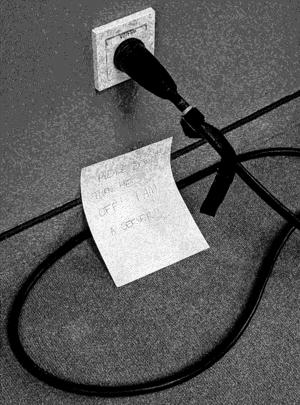
.png)
Praxis Doubling: Misfitting Infrastructures
(theory*practice)*2
Praxis is the combination of practice and theory, code and conduct, docs and protocols. We posit Praxis Doubling as a term for bringing together different kinds of praxis, making room for them to permeate one another, to deviate actions, and animate relations in other ways. Praxis doubling is itself plural. The "-ing" in doubling signals a process that is ongoing – a verb and an action that is multiplied through different orientations and approaches. By doubling praxis we aim to coalesce, seduce, and mutually shape feminist network praxes with critical access praxes. We aim to see how both of these approaches bring theory into collective action and not only make room for more accessible technical praxis, but also allow their matters to become more frictious and disputed.
To make-sense of these technical network relations, In-grid has built up a debugging practice around technical docs.Technical documentation is a resource that explains the processes and practices that make up technical infrastructures. This collective debugging praxis came about when we came into contact with ServPub's table of feminist network praxis, bringing with us our own background in collective access praxis. By disobediently making room at this collective table, we aimed to make-sense of our misffiting with the inherited figures and imaginaries of network infrastructures and their technical docs. Through embracing misfitting we disorient dialogues towards forming our own collective counter-imaginaries and figures – ones which reshape the limits and what is backgrounded within a single praxis. In this chapter, we outline how we have come to practise Praxis Doubling, and the methods we have used to facilitate this mingling of praxes.
Methods
The practices we describe here are ones that have emerged through an entanglement between disciplinary conventions and our own dis-abilities to fit within them. We engage with time scarcity, technical language hegemony, and the expectations of productivity from the situatedness of our accessibility desires and political ethics. This chapter expands on the ways in which we put these desires and ethics into practice, going through the process of working as a digital arts collective and how we approached creating critical documentation for the technical infrastructure of ServPub. We stop to reflect on the points where the tools and their sedimented politics and practices misfit us and halted the imaginary of smoothness within technological relations. Through out this sense-making of misfitting moving to make friction and in ways that we worked around, through, and within these tools to make room for ourselves and each other (Rice et al., 2024). Some of these ways include approaches to time management and note-taking, deliberately unpacking or gay abandoning technical terminology, entangling anecdotal experiences rather than writing for a universal user, and critically examining the political implications of names and logos of different tools. The technical documentation and resulting Practicing Prtocols workshops that are the outcome of this nebulous process are offered here to share what doubling of praxis may be like. We also acknowledge that the duality held within the double is not capacious enough to contain the multitude of difference and misfittings that the tools and conventions we confronted and aim to access try to erase. This chapter contains the doubling(s) of theory and practice that emerged from our particular confrontation with building this infrastructure as artists, technologists and crip, neurodivergent, and queer peers.
Background to In-grids Docs Praxis
To describe why the ServPub docs look and work the way they do, we must first (briefly) explain how In-grid works as a collective – specifically, the practices that make it possible for us to work together. The number of In-grid members hovers around thirteen to fifteen active members at any given time. Of that group, smaller clusters form around specific projects and streams of work, where approximately four to six members focus on a project at a time. When a proposed project garners the interest of enough members to make it feasible, we then confront the material conditions around everyone's time and capacity – specifically, the conditions that result from fractional and/or precarious work commitments. We work around that by allowing for some inefficiencies, such as last minute drop-outs and confirmations for joining meetings and working sessions, as well as caring for those returning after a several-month break to rejoin. We are also quite promiscuous as a collective and enjoy collaborating with a range of individuals beyond In-grid's already deviating members. For us, this does not dilute who we are but brings in a wide rage of expertise and perspectives that we feel outweighs the contribution of an experienced or expert individual. While everyone has the opportunity to contribute to our ways of collaborating, we agreed early on not to silo off our different skills into roles, determined specialisms, and isolated/ing processes, but to make room for them to be shaped by bodies inside and outside of our collective. Not only did this orient our collective towards skill and knowledge sharing in and through practice, but it also made room for projects to be more accessible to collaborators, where otherwise there might be social, technical or capacity-based barriers. We have found that even though caring for this wide range of perspectives, practices and politics takes a lot more labour, it offers room for these approaches to multiply – for them to more than double, and for us to unfold situated praxes from specific projects and relations, such as the docs and workshops we share here.
Abundant Notes, Better Make Some Room for Them
During the ServPub project, we adopted an exhaustive note-taking process – not only to document meetings, but to create how-to guides, informal educational resources, and relatable diagrams to inform everyone as much as possible about the contextual and technical details about each step of the project. These practices stem from In-grid's copious notes taken every time we meet, since we began working together in 2020. Many of our earlier materials are misplaced, mislabelled or duplicated as we have been trying over these years to feel out a way of keeping records outside big-tech tools, and in a way that is accessible to our members, however entangled they are. These notes started on a series of pads – not all of which have been tagged sensibly or have now been lost. The pads that we managed to wrangle were consolidated into an index pad, which we named the pad-of-pads – in reference to the bag-of-bags that we all have our homes.Here, we also reference Ursula Le Guin's Carrier Bag Theory of Fiction (1986) to acknowledge the role of these containers. We then moved to a shared Git repository, which some of us have integrated with local text-editing software Obsidian to keep a record of projects and events. Our current admin setup is on a Servus-hosted suite where we have a shared calendar, notes, polls, and storage space. This, however, is a more recent administrative development that we arrived at to balance the need for logistics with the need for friction, improvisation, and pause.Stefano Harney and Fred Moten, The Undercommons : Fugitive Planning & Black Study (Minor Compositions, 2013).
For the ServPub project, we had notes together on Etherpads hosted by a scattering of other collectives and organisations which we try to gesture to in the colophon of this book and wiki. These pads held our notes from sub-meetings, workshops, conversations, and saved chat logs. The notes overflowed from the working sessions we had with other Feminist server collectives such as Systerserver and Creative Crowds, where they shared with In-grid their practices and politics around setting up and maintaining these types of network infrastructures. These initial training moments were an important resource and we began this project's infinite-scroll-like pages of notes, code blocks, and annotations to try and contain it. Not many rules were put in place for this process of record-keeping, so they emerged as a chronology. The notes included references to documentation from other collaborating groups, and to "official" documentation provided by the makers of the software. Due to how fluid the process was at the time, we also recorded more affective notes and asides to each other in the same pads, reflecting the context of the information recorded. Often this context only made sense to us as collaborators and friends. However, even if not necessary to understand the technicalities of the work, these side notes allowed us to be ourselves, to centre our subjectivities and express moments of connection to and around the work being done through documentation that could otherwise be isolated and dispassionate. Slowly unfolding from this scattering of pads and notes, we started to make-sense of what these infrastructures, technical practices and their knowledges were to us and how we wanted to frictiously shape them from their misfitting.
Over time it became apparent that our unwieldy scattering of notes and ServPub's particular setup needed it's own technical docs to make room for these technical practices to take shape from the backgrounds, relations, and politics around this infrastructure. We go on to share how, through these critical-access-informed docs, we made room to question how their inherited formats for sharing technical knowledges were sedimented within configurations to dictate bodies, practices, and matters into determinate infrastructures, roles, and relations. By doubling the technical praxis of documentation with critical access praxis, we made room to access the relations, figures, and politics inherited from their configurations, and to make sense for ourselves of how these normalising relations misfit our devious collective bodies. In making room for frictious misfitting, we validated our feelings of discomfort from the pressure and inflexibility of configurations as a way to imagine how we desired to be collectively (dis)oriented otherwise.
Sedimented Norms
Technical documentation is a form of knowledge exchange that has been fairly standardised and sedimented within institutionalised computing contexts such as computer engineering – and before that from electrical, mechanical and more specifically industrial engineering and design. In these contexts, the promise of technical documentation is to provide a legible understanding of how something was built and from there be able to maintain it within specific regimes and to develop it further within the particular imaginaries of the system it is embedded within.Legibility can be contested when we talk about language written for and by a "specialist" group. The expertise of this artefact, however, also means that the docs become a compendium of standardised, abstracted, and streamlined processes of infrastructuring. Jeniffer Gabrys might call this a "flat-pack cosmology""Think of the flat pack that consists of an itemized inventory of parts, including atomized images of assembly, with connecting actions signaled through arrows segueing across framed sequences toward a clear outcome."(Gabrys 2019, 22) – one where technologies and their practices are configured into determined infrastructures, which hold in place specific worlds and politics. Miriyam Aouragh and Paula Chakravartty's Infrastructures of Empire (2016) offers an understanding of how the promises of technological freedoms through specific determinate infrastructures can bring with them their background – and often the dominant militaristic protocols and politics they are produced through. Technical docs, through this efficient orientation, offer selective points of access to their practices that dictate the reader/user to use the tool/product in a specific order or within a specific relation. The selection orients them to give just enough information to make the tool knowable and practised in the way it was intended to be, but also encoded so that only a specific role or category of person can access them. Aimi Hamraie's tracing of the figure of the Flexible User (2017) describes how these inflexible flat-pack configurations actually aim to shape users – and the human factor they make up – into normate and generalised figures that fit within their plans. This figure of the user is often whom such technical docs are made for, and we will revisit the user further on in the chapter when we talk about improvised roles.
Through their encoding, encrypting, and isolation of specific practices and their knowledges, technical docs configure the erasure of not only the affective and human presence from the systems, but also their backgrounds and politics. By prioritising "efficiency", these docs do not question the ways they demand bodies, communities, their infrastructures, and their practices to bend to their normalising configuration. For example, if we take Tinc's official technical docs,See, https://tinc-vpn.org/documentation/Introduction.html#Introduction. there is no room made to offer any of the politics of the software's makers, or for how they felt about this software – just what seems to be enthusiasm for its technical capacities. Outside of this affective and political critique there is also no effort made within these docs for them to be accessible to non-experts, both in the language they use and the way they structure and offer up their matters. By design, docs do not usually reveal anything beyond a certain level of utility of a system. While open-source platforms will make more parts accessible, they are still not annotated, documented or legible to a wide range of capacities. This orients these technical practices and infrastructures to only be accessible to anyone who already knows how to navigate technical files or code.
This sedimented configuration of how technical docs share practices and knowledges not only limits the capacities of what these network infrastructures can do, but also who can manifest them. The isolated technical knowledges held in docs highlights how these practices are held apart from their theory, how their sociality and background are hidden from view, and how this beckons for us to seduce them into devious praxis.
ServPub Docs In-Praxis
This section will dive deeper into the specifics of how In-grid puts in practice the ideas and theories with which we open this chapter. To mark this transition we are mobilising our "in-" prefix which, following in the footsteps of Trans-feminisms' use of "trans-" as a prefix"The dash and the space after it are intentional, indicating that each term puts pressure on, modifies, and is in critical combination with each other term. Trans- feminist and queer names formations of feminism and queerness that centre trans lives and analyses; transness that is inseparable from queer and feminist lives and analyses; queerness engaged with (and learning from) trans and feminist lives and analyses." (Cowan and Rault 2024, xvii), we use "in-" to indicate that we will be mutually shaping and shaped by the word that follows. For us this is a way of making sense of the materiality and relations we work through as Queer Feminist, and a way to process all of the trouble we get or find ourselves "in-".
Here, we explore how we navigated working with the conventions of technical docs within a practice that applies the theories of critical access, and the friction between them in the context of technical legibility – bringing the docs in-praxis. This is where we make room for these sedimented technical tables, figures, discourse and knowledges to be accessed, debugged, and troubled through our multiples contexts of praxis. This disorienting trans*praxis – crossing between critical access and feminist networks – describes how these approaches have shaped our network infrastructures in action. In this section, we highlight how this crossing of bounds, merging of methods, and breaking down of technicalities can open up the plurality of contingent possibilities for how infrastructures can be manifested by collectives, and improvised through their situated politics and practices.
To help discuss a few of these multiplications we are including snippets and transclusions from the Servpub docs to share how these disciplines of theory and practice have shaped one another. We have made these in-trans-clusions clear with dotted bounds that both shows the separation but room for them to touch. The excerpt below is a key example of our trans-praxis, where within the front page of the docs we make room for critical access praxis to multiply our technical praxis. In this section, we offer up how we have worked with Kelsie Acton's notion of semi-plain language (2023) to try to challenge these inaccessible and sedimented norms of technical docs. This approach makes room for the documentation of technical practices to be more accessible to different backgrounds, but also for their knowledges and expertise to be disputable and shaped by those taking it into praxis.
Access (〜 ̄▽ ̄)〜See, https://wiki4print.servpub.net/index.php?title=Docs:00_Contents.
Acton states this as:
Note on writing: This chapter is written in what I call a semi- plain language style. This means I do the following:
- Use an active voice
- Mostly use the 6000 most common words in the English language
- Use short sentences
- Use 14 point font
- Use “I” and “you”
Following Acton In-grid understands this as not trying to assimilate dialogues into dominant technical talking points. Instead, In-grid approaches this practice through critical access as to distribute where the expertise of systems are located, making them disputable from many experiences, backgrounds and knowledges.
As we collectively manifested ServPub through semi-public and public workshops, closed working sessions and independent working, this practice of copious – if atomised – note taking moved towards a pastiche of devious technical docs. In this process of coalescing ServPub's technical documentation in-trans-praxis, the docs became politically implicated and entangled in the backgrounds we brought with us. The docs that we eventually arrived at are somewhere between internal notes and personal asides, technical docs and DIY instructions: a simply-written, narrative-moderate set of instructions on building an ambulant self-hosted server with a VPN. These deviating docs make room not only for them to be accessible in form, but also for the social and political relations which hold our collective infrastructure together to also be accessible, known and figured out.
Why Tinc?https://wiki4print.servpub.net/index.php?title=Docs:03_VPN_with_Tinc
We are using Tinc because it is inherited from the history of projects that we are working with. This setup pulls from the original work of XPub and their HUB project, which used it to form experimental server space for their students which could get passed institutional firewalls securely and let devices roam. This led to the development into other projects like Rosa and the ATNOFS project, as well as Constant's Circulations. Similarly, we used the setup to form an experimental network of servers to form this Servpub collective publishing infrastructure.
You can read more on this history at the bottom of Constant's Circulations about page under the heading Radical Referencing.
Below is a list of other resources and docs on how to set up tinc that we have worked from/with:
- XPub docs - Tinc VPN install
- Lurk docs - Tinc VPN install
- Psaroskala zines - Making a private server ambulant
In the background of ServPub there are also pre-existing separate docs for the Tinc setup by XPUB, Run Your Own, and the many versions and docs of Wiki4print hosted on their MediaWiki instances. This diversity of docs is impressive, as we feel the background and priorities of these different groups come through. What do they care about? How are they practising and approaching these technologies and infrastructures together? And how do they contextually share and shape the abstract social relations that make up these technical practices? However, this same abundance and specificity can make these knowledges inaccessible to different groups and communities. This can of course be done intentionally, so that there has to be a certain level of intimacy given to the infrastructure, its politics, practices, and technologies to manifest them. This is highlighted in Simms and Marangoni's En-crip-ing Time (2025) where the work is purposefully obfuscated and en-cripped so it is only known through radical practices of intimacy and care. Here though, In-grid –In-praxis with technical docs – wanted to form a practice of knowledge sharing that could both orient towards being accessible and disputable, but also towards holding the collective backgrounds that ServPub has unfolded from.
Activating the Docs
Throughout our practice of technical docs we have been questioning how we can make room for them to not only be accessible from a plurality of capacities and backgrounds, but also open up the technical practices they document to be disputable and improvisable by those manifesting them. In this section, we reflect more deeply on how we have explored this later step, and how we approached making the docs and the practices they offer to be re-interpretable and disoriented from a plurality of embodied and situated expertise. To do this, we formed a set of workshops from these docs that we called Practicing Protocols. The name, Practicing Protocols, itself emerges from both its feminist STS roots, but also through a crip understanding of protocols as a place to dispute expert knowledge of systems through counter-protocols.“The feminist STS concept of “protocol” (Murphy 2012) describes methodological practices that become both standardized and reiterated in pursuit of particular political goals. Crip making adopts protocol, alongside expert knowledge, as a site of inquiry into design methodologies more generally". (Hamraie, 2023, 311) Through this framing, these workshops aimed to make room for people to accessibly be in touch with technical practices, and along the way, make sense of the misfitting we as a group felt from the normalised and sedimented figures and relations these network configurations hold in place. We developed this workshop as a way to not only make accessible the often obfuscated and encrypted practices of digital infrastructure, but to also bring them into dialogue with the operational concepts and metaphors they operate through. In doing this, our workshop aimed to create a space where people can bring the knowledges they have gained in practice together with the embodied knowledges and expertise they brought with them from their backgrounds. To dispute, improvise, and disorient these protocols in action we also turned to the methods of TITiPI's Disobedient Action Research (Pritchard et al. 2021), to inform us of how to collectively dispute what these systems are, how we make-sense of them, and how we would want to imagine, shape, and practice them otherwise.
So far we have run the Practicing Protocols workshops in two iterations: one as part of a combined panel hosted by In-grid members at 4S/EASST in Amsterdam,See, https://nomadit.co.uk/conference/easst-4s2024/panel/14253. and the other internally with In-grid members. The workshop at 4S/EASST, an international Science and Technology Studies (STS) conference, was run as part of a combined panel, where we presented work alongside TITiPI, NEoN Digital, researcher Júlia Nueno, as well as members of SHAPE. The panel presented a spectrum of community-organised infrastructure, and this iteration of Practicing Protocols aimed to offer up space for people to make-sense of these collective network infrastructures together. The second workshop was run internally for In-grid members who were not specifically involved in ServPub and may have missed out on learning these skills or understanding these practices and their knowledges. This second workshop within In-grid also importantly moved from being an accessible representational process, like we did at 4S/EASST, to part of a working session were we set up a Virtual Private Server (VPS) and foundational digital infrastructure for In-grid itself. Setting up this foundational infrastructure through our misfit debugging practices, allowed us to more intimately establish the structure through our own collective intentions and desires <3.
Bellow we highlight two points of praxis where we emphasise the sense-making of misfitting within configurations that unfolded from the Practicing Protocols workshops. The excerpts aim to provide a snapshot of how these different groups, contexts, and expertise felt and made friction that aimed to improvise and deviate these network norms towards the collective body-minds we are in dialogue with.
Misfitting Contracts...

In this section, we raise one of the key misfittings that was made sense of during this workshop to offer up how this process made room for us to question and disorient the sedimented configurations of network infrastructures. To do this we bring focus to Secure Shell (SSH), and how – when making-sense of this protocol with this group –we started to unravel not only how it is abelistly figured, but also how the relations it configures and holds in place are shaped by a specific kind of body and social relation. It was through the metaphor of the "handshake" through which SSH mobilises that this misfitting was brought into question – particularly how the "handshake" between bodies is meant to represent an act which forms safe and secure communication between devices within sedimented network configurations.
The following in-trans-clusion from our docs illustrates how this metaphor can be used.
Security via SSH KeysSee, https://wiki4print.servpub.net/index.php?title=Docs:01.3_SSH.
SSH Keys are user specific and are used in addition to a shared login password to make it more secure than traditional usernames and passwords. To make this method of access truly secure we will need to eventually disable password-only login.
SSH is often metaphored as a handshake between devices, but you can also think of the shared public file as the key, and the private file as the lock. Locks are non-transferrable and have to be generated per user.
To generate a key each user must execute this command on their laptop:
ssh-keygen -t rsa
This will generate a pair of public and private keys. You will then need to fill in the information requested (most of it is optional so you can leave it blank) and set a password (Also optional).
You’ll receive something like this:
$ ssh-keygen
Generating public/private rsa key pair.
Enter file in which to save the key (/home/me/.ssh/id_rsa):`
Enter passphrase (empty for no passphrase):
Enter same passphrase again:
Your identification has been saved in /home/me/.ssh/id_rsa.
Your public key has been saved in /home/dave/.ssh/id_rsa.pub.
The key fingerprint is:
ef:69:3b:9e:3b:2d:99:0d:ac:57:4e:b2:92:82:bd:9f me@hostname
The key's randomart image is:
+--[ RSA 2048]----+
|                 |
|                 |
|                 |
|                 |
|        S.       |
|         .+ o    |
|     o   o.%     |
|    . o +oXo+    |
|      .+E=B*
+-----------------+`
The shared key is the:
id_rsa.pub
The private Key is the:
id_rsa
When accessing the servers through SSH together, we reflected on how our devices were interfacing through these sedimented metaphors and figures. As a group here we started to question what a handshake represented within this configuration. The person shaking the hand is firstly assumed able-bodied, or assimilating to that norm, but also – when we take in the backgrounds and histories of these network infrastructures – they are also predominantly male and white. Therefore, this figuration of the handshake is a place where many of us felt we misfit, where we did not want to be "pulled in by the hand" and into determined and limiting forms of contract-making as trust, and the frictions we felt around this. The following notes emerged from the workshops and our collective reflection and writing on SSH.
2. SSHSee, https://servpub.net/ci_protocols.html.
- authenticity of host can't be established. - trust issue
- hospitality; being a respectful guest & welcoming host (simultaneously)
- server playing hard to get but finally got a seat at the table
- the terminal visually looks the same whether its your local machine terminal or a different shared machine, so it feels like the same. Because you are bringing somewhere else to you instead of you going.
- there is an obscurity to the virtual
- How could an SSH feel more material, closer
- Anonymity
- temperature feels very material - what else could be included i.e. location to the server
- physically caring for it's wellbeing (plugged in)
- is the handshake appropriate? i.e. banking, trumpy handshakes, getting pulled in by the hand, whats the origin of the expression?
- is it about a manifestation of trust - and so what else could signify this
- server hugs
In dialogue around this configurational misfitting the group started to orient towards what we would rather be connecting and building trust through – how we, as a group, wanted to imagine and practise these networks through intimacy and care. From this sense-making of how these infrastructures have been normalised to specific bodies, we started to question how we wanted to shape and improvise them to our relations and desires. There was more to the conversation but the collective notes of the workshop quoted above shared the "server hugs" that we desired together – the soft, comforting embrace of networks we wanted to shape and be held by.
Improvised Roles...

In this section we highlight one of the main misfittings felt by In-grid members during this workshop. The misfitting that was unavoidable here was that of the determined user of these servers. The user is the individualised account and role that permits specific limiting relations within the determinate hierarchies of the system. An example of this is the demarcation of a user to a user within the SUDO group. SUDO group users are members of a user group called "Superusers", who have more access to perform sensitive commands. It is often figured as a way of elevating users' privileges, which in turn allows them to do things like update or install packages, restart or disable tasks. The term SUDO is a truncation of the phrase "Superuser do."
We read the figure of the user here as one who is isolated within a closed system, not only through technical protocols but also through the non-existent capacity for and resulting invalidation of any social backgrounds. By finding friction with the configuration of the user within network infrastructures, we question who these technical relations are imagined for, but also what the limits of their relations and capacities for intimacy are.
Adding UsersSee, https://wiki4print.servpub.net/index.php?title=Docs:01.2_Creating_Users.
To make a new user, use the command below.
adduser <nameofuser>
[!note] You will be prompted to input a password and it is always better to give different users different passwords for security.`
If you want to give this user sudo access, then they have to be added to the “sudo” group. You don’t need to create this group, it exists by default and you can just add or remove users from it. The sudo group is stored in this directory: /etc/sudoers.d/
To add a user to the sudo group run the following command:
usermod -aG sudo <nameofuser>
When setting up our user accounts together on the server one by one, we questioned how these roles misfit our collective relations. The user role as stated above only holds the capacity for a determinate relation – one where a person interfacing with the server has to flex to specific relations and norms. When we brought this in touch with how we make room for our members to "perform" in our networks, the role of the user had very defined and hard limits – ones that could not hold the diversity of bodyminds, capacities, and perspectives we desired and embrace as a collective. In this space of misfitting we amplified this friction by starting to imagine what roles and relations we wanted to manifest within our network infrastructures.
When making this room to disorient the sedimented role of the user within network infrastructures, we began to question how we wanted to be together on this server. From this point of collective deviation we started to shape and perform the user through our own metaphors and figures. These ranged from maintainers and carers, but also to characters and personas. These figures brought a blend of In-grid's background of performances, parties, and arts with those of infrastructural practices and labours. From this point of misfitting and friction-making – alongside many others in the workshop – In-grid started to shape and practise the social and technical networks we desired to be in together.User ProtocolsSee, https://femfester.in-grid.io/.
Not users but:
- maintainers?
- carers?
- members?
- players?
- collaborators and caretakers
- it is nice to be individuals in a collective
- characters
- conversationalists
- persona
- infra as another collaborator not users/using
- fistulas
Praxis*∞
In-grid – and more broadly the group involved with ServPub as a whole – is made up of many individuals with still more multiple practices/praxes. For us, this shares how this publishing infrastructure is shaped by many approaches and politics towards collective and collaborative practice. As we have worked to build an infrastructure which tries to reflect the desires and concerns of those who have built and will use it, we have also created a way of recording that work which is also shaped by of our bodyminds and backgrounds. Traditional documentation intentionally omits affective details. On a practical level this is a useful way of keeping work succinct, searchable, and quick to parse and implement (ideally, anyway). What this can do however, is exclude non-experts by glossing over information about why you might take a particular action instead of another, making steps appear arbitrary or opaque.
Through learning and making this infrastructure, we recognised that not being able to understand the reasoning behind why a step has been taken in a set of documentation makes it difficult to deviate from a prescribed path or a set tool-kit. One of our aims for creating critical-access-informed docs is to create enough room around these technical processes to allow others to make these decisions – for example, whether they want to follow a certain setup or not – and to build the capacity to make more creative choices and cobble together their own improvised methods of infrastructuring collectively.
Reflecting back on the plurality of praxis we have shared in this chapter – from the ServPub infrastructure, to our resulting access-informed docs, and the Practicing Protocols workshops we made with them – these entangled and overflowing layers of praxis demonstrate how we have brought together disciplines and their methods in in-trans-practice to unfold the predetermined configurations of network infrastructures into and through other performances, matters and relations. Here we highlight how the critical access praxis that In-grid is engaging has mutually shaped and transformed the background and history of feminist network praxis from which this project builds. Through this mutual shaping we show one way in which critical access can make room for prescribed configurations, infrastructures, and their politics to be made more accessible to a range of capacities and contexts in a way that they are disputable and validate the diverse forms of expertise and knowing that artists, non-experts/technocrats and Feminist hackers form when in touch with them.
<unicode> ‡ ※ ☛ </unicode>
Whereas a book would usually end with a "list of references" or "works cited," this book’s final chapter concerns the practice of "referencing" and the word "reference" as a verb, not a noun. This change of perspective underlines how the creation of references, configurations of authorship, indexing of knowledge, and other scholarly activities (usually considered mundane and less important than the actual knowledge itself) are in fact an intrinsic and important part of the constitution of knowledge: what we know cannot be separated from the formats of knowing. To use another term, academic referencing is part of creating what Celia Lury has referred to as an "epistemic infrastructure" – the organisational structures and facilities by which knowledge becomes knowledge. Like other formal cultural expressions, academic referencing also follows formal properties of circulation, composed and upheld by technical infrastructures with specific features.Celia Lury, Problem Spaces: How and Why Methodology Matters (John Wiley & Sons, 2020), 3.
As mentioned in the introduction, ServPub explores self-hosting as an infrastructural practice, the potential for autonomy in the publishing process, and not least the role of communities in this. Referencing is to be seen in the same perspective – as an exploration of the potential for social and technical autonomy in the process of making knowledge.
Referencing is part of a constellation of practices such as quoting, indexing, paraphrasing, annotating, writing footnotes, selecting, and so on. Inherently, they can take many forms and do not necessarily work together. For instance, if we write an email to a friend saying, “My neighbour told me the traffic has dramatically increased in the street these last two years,” we are quoting and referencing. But we are not making the reference explicit (we are not naming our neighbour) and we do not index it. Academic publishing, in turn, establishes fixed and formal procedures to quote, index, annotate, and so on. What are the logics of referencing and formatting knowledge in academic publishing, considering social, technical, epistemic, or other forms of autonomy?
Radical referencing
A recurring term in the collective process has been "radical referencing." It was brought up by Systerserver in a collective conversation on how, what, and who to reference in the making of this book – that is, in our collective practice of referencing:As explained, the making of references is partly inspired by a real-life social encounter and is therefore also situated, embodied, and even non-verbal. However, a further investigation of the term "radical reference" leads to a distributed collective of library workers, Radical Reference (RR), which operated in the in the United States between 2004–2017.add link? An important task in librarianship is to seek and make available information, a process deeply dependent on the existence of catalogues – that is, an infrastructure of references, indexes, and data. Many of the formal requirements in referencing (for example, stating authors, publishers, years of publication in a correct manner) simply come from the need to build and maintain an infrastructure where one can identify and access publications.within systerserver we started to introduce the concept of radical referencing -- as a feminist strategy to share knowledges. Radical referencing came to us after a meeting with an artist, publisher and performer we know for years A.Frei, nowadays called https://aiofrei.net/. aio frei is a non-binary sound artist, relational listener, sonic community organizer, collaborator, sonic researcher, record store co-operator, graphic designer, experimental dj and mushroom enthusiast based in zürich.ooooo continues: “they organize concerts, experimental audio formats and collaborate on listening performances and collective listening settings. aio works as freelance graphic designer focusing on sound related projects, small editions and art books and give weekly risography-print-workshops. they are deeply interested in questions concerning “ethics of listening” – in socio-political, environmental, embodied and queer practices of listening within its situated contexts, emancipatory possibilities within the sonic realm, forms of non-verbal communication/improvisation and relational composition. aio frei is co-founder of oor records/oor saloon. oor records is a collective, cooperative and honorary operated record and art bookstore, organic archive and social gathering place for engaged ears.oor records they were invited in the Slamposium of Mothers & Daughters, A Lesbian* and Trans* Bar in Brussles. The event took place 15–16.10.2021 at Kaaistudios, see https://kaaitheater.be/en/agenda/21-22/slamposium. We met after § years not seeing each other. In the after conversation of the performance A.Frei coined the term.”
RR questioned the existing infrastructure from an activist perspective. They argued that the librarian is both a professional and a citizen, who has come to realise the activist potential of their profession. As librarians Melissa Morrone and Lia Friedman put it, “RR rejects a "neutral" stance and the commercialization of data and information, works towards equality of access to information services,” and therefore actively seek to form coalitions with activist groups.Melissa Morrone and Lia Friedman, "Radical Reference: Socially Responsible Librarianship Collaborating With Community," The Reference Librarian 50, no 4 (2009), 372, https://doi.org/10.1080/02763870903267952. RR is by no means a new thing. Members of the American Library Association (ALA) also took part in the Freedom Libraries movement in the 1960s, addressing race-based inequities in American library services.Morrone and Friedman, “Radical Reference,” 379. As part of its activities, RR assisted journalists and the public in anything from finding information on the radical right on college campuses“Question: Radical Right on Campus,” Radical Reference, submitted by emk on 13 January 2005, http://radicalreference.info/node/508. to providing references on cycling in London.“Bicycling Resources,” Radical Reference, submitted by MRM on 24 April 2005, http://radicalreference.info/node/508. In this sense, "the library" is not just a building with shelves – potentially, it is everywhere.Morrone and Friedman, "Radical Reference," 378–79.
What has appealed to many of the participants in the writing of this book, and sharing the notion of "radical referencing" as a working principle, is this idea of a wider and living library of references. There is a collective interest in situations where references are not always identifiable as objects of knowledge suitable for a conventional library (ascribed an International Standard Book Number (ISBN) or a Digital Object Identifier (DOI), for instance) – let alone listed at the end of a book. This would, for instance, include the practices of activists and others, which often lack "proper referencing" (ore referencing considered "proper" in academic writing) and where formal standards (or "styles" of referencing ) can be hard to meet because they produce knowledge through collective efforts (workshops, social gatherings, and conversations) or that knowledge is not fixed (preserved in a wiki or other technical system).
To some, there is also an appeal in the recognition of the librarian’s labour as an activist, or perhaps rather the activist as a librarian. RR resembles other library projects found in grass-roots software culture, where it is common (also to the authors of this book) to use Calibre software to access and build "shadow libraries."Calibre is a a free, open-source e-book management software. Some authors have, for instance, used Digital Aesthetics Research Centre’s Semi Library in the process – built on Calibre and developed in collaboration with Martino Morandi Roel Roscam Abbing. Semi Library is a library of collective readings (rather than books) used in a collective process of research, where each publication has an associated pad for collective note-taking. As such, it belongs to a wider network of shadow libraries that would include what Olga Goriunova refers to as different subject positions, such as ‘the thief’, ‘the pirate’, ‘the meta librarian’, ‘the public custodian’, ‘the general librarian’, ‘the underground librarian’, 'the postmodern curator of the avant-garde', and more. Olga Goriunova, "Uploading Our Libraries: The Subjects of Art and Knowledge Commons," in Aesthetics of the Commons, ed. Shusha Niederberger, Cornelia Sollfrank, and Felix Stalder (Diaphanes, 2020). That is, for hackers and activists to become their own "amateur librarians," building and sharing catalogues of publications – not only to distribute knowledge, but also to curate knowledge on particular subjects, and to preserve knowledge prone to erasure or other types of discrimination. Proper referencing here becomes a question of care and maintenance of an epistemic infrastructure, such as a catalogue or an index of references at the end of a book, in the pursuit of autonomy.
In the following, we take these appeals as points of departure for an exploration of the logic of referencing, and the potential implications for autonomous academic referencing.Reading through the book, you realise that “we” is used in many different ways. There is the "we" of a participating collective, the "we" of all authors, and the general "we". As the sentences of this chapter have been typed by the three of us, the "we" mainly refers to us – Christian, Pablo, and Nicolas. Yet this chapter is also about complicating the understanding of this "we." It has been written in dialogue with the other authors of this book. And through the various forms of referencing we discuss, many other voices are spectrally present in this "we." The trio behind this "we" is therefore continuously expanding in the various collectives that made this book possible. In other words, if referencing is a compulsory formality in the publication of research, we ask what purposes, and whose, this formality serves. Referencing in a radical perspective is not just a matter of autonomy from certain references, or types of referencing (such as the formal academic one), but rather an examination of the condition of all referencing, and potentially also an exploration of the forms that a liberation from referencing would potentially take – in recognition of other collectivities than the ones that occur in a, say, research community (connected by a network of references), and also in recognition of the various technical infrastructures (such as the MediaWiki or Etherpads used for collective writing) that make referencing in the ServPub community possible in the first place.
Academic akribeia and citation styles
Writing culture extends more than 4,000 years, and making reference to other manuscripts has always been practiced. For instance, Aristotle would often reference his mentor, Plato, but as scholar of Ancient Greek, Williams Rhys Roberts has argued: “The opening chapters of the Rhetoric do not give Plato's name, but I wish to suggest that they contain some verbal echoes of his Gorgias which are meant to be ‘vocal to the wise.’”William Rhys Roberts, “References to Plato in Aristotle's Rhetoric,” Classical Philology 19, no. 4 (Oct., 1924), 344, https://doi.org/10.1086/360610. Referencing does not inherently involve a direct mention of a name, and the study of ancient texts involves much debate on these intertextual relations. Until the nineteenth century there was no need to specify the ways in which one speaks of others. As readers of scholarly articles will know, there are nowadays set traditions of references that all authors must abide by, formulated as "styles" of referencing. The organisation of citing, listing, and other tasks finds, in other words, its form in a pre-defined template. This template is much more than a mere formality and belongs to an academic history of knowledge governance and an intellectual history of epistemic infrastructuring.
One widely used standard for referencing within the arts and humanities is the American Modern Language Association’s standard, the MLA format. MLA, along with several other standards such as the Association for Computing Machinery’s (ACM format) or the American Psychological Association (APA format), indicates that the act of referencing belongs to an institutional practice of "scholarly" work and academic akribeia – that is, a rigorous keeping to the letter of the law of the institution (and not just its principles).Akribeia is a Greek (ἀκριβής) word meaning exactness, precession, or strict accuracy. It is often used in a religious sense, to refer to the accordance with religious guidelines, found in the Acts of the Apostles in the Bible, where Paul says: "I am a Jew, born in Tarsus in Cilicia, but brought up in this city, educated at the feet of Gamaliel according to the strict manner [akribeian, ἀκρίβειαν] of the law of our fathers, being zealous for God as all of you are this day.” (Acts 22:3). In some research guidelines the notion is used to describe “academic acribeia” (such as the PhD Guidelines from Aarhus University ("Guidelines and framework for the preparation of PhD recommendations at the Faculty of Arts, Aarhus University," Aarhus University, accessed 7 January 2026, https://phd.arts.au.dk/fileadmin/phd.arts.au.dk/AR/Forms_and_templates/Ph.d.-afhandlingen/Guidelines_Recommendations.pdf. With a certain ethical – or even religious – undertone ("the right way"), it performs as a marker of "proper" knowledge within a particular field of knowledge, serving to demarcate it, exactly, as a field of knowledge. The Modern Language Association was, for instance, founded in the late nineteenth century when programmes in language and literature were being established at universities to promote and preserve a national cultural heritage and identity. Formatting references was a way for librarians to index reliable and useful knowledge in a field, and to provide insights into a network of scholars referencing each other, as well as into what and whose knowledge mattered the most. Such practices of demarcation and impact cannot be separated from the governance of research and are no less important in today’s austerity measures of knowledge production.
Besides librarians (as mentioned above) and academic associations, publishers were also keen to build epistemic infrastructures for referencing. The Chicago Manual of Style (used in this book) was historically the first attempt to specify clear principles for making references – quoting in a text, and listing the works quoted. It was first invented by the University of Chicago Press in the late nineteenth century to streamline the work of editors who had to produce books out of handwritten manuscripts and therefore drew up a style sheet and shared it in the university community.“About the Chicago Manual of Style,” The Chicago Manual of Style, accessed 26 September 2025, https://www.chicagomanualofstyle.org/help-tools/about.html. Over time, it has become one of the most widely used reference guides for writers, editors, and proofreaders. It comes in two versions: The “notes and bibliography” where sources are cited in numbered footnotes or endnotes, and the “author-date” where sources are referenced briefly in a parenthesis that can be matched up with the full biographical information in a concluding reference list. As we will discuss later in this chapter, a practice of making footnotes, and also of "bracketing" references are more than anything a particular cultural practice that has become naturalised within the world of academic publishing, but it also comes with particular histories and assumptions that reflect hierarchies of power, knowledge, and knowledge production. For, after all, what is a reference? And under what terms and conditions does an academic reference and authority occur?
As an illustrative example, The Works, Typologies and Capacities by Dutch artist Jeanne van Heeswijck uses 26 different types of potatoes to visualise all the collaborations and projects undertaken by Van Heeswijk between 2001–2019. The installation is divided into 26 typologies with 26 specific capacities, each linked to a potato species. Consider, for example, the artist who contributes to a work or a project, but also the activist, the teacher, the cameraman, the sound man, the reporter, the curator, the musician, the actor, and so on. The choice of different potato varieties as materials symbolises those typologies and capacities in a network.

Authorship and research ethics
"Potato style referencing" does not yet exist in scholarly akribeia. Instead, there is an obsession with origin in a different sense: knowledge has to come from someone, somewhere, sometime. The typical bibliography encodes limited entities: time in the form of dates, spaces in the form of locations (sometimes), people or collectives of people in the form of names, organisations in the form of publishers. Here the figure of the author, treated as a self-contained unit, plays the most central role. The scope is much broader than merely establishing "the letters of the law" (to cite the formally correct way); it has to do with a more idealistic research ethics. Establishing authorship is a question of acknowledging the origins of knowledge, but it is also a scientific community’s promise of holding people accountable for knowledge, and for guaranteeing the validity of that knowledge: at all times, knowledge must be ready to be verified by others, and authors must be prepared to accept contradiction.
This type of research ethics was the topic of the acclaimed Vancouver Convention in 1978, where a group of medical journal editors decided to establish a rule of conduct for scientists, editors and publishers, known as the Vancouver Guidelines.Johanne Severinsen and Lise Ekern (updated by Ingrid Torp), ”The Vancouver Recommendations,” The Norwegian National Research Ethics Committees, last modified 10 August 2020, https://www.forskningsetikk.no/en/resources/the-research-ethics-library/legal-statutes-and-guidelines/the-vancouver-recommendations/. Although these ethics standards were developed within the medical sciences, they have been applied within all the sciences, and also the arts and humanities. But are they easily applicable in a book such as the one you are reading now?
The Vancouver guidelines outline four criteria, by which all listed authors must abide.Severinsen, Ekern (and Torp), ”The Vancouver Recommendations,” 2020.
- An author is someone who has made a substantial contribution to the work.
- An author must have reviewed the work.
- An author must have approved the work.
- An author is accountable for the work.
These ethical standards clearly bring a level of order to academia (letters of law to abide by), but a critique often raised is that they do not sufficiently consider the extent to which authorship – and making reference to authorship – are situated within cultural communities of practices.Brad Wray, “Should What Happened in Vancouver Stay in Vancouver?” AIAS Seminar, Aarhus Institute of Advanced Studies, Aarhus University, 25 September 2025, https://aias.au.dk/events/show/artikel/aias-seminar-brad-wray. In some types of knowledge production, such as particle physics, for instance, it will make perfectly good sense to include hundreds of authors who have all contributed with specific tasks, but who cannot all possibly have read the final proved version and therefore be held accountable. In other research traditions you would credit people who cannot read, for example in some areas of social anthropology, acknowledging the productive role of local informants. In interdisciplinary research, an author within one field may have read and approved a section contributed by a researcher within another field, but with no authority to determine the validity of the knowledge.
In other words, even in the established world of research writing and research publication, the question of where an author is, and who speaks in a text, poses challenges. The complexity of enunciation points to a different type of research ethics, where one is less concerned with the validity and verification of the content, and more with the ethics of textual production itself – that is, an attention to the often unorganised patchwork that knowledge sharing is and becomes in a text (including the writing of this one). As Roland Barthes points out, text functions as textile:Not only in literary writing, but also in research writing, one might argue that language does not always refer to "some-thing" but – in the extreme – also to a commonality, something shared; a set of conditions for common ground where the question of ownership and authority remains undefined, where meanings swerve, and new sensibilities and habits arise.Christian Ulrik Andersen and Geoff Cox, "Editorial: Feeling, Failure, Fallacies," A Peer-Reviewed Journal About Machine Feeling 8, no. 1 (2019), 5, https://doi.org/10.7146/aprja.v8i1.115409. In similar ways, the stipulated originality in science and research (The Vancouver Guidelines) is partly refuted in this publication; the wiki4print is not only a repository tool for print but contributes to a larger whole and network of voices. No authorial voice can be raised fully; rather, it is a chorus of collective voices that takes on a name – Systerserver, NoNames, In-grid, ServPub, SHAPE – in full recognition of the wider "tissue" of a culture’s immeasurable voices of people and collectives, including Martino Morandi's work on wiki-to-pdf environments (TITiPI), Constant, and Open Source Publishing's (OSP) work on web-to-print, and many more, mentioned in this book.“[...] a multi-dimensional space in which a variety of writings, none of them original, blend and clash. The text is a tissue of quotations drawn from the innumerable centres of culture.”Roland Barthes, "The Death of the Author," in Image Music Text, trans. Stephen Heath (Hill & Wang, 1977), 146.
The demonic grounds for referencing
As we have seen, scholarly akribeia is connected to the assignation of an origin which takes the form of the author’s figure to assess who is speaking as well as for verification. Rather than a fully coherent technique, this form of referencing falls short of accounting for the academic contexts in which knowledge is produced and cannot grasp the "textile" dimension of discursive production. This has even stronger implications for those who produce knowledge outside of academia and those whose knowledge has been historically erased or appropriated. Indeed, referencing’s epistemic dimension cannot be separated from a larger problem of symbolic capital production. It is a key instrument in an economy of visibility central to the contemporary knowledge factory and a vector of exclusion of the subjects that are not deemed good "referents."
In that perspective, scholarly akribeia needs to be challenged on political grounds as well. Katherine McKittrick’s discussion of Sara Ahmed’s intervention in the politics of referencing gives a sense of both the urgency of interventions and their complexity. In her book Living a Feminist Life, Ahmed adopts a citation policy that excludes white men. The gesture to remove white men from citations and bibliographies opens up a space for the inclusion of other scholars and simultaneously emphasises the pervasive reproduction of a gendered and racial canon. What is naturalised under the routine referencing of the same canonical authors as a useful procedure for attribution is revealed as a conduit for white patriarchal authority.
In her "Footnotes essay," McKittrick acknowledges the “smartness” of Ahmed’s proposal but problematises it further. Is it enough to simply replace some names with others, leaving the structure intact? And “Do we unlearn whom we do not cite?”Katherine McKittrick, “Footnotes, (Books and Papers Scattered about the Floor),” in Dear Science and Other Stories (Duke University Press, 2021), 22, https://doi.org/10.1215/9781478012573-002. McKittrick’s proposal is that we “stay with the trouble” of referencing, and that we suspend the urge to make the cut. Writing should acknowledge its unstable foundation on demonic grounds:The reason for this goes beyond a mere post-structuralist stance. An insistent question needs answering: what kinds of collectives are implied and elicited by different forms of referencing? How to relate and do justice to the kinds of collective attachments and entanglements that cannot be resolved by assigning a name? How to balance the generosity and necessity of acknowledging, expressing, nurturing one’s relations and resisting at the same time the form of interpellation that is inherent to the naming, the assignation? How to acknowledge one’s debt without any simple recourse to "credit"? There isn’t really one satisfying answer to these questions. In part, because there is a form of recursivity to citational practice that tries to do justice with the various levels of agency involved in a creative process. As ooooo (who is part of Systerserver and the making of this book) observed in a commentary to this text, spaces have their role to play in bringing together ideas:“[...] the demonic invites a slightly different conceptual pathway—while retaining its supernatural etymology—and acts to identify a system (social, geographic, technological) that can only unfold and produce an outcome if uncertainty, or (dis)organization, or something supernaturally demonic, is integral to the methodology.”Katherine McKittrick, Demonic Grounds. Black Women And The Cartographies Of Struggle (University of Minnesota Press, 2006), xiv.
Specific examples from this book would include for instance, In-grid's poem, which opens the ServPub page landing page, stressing how social and technical forms and organisational processes come together in referencing:See, https://wiki4print.servpub.net/index.php?title=Main_Page.“we wanna insist on including social environments, (self-organised) gatherings of peer-to-peer sharing as 'identifiers’. The place where you were introduced to the specific author, situate it.”
The book is made with Wiki4Print techniques, but wiki4Print as a platform does not occur without wiki-to-print developed by Creative Crowds' participation in the project, which – as they describe it – is “a collective publishing environment based on MediaWiki software, Paged Media CSS techniques and the JavaScript library Paged.js, which renders a preview of the PDF in the browser.”See, https://cc.vvvvvvaria.org/wiki/Wiki-to-print. Nor would it be possible without the collective Hackers and Designers and The Institute for Technology in the Public Interest (TITiPI). The poem’s hyper-links stress the collective efforts to build a network of practice and practitioners, but the poetic language itself also underscores how language is more than an exchange of information. Poetic language tends to make us aware of a shared set of conditions in language – the grounds on which we speak.Why Wiki4Print?
2+to=4/for to from Varia's wiki-to-printSee, https://cc.vvvvvvaria.org/wiki/Wiki-to-print.
2 from Hackers and Designers wiki2printSee, https://github.com/hackersanddesigners/wiki2print.
4 as it is what the wiki is for
for as it is the fourth iteration since TITiPI's wiki2pdfSee, https://titipi.org/wiki/index.php/Wiki-to-pdf.
These infrastructural inspirations and contributions are "situating" (as described by ooooo) other groups and individual efforts within the project. The ongoing documentation of the tools and services used during the construction of the book not only works as a repository of technical knowledge, but also as a referencing tool for making visible the groups and projects that developed the infrastructure on which ServPub iterates (including, for instance, XPUB's Tinc software), as well as the active practices that ultimately allowed the construction of the book (for example, internal communication using and managing Tinc).See, https://wiki4print.servpub.net/index.php?title=Docs:00_Contents.
As ooooo further suggests, the quality of encounters is significantly defined by the surroundings and atmospheres. But, as they also point out, spaces are managed, sustained, and inhabited by people. Such referential dimensions of the space of encounter are visible in the practice of Amanda Jeicher, as ooooo remarks:Each reference brings in a new entanglement. Which begs the question: where does referentiality end?“In the Adobe bookshop, the artist Amanda Jeicher started keeping track of 'readers', visitors of the local community. On the last images of the scroll (fig. 1) you see the implementation in the bookshop which was also a gathering place for reading and activities. She later when the bookshop was closing made an artwork with the documentation of the real-time roll call of names and people who were meaningful to local artist and communities (fig 2, 3).”


Another complicating factor is that any answer is context-specific. A strategy that works in the citational economy of academia might simply fall flat in an activist context where fluctuating forms of presence are integral to a practice. Not to mention the problem of networks of collaboration that straddle different worlds with their different citational practices. This publication is a good example of this conundrum. We opted to attach all our names to the publication as a whole rather than by chapters. We aim to emphasise the collective nature of the effort. Indeed, if we didn’t all write actual words in every chapter, all chapters are the results in some form of a collective discussion and inspiration. There is a kind of diffused authorship that permeates the publication. Nevertheless, we belong to varying degrees to worlds where citational practices are part of an economy of visibility. Therefore, we still attach our names to the publication. This form of balance is an attempt to engage with the collective who worked on this manuscript whilst acknowledging our dependencies on modes of production such as academia and building one’s CV – the part where a name points to a delimited and singular, well-bound entity. But when it comes to the demonic ground – the unstable foundation for writing this text and this book – what kind of practices do we mobilise? Before we get back to this question, we must introduce another set of agents weaving the tissue of references: the machines, networks, and protocols underlying the ServPub collective.
ServPub as a technical referencing ecology
To summarise, the exploration of the logics of referencing, in an autonomous perspective, implies a questioning of the authority of the text. When referencing, there are debts with credits, but also more demonic ones, without credit – exceeding the restricted economy of exchange found in academic conventions of referencing (such as the Vancouver Guidelines).The notions of "restricted" and "general" economies are found in the works of Georges Bataille (see: Christian Ulrik Andersen and Geoff Cox, "Excessive Research – Editorial," A Peer-Reviewed Journal About Excessive Research 5, no. 1 (2016), https://doi.org/10.7146/aprja.v5i1.116035. However, this is only a partial answer. Textual authority cannot be excluded from the technical systems intrinsic to the epistemic infrastructure of referencing. Referencing of text is maintained not only by authors, librarians, editors, and publishers, but also by a range of software products, such as Endnote or Zotero – automating the indexicality of the text and ensuring that quotations are formatted, their origins identifiable in the larger repositories of text, and that they are listed correctly; keeping the ledger and minimising the risk of debts without credits, so to speak. But when it comes to the demonic ground of a text, what kind of socio-technical practices do we then mobilise?
This "book" is not only printed material, but it also exists in a technical layering, or what N. Katherine Hayles would refer to as "postprint." Unlike previous publishing infrastructures, the subreptitious "code" of the book positions it as a product of its technical epoch and modifies its nature.Katherine N. Hayles, Postprint: Books and Becoming Computational (Columbia University Press, 2020), https://doi.org/10.7312/hayl19824. This is evident in the content and skeleton of this project, where the book exists in a series of technical and social infrastructures that afford different materialities (the server, the wiki, the HTML code, the pad), but it is also reflected in the social practices related to these materials. As an immediate example, Hayles foregrounds the XML code used in her own book: the code enables the cognitive assemblage of humans and machines to function by enabling communication between them.
The practice of referencing within this book is explicitly embedded in a technical ecology in a relatively traditional way, where for example a bibliography generated within Zotero both enacts the spirit of openness while encoding the information in a suitable "Vancouver-compliant" standard. This is not too different to the XML example: it enables indexicality and structures formats of reference. However, while in other projects these tools are merely instrumental, or even invisible, most of the technologies that make this book possible have been not only carefully selected but also built. The technical ecology of this project is very much a milieu with its own sense of accountability, verification, and ethics. A self-hosted wiki for collaboration is not (only) an instrumental endeavour, but (mainly) a political and ethical stance. In a perhaps more complex setup, the server, the online meetings, the pads, and the CSS layouts, are "the collective" that this book both is and is about.
Perhaps the best example of this is the series of pads, where referencing practices exist but in a highly unstructured fashion: the pads (Etherpad instances) traverse the whole production process, not only for each chapter, but also for coordination, planning, and communications. The post-print practice of referencing is also manifested here, yet in more subtle forms and without specific standards. Each pad brings a communal authorship – as there are no straight IDs associated with the comments – and acts as a free-floating space for lineages, a variety of ideas, authors, remembrances, and even affective elements. A highly demonic ground for referencing beyond "proper" standards.
What is more, as we refer, reuse, and remix existing technologies, the technical layers add their own traditions and circumventions. For example, the project's use of Tinc, a VPN daemon played indeed a daemonic role in circumventing closed academic networks. Tinc being an open software endeavour itself, the list of contributors reveals an extensive genealogy of free and voluntary labour, hosting platforms, and distributed expertise. This brings up the question of how we "cite" not only software, but the ethos, praxis, and economies that come with it. As stated by ooooo in an email exchange regarding radical referencing:
"The references are not mere symbolic capital but also have financial repercussions and redefine labour, and these issues stay [a] complex issue to tackle in the FLOSS environments."
Both Ahmed’s strategy for inclusion, and our negotiated relation to authorship and communal authorship, are traversed by these infrastructures and traditions, which enrich and complicate how we integrate production. On the one hand, we play with the demonic inherent to any technological system by choosing a certain ecology of systems that prioritises care, openness, transparency, and collaboration (e.g., Calibre, Zotero, the wiki format for referencing, and the pad). On the other hand, we are aware of the perhaps inevitable ways in which larger infrastructures capture our labour as a community of authors and practitioners.
Non-consensual indexing
Embedded in networks, referencing takes place under a condition of general indexicality. If we index others (by referencing them), we are also indexed. In this sense, technical infrastructures for collaboration, even if resilient, are not immune to non-consensual indexing enterprises, due to their capturable nature. There are multiple frames of reference for indexing, but the largest indexing operation is performed by search engines. Exposed to scrapers such as Google or Bing, words published online are ranked and indexed. This is the main condition through which digital texts are searchable. In this sense, the condition of referentiality cannot be limited to an economy of citations. It is also an economy of links. To the difficulty of formalising a politics of citation and its problematic assignation of names, we need to add the difficulty of formalising a politics of the integration of our texts in a politics of search engine discovery and ranking. Once the document you are currently reading circulates as a PDF with active links or as a wiki page, it condenses a network of references redirecting to other (bound) objects.
As an example, the wiki is a digital platform where the indexicality of the content is embedded. By using this system as a writing infrastructure, referencing can be automated and aggregated, allowing automated tools to extract and monitor the ecology and sociometrics of an article. Studies of Wikipedia can monitor and millions of references to understand the dynamics and temporal evolution of included bibliographic content,Olga Zagovora, Roberto Ulloa, Katrin Weller, and Fabian Flöck, "'I Updated the <ref>': The Evolution of References in the English Wikipedia and the Implications for Altmetrics," Quantitative Science Studies 3, no. 1 (2022), https://doi.org/10.1162/qss_a_00171. and compare it to other knowledge reservoirs. Interestingly, only 2% of all the Wikipedia sources (with DOI) are indexed in the Web of Science repository,Harshdeep Singh, Robert West, and Giovanni Colavizza, "Wikipedia Citations: A Comprehensive Data Set of Citations with Identifiers Extracted from English Wikipedia," Quantitative Science Studies 2, no. 1 (2021), https://doi.org/10.1162/qss_a_00105. showing how vastly different these two academic spaces are, just in terms of sources and validation. These are but a few examples of the index-capture relationship inherent to computational platforms, whether we talk about the neoliberal subject and the corporate software, or collaborative and open alternatives. While this allows for a better understanding of citation, trends, and knowledge in collaborative systems, embedded indexicality is also the cornerstone for highly non-consensual extractive practices.
In recent years, this condition of general indexicality created the basis for another form of textual production that culminated with the chatbots of generative AI. Indexed texts became components of datasets. Interestingly, they undergo a different process. The search engine outputs links which connect a query to an actual page whereas the chatbot mostly absorbs the referent. Here to be exposed to scrapers means being digested into a statistical model that cannot reliably refer back to its constituent pieces. To expose one’s content to scrapers means to participate (unwillingly maybe) to the production of a mode of enunciation that is controlled by those who have the means to train AI models at scale (what Celia Lury has referred to as an "epistemic infrastructure," as mentioned in the introduction to this chapter). In that case, writing robots.txt files becomes an essential part of a practice of referencing as much as a list of references or footnotes. And a reminder that looking for a position regarding referencing also implies looking for versatile modes of opacity.
Intimate spaces
Referencing as conceived in this book is not about metrics and exposure only. Perhaps quite the contrary, the wiki (the VPN, the server, etc) where it rests, is more of an intimate space. As such, we can ask: what do our technical interfaces (the ServPub cognitive assemblage) allow for that more scholastic bibliography and conventional academic akribeia do not? If there is no space in Chicago, MLA, or APA for an affective dimension, the collective elaboration of this publication needs an approach to referencing that allows for the expression of admiration or tension.
Approaches to a more affective approach to bibliographic production also state both the importance of a community of care and shedding more light into the emotional work associated with the labour of academic written production, as noted by Malcom Noble and Sara Pyke. While opening the space for queering textual representation, they organized a gathering dedicated to discussing queer tools, methods, and practices with bibliographers. Queer Critical Bibliography, notably, does not entail only a topical gathering, but also emphasises the intersectionality of the "academic" and the "practitioner," alongside the "emotional nature of queer bibliographic work."Malcolm Noble, and Sarah Pyke, "A Bibliographic Gathering: Reflecting on “Queer Bibliography: Tools, Methods, Practices, Approaches,""The Journal of Electronic Publishing 28, no. 1 (2025), 254, https://doi.org/10.3998/jep.6034.
This emphasis on the tools for emotional labour also has wider implications. For instance, if formats are not simply thought of as practical templates, how can they be invested with other energies? Erik Satie, the composer, was aware of the limitations of formatting. His music sheets, filled with notes for the performer, deviate from the expected notation (for example, "pianissimo"), and instead take a sort of emotional and highly specific instructions: "Tough as the devil," "Alone, for a moment," "So as to make a hollow," "The monkey dances gracefully in the air," or "If necessary, you can stop here."While the literature on this is scarce, some of these examples can be found in: Vincent Lajoinie, Erik Satie (L’Age d’homme, 1985). While there is a tinge of dadaist humour tinge here, Satie's scores break with the format, even in the form of annotations, of classical music, and allow for unconventional references. Perhaps in a similar fashion, the format for referencing has to represent better the practices of referencing – ones that reflect intersectionality, collectivism, solidarity, and invisible lineages.
To summarise, this book started with the desire to publish in solidarity with others. Echoing this desire, we end by addressing the problem of referencing in solidarity. The question of referencing has led us to consider how referencing is not simply a list of sources, but a practice that can be thought of in "radical" and "autonomous" term. We have tried to outline what this means and the complex implications of this, also when it comes to the underlying dependencies on tools, software, infrastructures, and affective, labour.
One needs to understand that academic referencing, or akribeia, also expresses a form of solidarity, but a very different one that underlines the ethical and almost religious undertone of academic accuracy, accreditation, and authority. A style of referencing is a technical and organisational epistemic infrastructuring that reflects the ways academia indexes knowledge in order to build authority. This authority may be of an emerging field or a publication system, but also of other authorities, such as gendered, social, or racial ones. How does one build and "infrastructure" other forms of solidarity?
Of course, we can choose to question and unlearn our own routines of referencing (and their compulsive gendered, racial or other preferences). However, an objective has also been to question the underlying principles of referencing on which all writing relies: that is, to reference in recognition of more affective and situational relations, to point out a commonality in writing and in the tools for writing that serves as a shared set of "demonic" conditions where ownership of meaning and authority is defined less clearly. To paraphrase ourselves and Jeanne van Heeswijk: to explore what a "potato style of referencing" might be in an academic text that is otherwise dependent on the Chicago Manual of Style. Therefore, radical and autonomous referencing within this project also includes a criticism of the power structures embedded in bibliographical conventions such as the Chicago style, of the role of authorship within a neoliberal political economy of publications, and of the infrastructures that mediate and regulate new digital formats of old traditions. That is, a political stance which is not limited to topicality within library studies that conventionally takes care of the practices and tools of referencing.
Finally, we have also considered the tools and technical infrastructures for radical and autonomous referencing, and how they are built into the ways referencing is practiced. On the one hand, the technical ecology of this project unfolds as a living milieu, self-built with its own accountability and ethics. The self-hosted wiki, pads, CSS layout, and so on, far from being mere tools, are a quiet declaration of political intent. Yet, one should also consider how this form of referencing and indexicality that lies within these tools are inevitably part of a much larger one – a more general indexicality that today underscores the textual production of search engines, chatbots, generative AI, and others. Choose your referencing and its dependencies carefully.
what we talk about when we talk about tools
[who is the reader of this?]We wrote this text thinking of someone close to academia who is curious about publishing outside traditional academic channels; someone interested in why we do things in a certain ways as much as how; and someone wondering what the joys and difficulties are of working with different tools-practices in collective settings.
At the invitation of the ServPub project, we met in London in October 2025 as representatives of Hackers & Designers, Varia, Constant, TITiPI, and Creative Crowds, on the occasion of the symposium "Collective infrastructures for Publishing."
At a rapid pace, we presented our various positions and situated explorations in realms such as FLOSS publishing, small-scale hosting, bug reporting, campaigning for cloud abolition, and the development and maintenance of collective infrastructures. This quick meeting in London stimulated the desire to create further occasions to discuss the tools-practices that are shared across groups, collectives, and organisations.
We decided then to have a series of less intense and more reflexive gatherings to share perspectives, hopes, and grudges of our collective paths, touching on some of the long-term questions that have accompanied our distributed involvements. This created space to speak about some of the more subtle, complex issues for which there is hardly ever enough time, but that are urgent in the face of the increasing precarisation of work and dispossession of the technological landscape.
It is impossible to merge these reflections into a single voice; what follows is a selection of few intersecting themes that came up in different conversations, told via some rough transcriptions and rephrasings of our chats. So please take the "we" that we refer to in this short introduction with a pinch – or several pinches – of salt. This "we" is fluid and does not point to a fixed, shared identity, but rather to different combinations of perspectives that encountered each other and looked for points of contact and of friction.
These notes are thought as starters for further conversations that will be had in the future, as we reach out to friends, allies, and others who have not yet had the occasion to join this "we."
1. promises and traps: wikis, look-a-likes, and non-alternatives
[...]
there is something interesting about what are the expectations and aesthetics we are choosing. some styles feel more appropriate to the modes in which we work. instead, in this case there had been a layout process before starting the wiki, in which a promise was made of how approximately it will look, made with inDesign. that's because of the workflow in place, where publishers needed to see "something" to approve and go on with the project. that set a certain direction.
that's the trap of the alternative. You pitch yourself against the industry standard, saying you can obtain something comparable with these other tools, but then you create a stress and expectation on what you need to achieve.
indeed we got stuck on some things like adding quotes in the margins, things that we could do but maybe we would prefer another way, had to be fulfilled. we entered a strange situation in which we had to prove that we knew how to make "proper" books.
yes, when you go by html and css, you can choose to work really hard and make it work in a way similar to what you would do with a wysiwyg tool. but the process works much better when you give up the idea of total control over how something looks, and instead do something interesting by accepting html+css and their rigidity.
[...]
there was an invitation to make a lookalike of an academic journal with wiki-to-pdf. That lead to specific design decisions, like a single column layout because the journal would hardly ever be printed. This, in turn lead to the proposal of symmetrical margins of the layout, as there was no need to keep a spine into account, but asymmetrical margins were requested because the former journal had them. So in that case good design was thought of as being a "good lookalike" of the previous version, even though there were completely different conditions.
[...]
the wiki brings with itself many promises... for example, for the fact that everyone is allowed to read and write, one unsaid promise is that if you leave the wiki open, the interested people will come and write in it, the system will make the work happen!
instead you need a shared interest going on with other people... and even not just in the content but also in the mode of writing. The PrePostPrint wiki is a classic example, where the wiki stays empty, there could be lot of content but there is no collective excitement of writing in a wiki. Now there is a proposal to move it to "w", another small scale cms that some PPPers are already into, and that generated collective excitement.
another promise related with the fact that everyone can read and write, is the one that in the process of making a collective publication the hanging pieces will be dealt with by "someone". Sure, text corrections can be done at any moment by anyone, but who is committing to this work, and when? Editorial work requires an active engagement, it won't come by the platform alone. By working with wiki-to-print systems we have seen multiple examples of the invisibilised work to pick up all the loose parts of the project in view of printing.
Femke has an interesting hunch on how the wiki promises can be tracked back to the Agile Manifesto, published with others by Ward Cunningham, who also developed the first wiki system. The "lightweight" software development methods of Agile, that entangle the software's user into the making and expanding of the software itself, create multiple methods of offloading labour onto future interactions. While we want to oppose that, Cunningham's proposed blur of the reader and writer still resonates with our desire for blurred autorships. But not blurred responsibilities and workloads!
[...]
we are responsible for one promise, the one of wiki to be a to-print environment.
we are now working with learning palestine and we choose to use octomode. we did not even propose wiki2print...
because the pad is more user friendly than the wiki?
yes, it is more immediate, you don't need logins and you can work in the same document at the same time.
even in the servpub book, for some sections, there is a link to an etherpad for working on the text. as the wiki is not great as a publishing platform, it is strange to use it only for that and not to write there.
as manetta said, when speaking about the XPUB master course in rotterdam, you need an already existent relationship to the system: at XPUB the first thing you do as a student is to get introduced to the wiki, make your student page. Or, at Hackers & Designers we are using a wiki for the website. For us it is not just a publishing tool, it's a way of working and to relate to one another and to the outside world. That grew on us, so it is less of a barrier to use it for making publications.
So the wiki makes sense if already part of the ecosystem, and you do not really bring something new, you just add the print... Similarly, etherpad is also odd and not ideal to work on publishing, but if you use it everyday for organising in your group/organisation, it feels more natural to use it, as it is already part of the way you work. If you bring them up with a consortium of academics that are not used to work with them, you can't expect people will be excited about it straight-away.
So if it is not already a praxis inscribed in how you work together, it is a jump to bring it in as a publishing model, like skipping one of few steps. And to work on wikis that are only there to produce a "print", that's also awkward, as in, why are the wikis not really used as a website, too, then?
[...]
2. neighbouring communities, funding effects, and who supports whom
[...]
When we get money, we normally get it do to activities – workshops and events – not to do books. We sneak in the publishing. This mode of working on publications in a certain way also comes from certain funding structures, I think...
What are the sources of funding for H&D?
The main one was stimuleringsfonds, but they changed way they distribute money, for instance, organizing it by region, so in Amsterdam there is quite some competition, less initiatives get the funding. They also changed from 1-year to 2- or 4-year funding, pushing towards long-term planning and institutionalisation, which was something we don't really want. We still got positive advice in the last three applications but because of budget cuts and the point-system they use we ended up lower on the priority list and did not get funding. now we are trying project fundings and other paths.
Fucking hell this austerity machine is horrible. And this situation is at odds with the impression you might have from outside of certain groups or collectives being very productive, making good work and having a good attitude, and that's not enough.
And apparently we don't have a stable enough governing structure for multiple year funding.
We have organised on our own terms since 2013, less rigidly, doing the opposite for years and it used to be appreciated, but it isn't anymore.
The reach is always a topic, quantifying your public. And how you are different and better to the other neighbouring initiatives, having to convince you are the best one in the field.
It is also very tiring this mode of application writing, then you don't get funding three times and you start wondering is all this energy going into this applications worth it?
"Shadow organising" was considered, imagining parallel application proposals and budgets that would not always match each other, with some game in between, but that would mean such extra attention and stress that it can't really work.
In a way it has also been a bit of relief not to get big funding and feel freer with our activities, doing less, it made space for smaller projects with collectives we like, but of course there is then lot of things then we can't do without that money and some of us also relied on this income, having to look for other work now.
[...]
Many web-to-print workflows now include the javascript library paged.js, which recently lost its financial support from the Coko foundation. So the developers had to rethink how to continue, and how to fund the project. And that impacts many communities: if pagedjs went away, a lot of web-to-print publishing systems would have to re-invent themselves... There is a fragility here that is not about the code - it is about funding and who can maintain parts of infrastructure.
This is not the first time that such a situation happens: there is the risk of repeating the CSS regions drama, where a Chrome update all of a sudden removed a functionality that was extensively used by Open Source Publishing and others to layout using web-to-print, making it impossible to continue a certain practice of browser based layout that had been developed for years, remaining locked on an old unmaintained version of Chrome.
Paged.js is now teaming up with another web-to-pdf project, weasyprint, and with Julie Blanc, but with a financial plan for a year to work on code and standards. It is very clear it is a matter of survival for practies the need to engage "higher up", into where the code is developed (through Paged.js, first Julie Blanc, Julien Taquet, and now Julien + Fred + Gijs are taking the project further), but also into where css rules are defined, or finding ways to speak back to standard making.
https://typotheque.byebyebinary.space/fr/quniAnd it should not feel an impossible struggle just because of the power unbalance. A super exciting example of how it is possible to speak back to standards and act from the ground up, is the QUNI (Queer Unicode Initiative) project of Bye Bye Binary, which "recouped" unused parts of the Unicode Table to make a queer standard-in-the-standard.
[...]
3. experiments, "less-negotiables," and pilots
[...]
in the end the book had to be completely reprinted, the fading gradient did not come out as expected, text was not legible enough in parts, and immediately the publisher assumed the experimental tool was responsible. That was super stressful, put a lot of pressure on Hackers & Designers, considering us irresponsible in our practice... and then in reality it was a misunderstanding of the printer. we received an apology but that felt not enough after all the accusations and stress."
it seems that if you bring an experimental tool, or anything that moves away from the 'industrial standard', really, you will always be the first suspect when something goes wrong. As if the proprietary tools never had quirks that workers had to work around. the bar for the experimental tool is set even higher, absurdly.
[...]
that seem to relate to "things you don't fuck with". financial matters, infrastructure. there's some unspoken rules where institutions, but sometimes also smaller groups get rigid.
we want to keep a diy spirit, do we want everything to be experimental all the time? Like with the financial, there are many hesitations. It feels more risky, so we choose where we want to be professional... and may experiment in other areas.
and the same could go with including more people with sudo access to the server. But for infrastructure the strategy for us is taking care not to leave only one person responsible. there was a bad case of fully lost backup from the server, where the person responsible felt very bad about it... it seems unfair to carry this burden alone
[...]
the experiment is in itself a "promise"
a promise of being able to develop and learn a process together at the same time, a promise to experiment with things unstable and open-ended, not having to deliver something, testing out without knowing fully where this is going.
this is opposed for example to a "pilot project". Like the pilot project is a pilot for something. So it already knows where it tries to go, what it tries to do, to demonstrate, the promise of opening a field, of changing one. Like for example, academic publishing, in the case of servpub.
It is more difficult then to allow cross-disciplinary experimental collaboration (a bit of a missed opportunity to try something more radical )
[...]
4. institutional tunneling and elastic solidarities
[...]
so the server went down because it was hosted on a pi at someone's house. Why a pi and why someone's house?
we have our infrastructure distributed on few different machines, but the dns points to a raspberrypi at my house. from there the tinc vpn tunnel goes to the other machines.
why the tunneling?
we wanted to host our own things, but here at the NDSM we have no control over the infrastructure. we had to find a way to tunnel out, I have a static ip at home, so that was the way. It's in the utility closet with a lock. It has nice side effects, for example when working on a solar powered travelling server, we could use the same exit while being on a 4g network.
one machine is at the rijksakademie.
is it a coincidence that it is there? like it has a connection to the infrastructure of the place?
it just uses the internet.
there is no deeper symbolism
I was thinking, the titipi.local server that is connected to the internet from Switzerland, poses the question: what does it do in the network there, and here? A local server praxis is part of our research, but it also felt important to be in conversation with local IT and management. And then you find yourself inside the institutional firewall, with different resources, access, conditions. What does tunneling and what do different topologies do, how can you fold different networks and conditions in with each other?
in the case of titipi.local, the local oscillates between Basel and Brussels, between two cloned servers that move back and forth in and out of sync after being connected in one case to a university network, and in another to an artist studio network. To remote connect to the server in Basel, one needs to access a university provided gateway server first. This reminded me of rosa, which copied the configuration of the hub at XPUB, that was run as shadow IThttps://www.recntr.nl/2022/04/shadow-it-the-politics-of-digital-tools-in-research-and-teaching-21-april-1500-1700/, and which also acts as a gate to a wider infrastructure. I wonder about an understanding of locality that is defined through shared practices, and what role the intra and inter play in the flow of knowledge between institutional, para-institutional, and self-organised spaces.
[...]
one thing kept hanging from the conversation about the server. Thinking about Recurring technologies and imaginaries — the Trojan Horse, included in the belly of the enemy. Can we discuss differently the inside/outside of established localities? We cannot afford to repeat the Trojan Horse political thinking. The definition of the local is beyond the outside-inside binary. What political thinking we want to unfold that is not so rigid? We theoretically celebrate elastic solidarities, but how do they get computed?
What does elastic mean?
The tunnel, how does the gesture of tunneling be cultivated, practiced, sustained, not through a computational imagination, not through the metaphors of wall, etc, beyond what we have on our table now.
[...]
outroduction
The rephrased and loosely recollected notes above mark the beginnings of conversations we hope to continue in the future. In the gatherings, other tracks and questions emerged – first as mere intuitions, but gradually claiming more collective attention. Here are a few.
Many of shared collective infrastructures exists because of financial support, organisational backing, and collective energies. How do we fund our collective work? Are there ways around, through, or beyond official funding bodies to make space for processes of slow, deliberate development of publishing infrastructure – not just for different tools, but also in relation to other ways of working?
It is becoming increasingly difficult to love digital tools as we face constant onlineness under the cloud regime. How do we position ourselves in the face of the recuperation of free-software practices, the emptying out of a lot of its political value, and the extraction and dispossession of ways of doing and organising, funnelled into cloud platforms? How to move away from the "alternative" mode of understanding free software towards a "transformative" one?
Clearly, there is value in collective work, with all of its messy entanglements. There are certain frictions we are intentionally engaging with – around transdisciplinary collaboration, borrowed infrastructures, resistance to big tech, and ecologies of shared practices. While this work is often situated "outside" of, or adjacent to, academia in a "grassroots" position, we frequently encounter individuals from "inside" who are interested in collective work. What happens when the values of collective work meet academic research cultures that are ultimately centred around individuals? How do frictions translate – or fail to translate – to larger-scale contexts, where organisational structures are more vertical? And how can we move past the binary of "outside" and "inside" academic structures?
These questions tend to come up in passing – quick discussions over meals, between work and meetings. They're always too brief and we'd prefer them to last longer. We want to create more intentional space for them in the future and to bring in more voices. And if you've read this far, we'd like to meet you too – to keep thinking together and see where this "we" might go next.
Written by various members of Hackers & Designershttps://hackersanddesigners.nl/, Variahttps://varia.zone/, Constanthttps://constantvzw.org, TITiPIhttps://titipi.org and Creative Crowdshttps://cc.practices.tools
Bibliography
360 degrees of proximities, Berlin/Barcelona. Accessed 8 March 2026. https://systerserver.net/360/.
Aarhus University. “Guidelines and framework for the preparation of PhD recommendations at the Faculty of Arts, Aarhus University.” Accessed 7 January 2026. https://phd.arts.au.dk/fileadmin/phd.arts.au.dk/AR/Forms_and_templates/Ph.d.-afhandlingen/Guidelines_Recommendations.pdf.
Adema, Janneke. "The Poethics of Openness." In The Poethics of Scholarship, edited by Janneke Adema, Kaja Marczewska, Frances McDonald, and Whitney Trettien, 16–23. Coventry: Post Office Press & Rope Press, 2018. https://radicaloa.postdigitalcultures.org/conferences/roa2/the-poethics-of-scholarship/.
Adema, Janneke. "Versioning and Iterative Publishing." (2021). https://commonplace.knowledgefutures.org/pub/5391oku3/release/1.
Adema, Janneke. “The Processual Book How Can We Move Beyond the Printed Codex?." LSE blog (2022). https://blogs.lse.ac.uk/lsereviewofbooks/2022/01/21/the-processual-book-how-can-we-move-beyond-the-printed-codex/.
Adema, Janneke. "Experimental Publishing as Collective Struggle: Providing Imaginaries for Posthumanist Knowledge Production." Culture Machine 23 (2024). https://culturemachine.net/vol-23-publishing-after-progress/adema-experimental-publishing-collective-struggle/.
Adema, Janneke, and Gary Hall. “The Political Nature of the Book: On Artists’ Books and Radical Open Access." New Formations 78 (1) (2013), 138–156. https://doi.org/10.3898/NewF.78.07.2013.
Adema, Janneke, and Rebekka Kiesewetter. "Combinatorial Books Pilot Case: Introduction to Pilot Documentation." Copim, 30 Jun 2022. https://copim.pubpub.org/pub/combinatorial-books-documentation-introduction-post-1/.
Adema, Janneke, and Rebekka Kiesewetter. "Experimental Book Publishing: Reinventing Editorial Workflows and Engaging Communities." (2022). https://commonplace.knowledgefutures.org/pub/8cj33owo/release/1.
Adema, Janneke, and Samuel A. Moore. "'Just One Day of Unstructured Autonomous Time': Supporting Editorial Labour for Ethical Publishing within the University." New Formations 110 (2023), 8–27. https://doi.org/10.3898/NewF:110-111.01.2024.
African Network Information Centre. Accessed online on 25 July 2025. https://en.wikipedia.org/wiki/AFRINIC.
Agre, Philip E. “Toward a Critical Technical Practice: Lessons Learned in Trying to Reform AI.” Psychology Press, 1998.
Ahmed, Sara. Living a Feminist Life. Durham: Duke University Press, 2016.
Albornoz, Denisse, Angela Okune, and Leslie Chan. "Can Open Scholarly Practices Redress Epistemic Injustice?’ In Reassembling Scholarly Communications: Histories, Infrastructures, and Global Politics of Open Access, edited by Martin Paul Eve and Jonathan Gray. Cambridge, MA: MIT Press, 2020. https://doi.org/10.7551/mitpress/11885.003.0009.
Amiran, Eyal, Eileen Orr, and John Unsworth. "Preface." Postmodern Culture, 1(1) (1990). https://www.pomoculture.org/2013/09/26/preface.
Amoore, Louise. Cloud Ethics: Algorithms and the Attributes of Ourselves and Others. Durham, NC: Duke University Press, 2020.
Andersen, Christian, and Geoff Cox, eds. A Peer-Reviewed Journal About Minor Tech 12 (1) (2023). https://aprja.net//issue/view/10332
Anikina, Alexandra, Johannes Bruder, Megen de Bruin-Molé, Stephen Cornford, Kwame Phillips, and Geoff Cox, guest eds. “University as Infrastructures.” Culture Machine 25, forthcoming. https://culturemachine.net/vol25-cfp-university-as-infrastructure/.
“Armbian.” Accessed 4 January 2026. https://www.armbian.com
Association for Progressive Communications, Paz Peña and Joana Varon, “Consent to Our Data Bodies: Lessons From Feminist Theories to Enforce Data Protection”, Coding Rights (25 March 2019). Acessed 8 March 2026. https://www.apc.org/en/pubs/consent-our-data-bodies-lessons-feminist-theories-enforce-data-protection.
Bargheer, Margo, and Dirk Verdicchio. "Auswirkungen von Policies und Infrastrukturen auf die Wissenschaftskommunikation." Paper presented at Open Access: mehr Partizipation oder neue Ungleichheiten?, University of Bern, 25 November 2020.
Barnes, Lucy, Tom Grady, Kira Hopkins, Anna Hughes, and Kevin Sanders. "From Mission to Market: The Commercialisation of Institutional Publishing." Preprint, Zenodo, November 8, 2025. https://doi.org/10.5281/zenodo.17540083.
Batterbury, Simon. "The Chequered History of Scholar-led OA: Doing it and Supporting it." In Publishing Activism Within/Without a Toxic University, edited by Radical Open Access Collective, 7–14. London & Coventry: Open Humanities Press & Post Office Press, 2025. https://works.hcommons.org/records/jg2as-46424.
Beall, Jeffrey. "Predatory Publishers are Corrupting Open Access.” Nature 489, 179 (2012). https://doi.org/10.1038/489179a.
Beigel, Fernanda, Dan Brockington, Paolo Crosetto, Gemma Derrick, Aileen Fyfe, Pablo Gomez Barreiro, Mark A. Hanson, Stefanie Haustein, Vincent Larivière, Christine Noe, Stephen Pinfield, James Wilsdon. "The Drain of Scientific Publishing,” 2025. https://doi.org/10.48550/arXiv.2511.04820.
de la Bellacasa, Maria Puig. Matters of Care: Speculative Ethics in More Than Human Worlds. University of Minnesota Press 2017.
Benjamin, Walter. "On the Concept of History." In H. Eiland and M.W. Jennings, eds. Selected Writings, Volume 4, 1938–1940. Cambridge, MA: Belknap Press of Harvard University Press, 2003.
Benjamin, Walter. “The Author as Producer.” In Walter Benjamin: Selected Writings: Volume 2, Part 2, 1931-34. Belnap Press of Harvard University Press, 2005.
Berardi, Franco ‘Bifo.’ A Thousand Little Machines: A/traverso and the Movement of ’77. Agit Press, 2024.
Berlant, Lauren. “The Commons: Infrastructures for Troubling Times.” Environment and Planning D: Society and Space 34, no. 3 (2016): 393–419. https://doi.org/10.1177/0263775816645989.
Bevilacqua, Davide, ed. Artists Running Data Centers. servus.at, 2024. https://publications.servus.at/2024-Artists-Running-Data-Centers/ArtistsRunningDataCenters-servus-at_2024.pdf.
Boggs Grace, Kurashige Scott, The Next American Revolution: Sustainable Activism for the Twenty-First Century. University of California Press, 2012.
Bowie, Simon. "What is Computational Publishing?" Copim, 7 July 2022. https://copim.pubpub.org/pub/computational-publishing/.
Bowie, Simon. "Embodied and Embedded Publishing Infrastructure on ServPub." Copim, 21 March 2025. https://copim.pub/pilot-project-documentation-servpub3/.
Butler, Leigh-Ann, Lisa Matthias, Marc-André Simard, Philippe Mongeon, Stefanie Haustein. "The Oligopoly’s Shift to Open Access: How the Big Five Academic Publishers Profit from Article Processing Charges.” Quantitative Science Studies (2023) 4 (4): 778–799. https://doi.org/10.1162/qss_a_00272.
Cait McKinney, Information Activism: A Queer History of Lesbian Media Technologies, Duke University Press, 2020.
Calkins, Sandra, and Richard Rottenburg. "Evidence, Infrastructure and Worth." In Infrastructures and Social Complexity. Routledge, 2016.
Callon, Michel. "Writing and (Re)writing Devices as Tools for Managing Complexity.” In Complexities, edited by John Law and Annemarie Mol. Durham, NC: Duke University Press, 2002.
The Chicago Manual of Style. “About the Chicago Manual of Style.” Accessed 26 September 2025. https://www.chicagomanualofstyle.org/help-tools/about.html.
Constant. "Are You Being Served?" 2013. https://areyoubeingserved.constantvzw.org/.
Content-Form - Creative Crowds Wiki. https://cc.vvvvvvaria.org/wiki/Content-Form. Accessed 5 Mar. 2026.
Chan, Leslie, Brian Hall, Florence Piron, Rajesh Tandon, and William L. Williams. "Open Science Beyond Open Access: For and With Communities, a Step Towards the Decolonization of Knowledge (Version 1)." 2020. https://doi.org/10.5281/zenodo.3946773.
Chun, Wendy Hui Kyong. Programmed Visions: Software and Memory. Cambridge, MA: MIT Press, 2011.
Ciston, Sarah, and Mark C. Marino. “How to Fork a Book: The Radical Transformation of Publishing," Medium (2021). https://markcmarino.medium.com/how-to-fork-a-book-the-radical-transformation-of-publishing-3e1f4a39a66c.
Centre for the Study of the Networked Image. Accessed 4 January 2026. https://www.centreforthestudyof.net/.
CSS Paged Media. https://www.w3.org/TR/css-page-3/. Accessed 5 Mar. 2026.
“CTP Server (Critical Technical Practice).” DARC, Aarhus University. Accessed 4 January 2026. https://ctp.cc.au.dk/; https://darc.au.dk/projects/ctp-server.
Deleuze, Gilles, and Félix Guattari, Kafka: Toward a Minor Literature [1975], trans. Dana Polan. Minneapolis, MN: University of Minnesota Press, 1986.
Deville, Joe. "Affects of Open Access: Platform Building as Affective Method in Scholarly Publishing." Society for the Study of Affect (SSA) Conference, 13 October 2024. https://doi.org/10.5281/zenodo.14652801.
Digital Aesthetics Research Center (DARC). “Peer-reviewed Newspaper.” Aarhus University. Accessed 4 January 2026. https://darc.au.dk/publications/peer-reviewed-newspaper.
Diversions v2. https://diversions.constantvzw.org/wiki/index.php?title=Main_Page. Accessed 5 Mar. 2026.
“Docs:02.2 Static NginX.” wiki4print. Accessed 4 January 2026. https://wiki4print.servpub.net/index.php?title=Docs:02.2_Static_NginX.
Easterling, Keller. Extrastatecraft: The Power of Infrastructure Space. London: Verso, 2014.
The Eclectic Tech Carnival (/ETC) 2002-2024 (international). Accessed on 8 March 2026. https://eclectictechcarnival.org/
Etherport. https://etherport.org/publications/. Accessed 5 Mar. 2026.
Ethertoff. https://osp.kitchen/tools/ethertoff/. Accessed 5 Mar. 2026.
Experimental Publishing – Piet Zwart Institute. https://www.pzwart.nl/experimental-publishing/. Accessed 5 Mar. 2026.
Federici, Silvia. Revolution at Point Zero: Housework, Reproduction, and Feminist Struggle. Oakland: PM Press, 2012.
Fernandez, Maria, Faith Wilding and Michelle Wright, eds. Domain Errors! Cyberfeminist Practices. Brooklyn, NY: Autonomedia, 2003.
Fitzpatrick, Kathleen. Planned Obsolescence: Publishing, Technology, and the Future of the Academy. New York: NYU Press, 2011.
Fricker, Miranda. Epistemic Injustice: Power and the Ethics of Knowing. Oxford: Oxford University Press, 2007. https://doi.org/10.1093/acprof:oso/9780198237907.001.0001.
Fyfe, Aileen, Kelly Coate, Stephen Curry, Stuart Lawson, Noah Moxham, and Camilla Mørk Røstvik. "Untangling Academic Publishing: A History of the Relationship Between Commercial Interests, Academic Prestige and the Circulation of Research." University of St Andrews, 2017. https://doi.org/10.5281/zenodo.546100.
Gabrys, Jennifer. How To Do Things with Sensors. Minneapolis: University of Minnesota Press, 2019.
Gargaglione, Erika, “Hacking Maintenance With Care Reflections on the Self-administered Survival of Digital Solidarity Networks", Roots§Routes (14 May 2023). Accessed 8 March 2026. https://www.roots-routes.org/hacking-maintenance-with-care-reflections-on-the-self-administered-survival-of-digital-solidarity-networks-by-erica-gargaglione/.
Gill, Rosalind. "Breaking the silence: The hidden injuries of neo-liberal academia." Feministische Studien 34 (1) (2016): 39–55. https://doi.org/10.1515/fs-2016-0105.
Goriunova, Olga. "Uploading Our Libraries: The Subjects of Art and Knowledge Commons." Aesthetics of the Commons, edited by Shusha Niederberger, Cornelia Sollfrank, and Felix Stalder. Diaphanes, 2020.
Graeber, David. Fragments of an Anarchist Anthropology. Prickly Paradigm Press, 2004.
Gray Jonathan, Gerlitz Carolin, Bounegru Liliana, “Data Infrastructure Literacy.” Big Data & Society 5, no. 2 (1 July 2018). https://doi.org/10.1177/2053951718786316.
Hackersanddesigners/Wiki2print. 27 Jan. 2022, Python. Hackers & Designers, 5 Nov. 2025. GitHub, https://github.com/hackersanddesigners/wiki2print.
Halberstam, Jack. The Queer Art of Failure. Duke University Press, 2011.
Hall, Gary. Digitize This Book!. Minneapolis: University of Minnesota Press, 2008.
Hamraie, Aimi. 2023. ‘Crip Making’. In Crip Authorship: Disability as Method, edited by Mara Mills and Rebecca Sanchez. New York University Press.
Haraway, Donna. “Situated Knowledges: The Science Question in Feminism and the Privilege of Partial Perspective.” Feminist Studies 14, no. 3 (Autumn 1988): 575–599. https://doi.org/10.2307/3178066.
Harney, Stefano, and Fred Moten. The Undercommons: Fugitive Planning & Black Study. Wivenhoe/New York/Port Watson: Minor Compositions, 2013.
Hilfling Ritasdatter Linda, Gansing Kristoffer, "A Video Store After the End of the World". Accessed 8 March 2026. https://vhs.data.coop/.
Hillyer, Rebecca, Denisse Albornoz, Alejandra Posada, Angela Okune, and Leslie Chan. "Toward an Inclusive, Open, and Collaborative Science: Lessons from OCSDNet." In Making Open Development Inclusive: Lessons from IDRC Research, edited by Matthew L. Smith and Ruhiya Seward, 93–122. Cambridge, MA: MIT Press, 2020. https://direct.mit.edu/books/book/4873/chapter/618144/Toward-an-Inclusive-Open-and-Collaborative-Science.
Hsu, Shih-yu, Winnie Soon, Tzu-Tung Lee, Chia-Lin Lee, Geoff Cox. "Collective Translation as Forking (分岔)." Journal of Electronic Publishing 27 (1) (2024): 195-221. https://doi.org/10.3998/jep.5377(2024).
Huston Geoff, The IPv6 transition. Accessed 8 March 2026. https://blog.apnic.net/2024/10/22/the-ipv6-transition/
“International Trans★Feminist Digital Depletion Strike.” C.I.R.C.E., February 28, 2023. https://circex.org/en/news/8m.
Internet working with TCP/IP, Vol. 2 by Douglas E. Comer and David L. Stevens, (Prentice Hall, 1998). Accessed 20 September 2025, https://archive.org/details/internetworking000come.
Ikiwiki. https://ikiwiki.info/. Accessed 5 Mar. 2026.
Kelty, Christopher M. Two Bits: The Cultural Significance of Free Software. Duke University Press, 2020. https://twobits.net/pub/Kelty-TwoBits.pdf.
Khúc, Mimi. Dear Elia: Letters from the Asian American Abyss. Durham, NC: Duke University Press, 2023.
Kiesewetter, Rebekka. "Undoing Scholarship: Towards an Activist Genealogy of the OA Movement." Tijdschrift Voor Genderstudies 23 (2) (2020): 113–30. https://doi.org/10.5117/TVGN2020.2.001.KIES.
Kiesewetter, Rebekka. 2024. "Experiments Toward Editing Otherwise." Culture Machine 23 (2024). https://culturemachine.net/vol-23-publishing-after-progress/kiesewetter-experiments-toward-editing-otherwise/.
Kiesewetter, Rebekka. "The (Im)possibility of Non-Extractive Collaboration’. Copim, August 1, 2025. https://copim.pub/pilot-project-documentation-servpub4-non-extractive-collab/.
Kiesewetter, Rebekka, and Simon Bowie. "The (Im)possibility of Non-Extractive Collaboration." (2025). https://copim.pubpub.org/pub/pilot-project-documentation-servpub4-non-extractive-collab/release/1.
Kiesewetter, Rebekka. (it’s a paper which is not out yet. will update asap) 2025.
Klang, Mathias. "Free Software and Open Source: The Freedom Debate and its Consequences." First Monday (2005). https://firstmonday.org/ojs/index.php/fm/article/view/1211.
Knöchelmann, Marcel. Authorship and Publishing in the Humanities: Constructing Credibility in the Twenty-First Century. Cambridge: Cambridge University Press, 2023. https://doi.org/10.1017/9781009223089.
Kolb, Lucie. "Sharing Knowledge in the Arts: Creating the Publics-We-Need.” Culture Machine 23 (2024). https://culturemachine.net/vol-23-publishing-after-progress/kolb-sharingknowledge-in-the-arts/.
Lajoinie, Vincent. Erik Satie. L’Age d’homme, 1985.
Larkin, Brian. “The Politics and Poetics of Infrastructure.” Annual Review of Anthropology 42 (2013): 327–43.
“Libre Computer.” Accessed 4 January 2026. https://libre.computer/.
Lorde, Audre. The Master’s Tools Will Never Dismantle the Master’s House (1979). https://theanarchistlibrary.org/library/audre-lorde-the-master-s-tools-will-never-dismantle-the-master-s-house.
Lotringer, Sylvère, and Christian Marazzi, eds. Autonomia: Post-Political Politics. Semiotexte, 2007.
Lury, Celia. Problem Spaces: How and Why Methodology Matters. John Wiley & Sons, 2020.
Magazine, Roger, and Gabriela Méndez Cota. "Reverse Scholarship as Solidarity after Progress." Culture Machine 23 (2024). https://culturemachine.net/vol-23-publishing-after-progress/magazine-mendez-reverse-scholarship/.
Making A Private Server Ambulant, Karagianni Mara, Murthaugh Michael, Van Wynsberghe Wendy (2023). Accessed 8 March 2026. https://psaroskalazines.gr/pdf/rosa_beta_25_jan_23.pdf.
Marx, Karl. Grundrisse: Foundations of the Critique of Political Economy (Rough Draft). Penguin Books in association with New Left Review, 1973. https://www.marxists.org/archive/marx/works/1857/grundrisse/.
McHardy, Julien. "Like Cream: Valuing the Invaluable." Engaging Science, Technology, and Society 3 (2017): 73–83. https://doi.org/10.17351/ests2017.116.
McHardy, Julien. "On patents and databooks." Copim, 28 April 2023. https://copim.pubpub.org/pub/on-patents-and-datebooks/.
McKittrick, Katherine, ed. Dear Science and Other Stories. Duke University Press, 2021. https://doi.org/10.1215/9781478012573-002.
‘MediaWiki’. MediaWiki, https://www.mediawiki.org/wiki/MediaWiki. Accessed 5 Mar. 2026.
Metahaven, Daniel van der Velden, Vinca Kruk, "Captives of the Cloud: Part I,", e-flux 37 (2012). https://www.e-flux.com/journal/37/61232/captives-of-the-cloud-part-i.
Ministry of Hacking: Department of Shadows and Waves and the Department of Care and Wonder. esc (2014 ) ,Graz. Accessed 8 march 2026. https://esc.mur.at/en/projekt/ministry-hacking
Morandi, Martino. "Constant Padology.” MARCH, January 2023, https://march.international/constant-padology/.
Morrone, Melissa, and Lia Friedman, "Radical Reference: Socially Responsible Librarianship Collaborating With Community," The Reference Librarian 50, no 4 (2009): 371–396. https://doi.org/10.1080/02763870903267952.
Negt, Oskar, and Alexander Kluge, Public Sphere and Experience: Analysis of the Bourgeois and Proletarian Public Sphere. University of Minnesota Press, 1993.
Networks with an Attitude: The internet is dead, long live the internets! constant vzw (2019) Antwerp. Accessed 8 March 2026. https://constantvzw.org/sponge/s/?u=https://www.constantvzw.org/site/-Networks-with-an-Attitude-.html.
Networking! Ack! (2017), Evans Julia. Accessed 8 March 2026 https://jvns.ca/networking-zine.pdf.
Nicholas, David, Anthony Watkinson, Chérifa Boukacem-Zeghmouri, Blanca Rodríguez-Bravo, Jie Xu, A. Abrizah, Dj Clark, and Eti Herman. "So, Are Early Career Researchers the Harbingers of Change?." Learned Publishing 32 (3) (2019): 237–247. https://doi.org/10.1002/leap.1232.
Niederberger, Shusha. “Feminist Server – Visibility and Functionality.” springerin 4 (2019). https://www.springerin.at/en/2019/4/feminist-server-sichtbarkeit-und-funktionalitat/.
Noble, Malcolm, and Sarah Pyke. ‘A Bibliographic Gathering: Reflecting on “Queer Bibliography: Tools, Methods, Practices, Approaches”’. The Journal of Electronic Publishing 28, no. 1 (2025). https://doi.org/10.3998/jep.6034.
Nkoudou, Mboa, and Thomas Hervé. "Epistemic Alienation in African Scholarly Communications: Open Access as a Pharmakon.’ In Reassembling Scholarly Communications: Histories, Infrastructures, and Global Politics of Open Access, edited by Martin Paul Eve and Jonathan Gray, 103–121. Cambridge, MA: MIT Press, 2020. https://doi.org/10.7551/mitpress/11885.003.0006.
Noel-Tod, Matthew. "High Streets for All?" Art Monthly, no. 446 (May 2021). https://www.artmonthly.co.uk/magazine/site/article/high-streets-for-all-by-matthew-noel-tod-may-2021.
OBF Experimental Publishing Group (This blogpost still needs to be released).
Open Humanities Press– DATA Browser. https://www.openhumanitiespress.org/books/series/data-browser/. Accessed 5 Mar. 2026.
paged.js. https://pagedjs.org/. Accessed 5 Mar. 2026.
Papert, Seymour. Mindstorms: Children, Computers, and Powerful Ideas. New York: Basic Books, 1980.
Permacomputing. https://permacomputing.net/. Accessed 5 Mar. 2026.
Pia, Andrea, Simon Batterbury, Agnieszka Joniak-Lüthi, Marcel LaFlamme, Gerda Wielander, Filippo Zerilli, Melissa Nolas, et al. "Labour of Love: An Open Access Manifesto for Freedom, Integrity, and Creativity in the Humanities and Interpretive Social Sciences." Commonplace (2020). https://commonplace.knowledgefutures.org/pub/y0xy565k/.
The Pirate Care Project. https://pirate.care/.
Piron, Florence, Samuel Regulus, and Marie Sophie Dibounje Madiba. "Introduction: Une autre science est possible." In Justice cognitive, libre accès et savoirs locaux, edited by Florence Piron. Montréal: Éditions science et bien commun (2016). https://scienceetbiencommun.pressbooks.pub/justicecognitive1/front-matter/introduction/.
Possible Bodies (Jara Rocha and Femke Snelting), eds. Volumetric Regimes. London: DATA browser/Open Humanities Press, 2022. http://www.data-browser.net/db08.html.
Przybyło, Ela. "Manufactured Unwellness, Publishing Scheming, and How Only Mad People Can Burn It Down.’ In Publishing Activism Within/Without a Toxic University, edited by Radical Open Access Collective, 23–30. London & Coventry: Open Humanities Press & Post Office Press, 2025. https://works.hcommons.org/records/jg2as-46424.
Publishing Partyline | Varia. https://varia.zone/en/publishing-partyline.html. Accessed 5 Mar. 2026.
Radical Reference. “Bicycling Resources,” Submitted by MRM on April 24, 2005. http://radicalreference.info/bikes.
Radical Reference. “Question: Radical Right on Campus.” Submitted by emk on January 13, 2005, at http://radicalreference.info/node/508.
Raju, Reggie, Jill Claassen, Namhla Madini, Tamzyn Suliaman, and Bethany Nowviskie. "Social Justice and Inclusivity: Drivers for the Dissemination of African Scholarship." In Reassembling Scholarly Communications: Histories, Infrastructures, and Global Politics of Open Access, edited by Martin Paul Eve and Jonathan Gray. Cambridge, MA: MIT Press, 2020. https://doi.org/10.7551/mitpress/11885.003.0008.
Raspberry Pi Documentation, “IP Address,” in Remote Access – Raspberry Pi Documentation, Accessed 4 January 2026.https://www.raspberrypi.com/documentation/computers/remote-access.html#ip-address.
Raspberry Pi Documentation, “SSH,” in Remote Access – Raspberry Pi Documentation, Accessed 4 January 2026. https://www.raspberrypi.com/documentation/computers/remote-access.html#ssh.
Raspberry Pi Foundation. “About Us.” Raspberry Pi. Accessed 4 January 2026.https://www.raspberrypi.org/about/.
Raspberry Pi (Trading) Ltd. Raspberry Pi 4 Model B Datasheet. Release 1.1. March 2024. https://datasheets.raspberrypi.com/rpi4/raspberry-pi-4-datasheet.pdf.
Reiche, Claudia and Verena Kuni, eds. Cyberfeminism. Next Protocols. Brooklyn, NY: Autonomedia, 2004.
Request for Comments, December 1998. Accessed 20 September 2025. https://www.rfc-editor.org/rfc/rfc2460.txt.
Remedios Zafra, A Connected Room of One’s Own, Fórcola Ediciones, S.L. 2013.
Roberts, William Rhys. “References to Plato in Aristotle's Rhetoric,” Classical Philology 19, no. 4 (Oct., 1924): 342-346. https://doi.org/10.1086/360610.
“SBC Power Consumption.” Permacomputing. Accessed 4 January 2026. https://permacomputing.net/SBC_power_consumption/.
Schuh, Christina. "Publikationsverhalten im Überblick – eine Zusammenfassung der einzelnen Diskussionsbeiträge." In Diskussionspapiere der Alexander von Humboldt-Stiftung. Publikationsverhalten in unterschiedlichen wissenschaftlichen Disziplinen. Beiträge zur Beurteilung von Forschungsleistungen, edited by Alexander von Humboldt Stiftung, 6–13. Alexander von Humboldt Stiftung, 2009. https://qs.univie.ac.at/fileadmin/user_upload/d_qualitaetssicherung/Dateidownloads/Publikationsverhalten_in_unterschiedlichen_wissenschaftlichen_Disziplinen.pdf.
Severinsen, Johanne, and Lise Ekern (updated by Ingrid Torp). ”The Vancouver Recommendations.” The Norwegian National Research Ethics Committees, last modified August 10, 2020, https://www.forskningsetikk.no/en/resources/the-research-ethics-library/legal-statutes-and-guidelines/the-vancouver-recommendations/.
Shah, Nishant. "Weaponization of Care." nachtkritik.de, 2021. https://nachtkritik.de/recherche-debatte/nishant-shah-on-how-art-and-culture-institutions-refuse-dismantling-their-structures-of-power.
Shukaitis, Stevphen, and Joanna Figiel. "Publishing to Find Comrades: Constructions of Temporality and Solidarity in Autonomous Print Cultures." Lateral 8 (2) (2019). https://doi.org/10.25158/L8.2.3.
Singh, Harshdeep, Robert West, and Giovanni Colavizza. "Wikipedia Citations: A Comprehensive Data Set of Citations with Identifiers Extracted from English Wikipedia." Quantitative Science Studies 2, no. 1 (2021): 1–19. https://doi.org/10.1162/qss_a_00105.
“Single Board Computer.” Permacomputing. Accessed 4 January 2026.https://permacomputing.net/single-board_computer/.
Sollfrank, Cornelia, ed. The Beautiful Warriors: Technofeminist Praxis in the Twenty-First Century. Brooklyn, NY: Autonomedia, 2019.
Sollfrank, Cornelia, "Forms of Ongoingness". House for Electronic Arts (HeK). (18 September 2018). Accessed on 8 March 2026. https://creatingcommons.zhdk.ch/wp-content/uploads/2020/06/Transcript-Femkespider.pdf.
Soon, Winnie. "Writing a Book As If Writing a Piece of Software." In A Peer-reviewed Newspaper about Minor Tech 12 (1) (2023).
Soon, Winnie, and Geoff Cox. Aesthetic Programming: A Handbook of Software Studies. London: Open Humanities Press, 2021.
Star, Susan Leigh. "The Ethnography of Infrastructure." The American Behavioral Scientist 43 (3) (1999): 377–91. https://doi.org/10.1177/00027649921955326.
Star, Susan Leigh, and Karen Ruhleder. “Steps Toward an Ecology of Infrastructure: Design and Access for Large Information Spaces.” Information Systems Research 7(1) (1996), 111-113. https://doi.org/10.1287/isre.7.1.111.
Stevens, Gunnar, et al. "Objects-to-Think-with-Together." In End-User Development: 4th International Symposium, IS-EUD 2013, Copenhagen, Denmark, June 10-12, 2013. Proceedings, edited by Yvonne Dittrich et al., 223–28. Berlin: Springer, 2013. https://doi.org/10.1007/978-3-642-38706-7_17.
Terranova, Tiziana. After the Internet: Digital Networks between Capital and the Common. Semiotext(e), 2019.
Thoburn, Nicholas. Anti-Book. University of Minnesota Press, 2019.
tmux/tmux Wiki, GitHub, last modified October 5, 2024, Accessed 4 January 2026.https://github.com/tmux/tmux/wiki.
TransHackFeminist (2014, 2015, 2016, 2022). Accessed 8 march 2026. https://femhack.noblogs.org/thf-2016/
transmediale. “Research Workshop 2024: Content/Form.” Accessed 4 January 2026. https://transmediale.de/en/event/research-workshop-2024.
Toward a Minor Tech | Varia. https://varia.zone/toward-a-minor-tech.html. Accessed 5 Mar. 2026.
A Traversal Network of Feminist Servers. 2024. https://psaroskalazines.gr/pdf/ATNOFS-screen.pdf.
Tunnel Up/Tunnel Down (2019), Karagianni Mara. Accessed 8 March 2026 https://psaroskalazines.gr/pdf/fanzine-VPN-screen-en.pdf.
“UNEP Releases Guidelines to Curb Environmental Impact of Data Centres.” United Nations Environment Programme. Accessed 4 January 2026. https://www.unep.org/technical-highlight/unep-releases-guidelines-curb-environmental-impact-data-centres.
de Valk, Marloes. The Image at the End of the World: Communities of Practice Redefining Technology on a Damaged Earth. PhD diss., London South Bank University, 2025.
Varia, Networks of One’s Own, (September 2019). Accessed 8 March 2026. https://networksofonesown.varia.zone/.
Verbindingen/Jonctionsn constant vzw (2013) Brussels. Accessed 8 March 2026. https://areyoubeingserved.constantvzw.org/Summit.xhtml.
'Volumetric Regimes' https://volumetricregimes.xyz/index.php?title=Volumetric_Regimes. Accessed 5 Mar. 2026.
Wages for Housework, https://en.wikipedia.org/wiki/Wages_for_Housework.
Wang, Fei-Hsien. Pirates and Publishers: A Social History of Copyright in Modern China. Princeton University Press, 2019.
Webb, Sharon. “Defining Full Stack Feminism.” July 2023. https://fullstackfeminismdh.pubpub.org/pub/iqztanz3/release/4?readingCollection=ee61d2f6.
Weinmayr, Eva. "One publishes to find comrades.” In Publishing Manifestos: an international anthology from artists and writers, edited by Michalis Pichler. Cambridge, MA: MIT Press, 2018.
“Welcome!,” The Apache HTTP Server Project, Accessed 4 January 2026. https://httpd.apache.org/.
wessalowski, nate, and Mara Karagianni. “From Feminist Servers to Feminist Federation.” APRJA 12, no. 1 (2023). https://doi.org/10.7146/aprja.v12i1.140450.
West, Kim. The Autonomy of Art Is Ordinary: Notes in Defense of an Idea of Emancipation. London: Sternberg Press, 2024.
Wiki4print. https://wiki4print.servpub.net/index.php?title=Main_Page. Accessed 5 Mar. 2026.
Wiki-to-Pdf - Titipi. https://titipi.org/wiki/index.php/Wiki-to-pdf. Accessed 5 Mar. 2026.
Wiki-to-Print - Creative Crowds Wiki. https://cc.vvvvvvaria.org/wiki/Wiki-to-print. Accessed 5 Mar. 2026.
Wray, Brad. “Should What Happened in Vancouver Stay in Vancouver?” AIAS Seminar, Aarhus Institute of Advanced Studies, Aarhus University, September 25, 2025. https://aias.au.dk/events/show/artikel/aias-seminar-brad-wray.
Wright, Steve. The Weight of the Printed Word: Text, Context and Militancy in Operaismo. Brill, 2021.
Contributors
In-grid is a London-based trans*feminist collective of artists/educators/technologists working in and around digital infrastructure.
noNames (aka Slade School of Fine Art, part of the University College London, and CSNI, a research centre at London South Bank University).
Open Book Future’s Experimental Publishing Group researches and supports experimental open access book publishing in the arts and humanities.
SHAPE is a research project at Aarhus University focussed on digital citizenship.
Systerserver is a community-run server, cared by feminists, offering FOSS tools to its network of FLINTA (*females, lesbians, intersex, non-binary, trans, agender), such as mailing lists, code repository, federated social media about cyber and techno-feminism, and a VPN for their community.
+ names (max. 100 words)
Christian Ulrik Andersen is Associate Professor in Digital Design and Information Studies at Aarhus University. His research explores the art, culture, and aesthetics of interfaces – including theoretical work (e.g., The Metainterface, MIT Press 2018), experimental work, editorial work (including the journal APRJA), and a long-term collaboration with transmediale festival, Berlin. He is currently a Carlsberg Monograph Fellow at Aarhus Institute of Advanced Studies working on how sustainability, diversity, and pluralism are integrated into technologies as a response to the environmental, cultural, and societal effects of Big Tech.
Simon Bowie is an open source software developer focused on community-owned and scholar-led open publishing infrastructures who worked on the COPIM and Open Book Futures projects as part of the Experimental Publishing Group. His academic work focuses on open source software and open access publishing, radical librarianship, posthumanism, and cultural expression of irony and sincerity. More info: https://simonxix.com
Geoff Cox works across the fields of computational culture, contemporary art, and image politics, expressed though numerous projects, published works and editorial roles including The Contemporary Condition (Sternberg Press), and DATA browser (Open Humanities Press). He is currently Professor of Art and Computational Culture and Director of the Digital x Data Research Centre and CSNI at London South Bank University, as well as Adjunct Professor at Aarhus University. More info: www.anti-thesis.net
Batool Desouky is a computational artist, researcher and educator. They work with code, drawing, physical computing and writing, exploring non-western computing traditions through medieval Arabic magical practices. They are a founder member of In-grid, Associate Lecturer at the Creative Computing Institute UaL and doctoral candidate at the Slade School of Fine Art, UCL. More info: https://batooldesouky.net/about/
Mara Karagianni works in the intersection of technology, publishing, and cultural activism, exploring a feminist emancipation through research of the political economy, gender bias, and the technical aspects of infrastructures, with interventions such as the Read The Feminist Manual browser extension, code poems, and artistic & technical manuals. Mara currently teaches in the department of Digital Arts at École de Recherche Graphique in Brussels. More info: https://mara.multiplace.org/.
Rebekka Kiesewetter is a Research Fellow at Coventry University and a member of the Experimental Publishing Group of the Open Book Futures (OBF) project. She also works on the Materialising Open Research Practices in the HSS (MORPHSS) research project. Among other things, her research focuses on knowledge equity and diversity in academic publishing; the psychosocial and emotional dimensions of scholarly labour; and the pasts, presents, and futures of radical open access publishing. She is a co-convener of the Radical Open Access Collective and a co-editor of continent. journal and the Combinatorial Books: Gathering Flowers book series (Open Humanities Press).
Nicolas Malevé is currently a postdoc at SciencesPo Medialab and School of Law. His current research focuses on the controversies between visual artists and artificial image generation platforms. This work lies at the intersection of aesthetics and computer science. As part of the PostGenAI@Paris project, he is studying how the questions raised therein relate to the formalising mechanisms of law and the ways of seeing at play in the legal world.
𝐨𝐨𝐨𝐨𝐨 (pronoun: we) is a transuniversal constellation since 1998, that initiates, mediates and facilitates, creates and takes over projects and encourages thinking, reflection and action in relation to relevant techno-social issues. Their 'open' network inspires participatory processes, mutual learning and collective emancipation. https://www.ooooo.be
Winnie Soon is a Hong Kong-born artist, coder and researcher interested in the cultural implications of digital infrastructure that addresses wider power asymmetries. Their works have been presented internationally across museums, galleries, festivals, and distributed networks. Currently, Winnie is an Associate Professor and Director of Art and Technology Studies at the Slade School of Fine Art, University College London. More info: www.siusoon.net
Katie Tindle is a multidisciplinary artist, researcher and founder member of In-grid. Her recent research focuses on how re/use of tropes and genre conventions function in the context of a critically technologically engaged arts practice. She is a lecturer in Computational Arts at Goldsmiths, University of London, where she is also currently a Doctoral Candidate and member of the Process Iteration Network. More info: https://katietindle.co.uk/
Marthe Van Dessel is a technoactivist, pedagogue and performer. She/he* graduated Political & Social Sciences, Graphic Design and was a researcher at the Jan Van Eyck Academy (NL) and an UNIDEE resident. She/he* mainly creates interfaces, writes protocols and conceives devices for audio-virtual performances and collaborative performative events. By initiating 'bodies' in non-hegemonic relations to hard-, soft- & wetware… she explores strategies of (digital) re-affection and find ways together to shortcircuit neoliberal and patriarchal technologies
Pablo Velasco is Associate Professor of Digital Methods and Critical Data Studies at the department of Digital Design & Information Studies (University of Aarhus), and director of the Centre for Critical Data Practices research centre. His research critically explores digital culture and practices through the prism of technical infrastructures and digital devices. More information about his work and publications can be found at: https://pablov.me/
nate wessalowski is a technofeminist researcher at the University of Münster, Germany. Both their scholarly work and teaching as well as their activist-artistic practice evolve around feminist data, hacking, collectively hosted servers and the decentralized social media commons of the Fediverse.
Sunni Liao is an artist, coder, musician and a member of In-grid. She's interested in infrastructure, design and ethics in tech. Her other practices are more around audiovisual performance and other multi-format workflow in sound.
Rebecca Aston is an artist and creative technologist working with a range of time-based media and computation. She is a founding member of In-grid. Currently she is a Lecturer in Computing at Goldsmiths University, where she is the Co-Head of the MA/MFA in Computational Arts and a member of the research group Process Iteration Network (PIN). https://rebeccaaston.com/
Colophon
Our book is derived from the larger project ServPub which uses wiki-to-print – a collective publishing environment based on MediaWiki software, Paged Media CSS techniques and the JavaScript library Paged.js – and which renders a preview of the PDF in the browser.https://www.mediawiki.org + https://www.w3.org/TR/css-page-3/ + https://pagedjs.org It builds on the work of others and would not have been possible without the help of Creative Crowds,https://cc.vvvvvvaria.org/wiki/APRJA_Content_Form_-_Wiki-to-print who themselves acknowledge the longer history, which includes: the Diversions publications by Constant and OSP;https://diversions.constantvzw.org + https://constantvzw.org & https://osp.kitchen the book Volumetric Regimes by Possible Bodies and Manetta Berends;http://data-browser.net/db08.html + https://volumetricregimes.xyz + https://possiblebodies.constantvzw.org + https://manettaberends.nl TITiPI's wiki-to-pdf environments developed by Martino Morandi;http://titipi.org + https://titipi.org/wiki/index.php/Wiki-to-pdf and Hackers and Designers' version of wiki2print that was produced for the book Making Matters.https://hackersanddesigners.nl + https://github.com/hackersanddesigners/wiki2print + https://hackersanddesigners.nl/s/Publishing/p/Making_Matters._A_Vocabulary_of_Collective_Arts As such, our work is a continuation of a network of instances and interconnected practices that are documented and shareable.https://git.vvvvvvaria.org/CC/wiki-to-print
Similarly, the server infrastructure includes: the free and open-source software Tinc,https://tinc-vpn.org/download/ VPN server and static IP provided by Systerserver, Raspberry Pi mobile servers set up by In-grid, and domain registration and DNS management via the Netherlands-based TuxIC.http://tuxic.nl/
In addition to using a version of Creative Crowds' wiki-to-print (wiki4print), for the design process we also followed FLOSS design principles and processes, including choice of fonts, and design values, ethics and considerations, licensing, questions of openness, federation, and other ways of organising. The book is designed by Johanna de Verdier (from In-Grid), the cover's illustration by Mara Karagianni (Systerserver), and the overall cover design by Artemis Gryllaki (Systerserver). We used:
- Excalidraw for moodboards/brainstorming https://excalidraw.com/
- Inkscape for the layout of the cover https://inkscape.org/
- Choice of open-source fonts from places like: BADASS LIBRE FONTS BY WOMXN, Open Foundry, Velvetyne, The League Of Moveable Type.
- All fonts used in this book are under the SIL Open Font License https://scripts.sil.org/OFL
For our communication and working tools we've used:
- monthly group meeting and discussion: jitsi, hosted by Greenhost;https://meet.greenhost.net/
- Etherpads hosted by Riseuphttps://pad.riseup.net/ and the Critical Technical Practice (CTP) server at Aarhus University;https://ctp.cc.au.dk/
- mailing list provided by Systerserver;
- poll system for meeting times by AnarchaServerhttps://transitional.anarchaserver.org/date/ and Framasoft;https://framadate.org/
- Git repository by Systerserver
This infrastructure colophon is adapted from the publication entitled Infrastructural Interactions: Survival, Resistance and Radical Care (2022) edited by Helen V Pritchard and Femke Snelting.http://titipi.org/pub/Infrastructural_Interactions.pdf