Lorem ipsum dolor sit amet, consectetur adipiscing elit. Sed non risus. Suspendisse lectus tortor, dignissim sit amet, adipiscing nec, ultricies sed, dolor. Cras elementum ultrices diam. Maecenas ligula massa, varius a, semper congue, euismod non, mi. Proin porttitor, orci nec nonummy molestie, enim est eleifend mi, non fermentum diam nisl sit amet erat. Duis semper. Duis arcu massa, scelerisque vitae, consequat in, pretium a, enim. Pellentesque congue.
Praesent vitae arcu tempor neque lacinia pretium. Nulla facilisi. Aenean nec eros. Vestibulum ante ipsum primis in faucibus orci luctus et ultrices posuere cubilia Curae; Suspendisse sollicitudin velit sed leo. Ut pharetra augue nec augue.
Fusce euismod consequat ante. Lorem ipsum dolor sit amet, consectetuer adipiscing elit. Pellentesque sed dolor. Aliquam congue fermentum nisl. Mauris accumsan nulla vel diam.
What does it mean to publish? Put simply, publishing means making something public (from the Latin publicare, ‘make public’) but there’s a lot more at stake, not simply concerning what we publish and for whom, but how we publish. It is inherently a social and political process, and builds on wider infrastructures that involve communities and publics, and as such requires reflexive thinking about the socio-technical systems we use to facilitate production and distribution, including the choice of specific tools and devices. In other words, publishing entails understanding the wider political-economic forces, structures and infrastructures that shape it as a practice and cultural form.
This book is an intervention into these concerns, emerging out of a particular history and experimental practice often associated with collective struggle.[1] It is shaped by the collaborative efforts of various collectives involved in experiemntal publishing, operating both within and beyond academic contexts (and hopefully serving to undermine the distinction between them), all invested in the process of how to publish outside of the mainstream commercial and institutional norms.[2] So-called "predatory publishing" has become the default business model for much academic publishing, designed to lure prospective and career-minded researchers into a restrictive model, that profits from the payment of fees for low quality services.[3] For the most part, academics are unthinkingly complicit, compelled by a research culture that values metrics and demands productivity above all else, and tend not to consider the means of publishing as intimately connected to the argument of their papers. As a result there's often a disjunction between form and content.
Public-ation
Despite its apparent recuperation by the mainstream, the ethics of Free/Libre and Open Source Software (FLOSS) still provides a foundation for our approach, as it places emphasis on the freedom to study, modify and share information.[4] These remain core values for any publishing project that wants to maximise its reach and use, as well as enable re-use within a broader and expandible community.[5] What FLOSS and experimental publishing have in common is the need to address the intersection of technology and sociality, and support communities to constitute themselves as publics not simply in terms of the ability to speak and act in public, but through being able to construct their own platforms, what Christopher M. Kelty has referred to as a "recursive public."[6]
For the most part, distribution of academic publications is still largely organised behind pay-walls and through reputation or prestige economies, dominated by major commercial publishers in the Global North.[7] When open access is adopted, for the most part it remains controlled by a select few companies that operate oligopolistic structures to protect their profit margins and positions in the markeplace.[8] As sucgh it is not suprising to realise that the widespread adoption of open access principles in academic publishing, once intended to democratize knowledge, have become a new profit engine for publishers. In these hands, open access provides as a smokescreen for business as usual, much like greenwashing for the environment.
This book is an attempt to draw some red lines here concerning the historical and material conditions for their production and distribution, while offering an alternative model -- and one that is less extractive in terms of resources and labour power. Our approach is grounded in collective working practices and shared values that push back against dominant big tech infrastructures and the drive toward seamless interfaces and scale-up efficiency. To repeat, our concern lies in the disjunction between the critical rigour of academic texts and the use of conventional modes through which they are produced that lack criticality. By criticality, we mean to go beyond a criticism of conventional publishing and to further acknowledge the ways in which we are implicated at all levels in the choices we make when we engage with publishing practices. This includes not only the tools we use -- to design, write, and edit -- but also the broader infrastructures such as the platforms and servers, within, and through which, they operate. It is this kind of reflexivity that has guided our approach throughout the project: moving beyond the notion of the book as a discrete object and instead conceiving of it as a relational assemblage in which its constituent parts mutually depend on and transform one another in practice.
Infrastructure
We have adopted the phrase "publishing as collective infrastructure" as our working title because we want to stress these wider relational properties and how power is distributed, as part of the hidden substrate that includes tools and devices but also logistical operations, shared standards and laws, as Keller Easterling has put it. Infrastructure allows information to invade public space, she argues -- interestingly, just as architecture was killed by the book with the introduction of the Gutenberg printing press.[9] This is why we consider it important to not only expose its workings but also acquire the necessary skills -- both technical and conceptual -- to make infrastructures otherwise.
The argument of Easterling, and others who draw attention to infrastructure, recognises that infrastructure has become a medium of information and mode of governance, exercised through actions that determine how objects and content are organised and circulated. Susan Leigh Star is another who has also emphasised that "infrastructure is a fundamentally relational concept," organised through practices and wider ecologies.[10] Put simply, infrastructures “boring things"[11] and the trick of the tech industry is to make these operations barely noticeable, so in this sense ideological, as the underlying structures are naturalised. The infrastructures of publishing are powerful as they distribute information on the page through words, and at the same time through the wider operating systems on which they are dependent. If we are to reinvent academic publishing, this must occur at every layer and scale -- what we might call a 'full-stack' transformation -- which includes not only technical layers but also the social and cultural aspects that technology influences and is influenced by. Here we make reference to 'full stack feminism' which calls for a rethinking of how digital systems are developed, applying the principles of intersectional feminism -- itself an infrastructural critique of method -- to critically engage with every layer of implementation.[12]
Backround-foreground
In summary, the book you are reading is a book about publishing a book, a tool for thinking and making one differently, drawing attention to these wider structures and recursions. It sets out to acknowledge and register its own process of coming into being as a book -- as an onto-epistemological object so-to-speak -- and to highlight the interconnectedness of its contents and the forms and processes through which it takes shape in becoming book.
Given these concerns, we can't help find it perverse that academic books are still predominantly written by individual authors and distributed by publishers as fixed objects in time and space. It would surely be more in keeping with the affordances of the technology to incorporate practices such as collaborative authorship, community peer review and annotation, as well as other messy realities of production. This would allow for the development of versions over time, as Janneke Adema has argued, "an opportunity to reflect critically on the way the research and publishing workflow is currently (teleologically and hierarchically) set up, and how it has been fully integrated within certain institutional and commercial settings."[13] An iterative approach like this would suggest other possibilities that draw publishing and research processes closer together, and within which the divisions of labour between writers, editors, designers, software developers could combine in non-linear workflows and interactions. Through the sharing of resources and their open modification, generative possibilities emerge that break out of protectionist conventions perpetuated by tired academic procedures (and tired academics) that assume knowledge to be produced in standardised forms, and imparted through the reductive logic of input/output.
An approach such as ours is clearly not new. It draws on multiple influences, from the radical publishing tradition of small presses and artist books as well as other experimental attempts to make interventions into research cultures and pedagogy. We might immodestly point to some of our own previous work in this connection, including Aesthetic Programming, a book about software, imagined as if it were software.[14] It draws upon the practice of forking in which programmers are able to update or improve software -- making changes and submitting merge requests to incorporate updates -- as part of a community of shared practice and trust, common practice in free and open software development using version control repositories (such as GitLab). The book explores how the concept of forking could inspire new practices of writing by offering all contents as an open resource, with an invitation for other researchers to fork a copy and customise their own versions of the book, with different references, further reflections and new chapters open for modification and re-use.[15] By encouraging new versions to be produced by others in this way, our aim has been to challenge publishing conventions and exploit the technical affordances of the technologies we use. Clearly wider infrastructures are especially important to understand how alternatives emerge from the need to configure and maintain more sustainable and equitable networks for publishing, and that remain sensitive to the communities that contribute to this shared effort of publishing in all its aspects (concerning readers, writers and programmers alike). All this goes against academic conventions that require books to be fixed in time and follow narrow conventions of attribution and copyright.[16]
The collaborative workshops co-organised by the Digital Aesthetics Research Center at Aarhus University and transmediale festival for art and digital culture based in Berlin provide a further example of this in practice. Since 2012, these workshops have attempted to make interventions into how academic research is conducted and disseminated.[17] Participants are encouraged to not only engage with their research questions and offer critical feedback to each other through an embodied peer review process, but also to engage with the conditions for producing and disseminating their research as a shared intellectual resource.
The Minor Tech workshop in 2023 made these concerns explicit, setting out to address alternatives to major (or big) tech by drawing attention to the institutional hosting, both at the in-person event and online.[18] In this way, the idea was that the publishing platform developed for the workshop is to be understood to have a pedagogic function in itself, allowing for thinking and learning to take place as part of the wider socio-technical infrastructure.
The 2024 workshop Content/Form further developed this approach in collaboration with Systerserver and In-grid, using the ServPub project as a technical infrastructure on which to ground the pedagogy, and to stress that the tools and practices used for our writing shape it whether acknowledged or not.[19] The process of setting up the server is described in subsequent chapters, but for now it is important to register how its presence in the same space as the workshop helped to place emphasis on the material conditions for collective working and autonomous publishing -- for publishing as collective infrastructure.
Self-hosted Server
The server needs care, but rather differently to the ways care has become weaponised in mainstream institutional contexts. As Nishant Shah describes, care has become something that institutions purport to do, with endless policies and promises for well-being and support, but without threatening the structures of power that produce the need in the first place.[20]In this case, we would argue that something more along the lines of "pirate care" is required, in which the coming together of care and technology can question "the ideology of private property, work and metrics".[21] Pirate care in this sense comes close to the work of feminist scholars such as Maria Puig de La Bellacasa who draws attention to relations that "maintain and repair a world so that humans and non-humans can live in it as well as possible in a complex life-sustaining web".[22]
Feminist servers follow these principles, wherein practices of care and maintenance are understood as acts of collective responsibility. It is with this relationality in mind that we have tried to engage more fully with affective infrastructures that not only support alternative forms but are underpinned by intersectional and feminist methodologies. Systerserver, for instance, operate as a feminist, queer, and anti-patriarchal network, which prioritises care and maintenance, offers services and hosting to its community, and acts as a space to learn system administration skills and inspire others to do the same.[23] Our inspiration here is the project "A Transversal Network of Feminist Servers" (ATNOFS) formed around intersectional, feminist, ecological servers whose communities exchanged ideas and practices through a series of meetings in 2022.[24] The publication that emerged from these meetings and conversations was released in a manner that reflects the collective ethos of the project. A limited number of copies were printed and distributed through the networks of participants, and designed to be easily printed and assembled at home -- reinforcing its commitment to collaboration and access.
The project responded to the need for federated support for self-hosted and self-organised computational infrastructures across Europe, although the UK was notably absent. Indeed part of our initial motivation for ServPub was to address the perceived need to develop a parallel community of shared interest around experimental publishing and affective infrastructures in London.[25]
Socio-technical forms
We hope it is clear by now that our intention for this publication is not to valorize feminist servers or free and open-source culture as such but to stress how technological and social forms come together to expose power relations. This is close to the position that Stevphen Shukaitis and Joanna Figiel have elaborated in "Publishing to Find Comrades," a phrase which they borrow from the Surrealist Andre Breton:
The openness of open publishing is thus not to be found with the properties of digital tools and methods, whether new or otherwise, but in how those tools are taken up and utilized within various social milieus.[26]
Their emphasis is not to publish pre-existing knowledge and communicate this to a fixed reader but to work towards developing the appropriate social conditions for the co-production of meaning and action.
Thus, publishing is not something that occurs at the end of a process of thought, a bringing forth of artistic and intellectual labor, but rather establishes a social process where this may further develop and unfold.
In this sense, the organization of the productive process of publishing could itself be thought to be as important as what is produced.[27]
We agree. Their article discusses collectives involved in autonomous publishing and how they invent organisational forms that come close to political organising. Thus the process of making a book can be seen to be not merely a way to communicate the contents but to invent organisational forms with wider social and political purpose. Can something similar be said of the ServPub project and our book? Maybe. Perhaps the attention to infrastructure is significant here, as well as the affordances of the tools we use, in allowing for reflection on divisions of labour, the conditions of production, the dependencies of support networks, and sustainability of our practice as academics and/or cultural workers. Moreover, the political impulse for our work draws upon the view that the tools of oppression offer limited scope to examine that oppression and their rejection is necessary for genuine change in publishing practices. Here we praphrase Audre Lorde.[28]
Caption: A screenshot of Etherpad
AS for the tools for this book, we have used Etherpad for drafting our texts, a free and open source writing software, to collaborate and write together asynchronously. As an alternative to working with Microsoft teams or Google docs, a pad allows for a different model for the organisation and development of projects and other related research tasks that tend to follow a prescribed format. To explore the public nature of writing, Etherpad makes the writing process visible — anyone of us can see how the text evolves through additions, deletions, modifications, and reordering. One of its features is the timeline function (called Timeslider in the top menu bar), which allows users to track version history and re-enact the process. This transparency over the sociality and temporality of form not only shapes interaction among writers but also potentially engages unknown readers in accessing the process, before and after the book itself.[29] Another feature of a pad is that authors are identifiable through colours, usernames are optional and writing is anonymous by default. Martino Morandi has described this as "organizational writing", quoting Michel Callon’s description of "writing devices that put organization-in-action into words" and how writing in this way collectively "involves conflict and leads to intense negotiation; and such collective work is never concluded".[30]
Logistics
Apart from writing the book, and drawing attention to its organisational form, it is important to register that we are collectively involved in all aspects of its making. The production process -- including writing and peer review, copyediting and design -- is reflected in the choice of other tools and platforms that we are using. Using MediaWiki software and web-to-print layout techniques, ServPub is an attempt to circumvent standard academic workflows and instead conflate traditional roles of writers, editors, designers, developers alongside the affordances of the technologies. To put it plainly, this means rejecting proprietary software such as Abode Creative Cloud and designing otherwise, with the ironic naming of Creative Crowds as part of our collective a reminder of an alternative approach. Indeed, the distributed nature of this process is reflected in the combinations of those involved, directly and indirectly. This includes building on the work of others involved in the development of the tools such as the various iterations of 'wiki-to-print' and 'wiki2print', which In-grid have further adapted as 'wiki4print' for this book.[31] The book object is just one output of a complex set of interactions and exchange of knowledge across time and space.
As mentioned, the traditional divisions of labour are somewhat collapsed, and the activities that make up the publishing pipeline are reinvented in relation to the various tools and the platforms they support. This is inevitably not without its challenges, especially when such a diverse group of people are involved, each with their own experiences, positionalities, life and employment situations. One of the many challenges of a project like this has been to account for these differences, which include the complexities of unpaid and paid labour. We have tried to address or acknowledge potential 'discomfort' associated with the project throughout our work together, [32] and this as a requirement when engaging grassroots collectives who often remain suspicious of academia as a zone of privilege.
Discomfort such as this is important to the praxis of ServPub, regularly emerging as we navigate complex questions related to hierarchies and accreditation, and the nature of the infrastructures that support the work.[33] The entire group embraces feminist pedagogies and non-hierarchical methodologies, but this commitment is not without friction or differences of interpretation. Uneven access to resources, disparities in institutional support, and the ongoing negotiation of additional labour reveal the power struggles individuals/collectives face within their own particular conditions, even as they remain committed to the project. Language itself also acts as a destabilizing factor, as not all contributors are native English speakers, leading to subtle miscommunication and moments of discomfort that demand continuous exercise of trust, open communication and negotiation of meaning. Consensus-building within this diverse project, which includes artists, technologists, publishers, and educators — many of whom are precariously positioned at the intersection of academia and grassroots communities — entails differing end goals, from contributing to community and personal research interests to advancing academic careers. These discomforts are further complicated by the politics of documentation and attribution, as contributors strive to fairly represent both individual and collective labour while remaining vigilant against replicating extractive academic norms. Rather than glossing over these contradictions, we approach them with transparency, acknowledging privilege, slowing down the collective decision-making processes and engaging in open dialogue, fostering solidarity that allows these tensions to become spaces for critical reflection, learning, and collective growth .
In the article by Shukaitis and Figiel, these tensions are characterised as a question of who has access to resources and the reliance on forms of free labour in cultural work.[34] Athough it should be noted that they are mindful not to reduce everything to the question of financial remuneration. Mirroring what commonly takes place in the arts, they refer to how unseen and unpaid labour is central to academic publishing, in particular the peer review process, if not the writing too.[35] Careful consideration must be given to the working conditions and infrastructures for publishing, with sensitivity to all aspects of intersectionality, such as how protected characteristics interact and overlap to allow access to the resources we are able to draw upon, and questioning which particular kinds of labour are valorised over others.
This attentiveness to the social and material conditions of publishing — as a means of establishing new social relations and engaging critically with infrastructure — further resonates with what Fred Moten and Stefano Harney describe as the "logisticality of the undercommons".[36] In The Undercommons, they refer to how "logistics" — the invisible infrastructures that move people, goods, and information — are central to how institutions function under global capitalism. The undercommons refers to spaces or modes of being that exist outside of formal institutions like the university or the state. Attention is drawn to the informal, "fugitive" and diverse ways of knowing, relating, and organising that don't reproduce existing power structures and refuse easy resolutions. This also resonates with David Graeber's rejection of academic elitism and instead embraces lived experience and collective imagination.[37] Like Jack Halberstam’s articulation of "low theory" in The Queer Art of Failure, this a way to think with failure and engage theory from the margins, rather than from rigid and legitimated systems of knowledge often published in academic journals.[38] The logisticality of the undercommons in this way points us to questions of how we share resources, how we organise together, and how we circulate ideas — how we publish as collective infrastructure.
Minor publishing
As the publisher of Harney and Moten's work, and this book, the project of Minor Compositions follows such an approach. Its naming resonates here too, alluding to Deleuze and Guattari's book on Kafka, the subtitle of which is "Towards a Minor Literature".[39] As mentioned earlier, we previously used this reference for our 'minor tech' workshop to question 'big tech' and to follow the three main characteristics identified in Deleuze and Guattari's essay, namely deterritorialization, political immediacy, and collective value.[40] As well as exploring our shared interests and understanding of minor tech in terms of content, the approach was to implement these operational principles in practice. This approach maps onto our book project well and its insistence on small scale production, as well as the use of the ServPub infrastructure to prepare the publication and to challenge the of "big tech" publishing.
The project of Minor Compositions is explained by Stevphen Shukaitis as deriving "not from a position of ‘producer consciousness’ ('we’re a publisher, we make books') but rather from a position of protagonist consciousness ('we make books because it is part of participating in social movement and struggle')".[41] Aside from the allusion to minor literature, explicit connection is made to the post-Marxism of autonomist thinking and practice, building on the notion of collective intelligence, or what Marx referred to, in "Fragment on Machines", as general (or mass) intellect.[42] The idea of general intellect remains a useful concept for us as it describes the coming together of technological expertise and social intellect, or general social knowledge, and recognition that although the introduction of machines under capitalism broadly oppresses workers, they also offer potential liberation from these conditions. The same is the case with infrastructure as we have tried to argue.
In the case of publishing, our aim is to extend its potential beyond its functionary role to make books as fixed objects and generate surplus value for publishers, and instead engage with how thinking is developed with others that might establish alternative social relations. In our interview sessions with the organisers of Open Book Futures (our sponsors), collectives have identified that working together is a way to learn together, a way to share skills and knowledge, often taken from experience of computational practice and then applied to publishing, trying to think outside of the established conventions of both (even when the practices of publishing is relatively unknown, as identified by In-grid). Systerserver, on the other hand, build on their experience making zines for technical documentation, and recognise that what we refer to as academic publishing comes with its own set of conventions that tend to go against the grain of radical self-organisation.
Radical referencing is a good example of this, as a way to address the canon and offering other viewpoints and voices that tend to be left out of the discussion. The book has tried to take this approach seriously, diverting from the reliance on big name academics in recognition that ideas evolve far more organically through conversations and encounters in everyday situations. The last chapter explores this in more detail and it becomes clear that hierarchies of knowledge are reinforced through referencing and the cultural capital attached to certain theorists and theory that comes and goes with academic fashions. In the last chapter, Celia Lury's notion of ‘epistemic infrastructure’ points to how organisational structures shape the processes by which knowledge becomes knowledge.[43] Here we are also introduced to Sara Ahmed’s intervention in the politics of referencing in which they choose to exclude white men from citation to somewhat balance the books.[44] If we are to take an intersectional approach here, then clearly there are other exclusions which we need to engage that relate to the broader project of epistemic justice.
Structure of the book
Each chapter unpacks practical steps alongside a discussion of the implications of our approach.
[go on to describe each chapter in detail]
Autonomous publishing
The different groups have tried to identify some of the challenges and opportunities in making a book like this. In our interview sessions they state that working together is a way to express autonomy and recognise our dependencies. For instance, we reached out to Tuxic.nl, a company within our friends' network, regarding the domain registration (www.servpub.net) because they provide open-source software and hardware solutions. Members of servpub interviewed Jaap Vermaas, the person behind Tuxic.nl, who shared his frustration with the evolving hacker scene, particularly its lack of diversity (2023). He explained that he used to be a regular visitor at hacker festivals but stopped attending. He stated: "Still, 95% is white male and the DIY spirit has been replaced by either a "get rich quick" or "let's work for security services" attitude, which is why I stopped going".[45]
This relates to the issue of consent according to one of the members of In-grid, and a baseline solidarity about what everyone is working towards and has agreed to, as part of a wider ecology of software development and community. "We're choosing to be reliant on software's open source practices, drawing upon the work of other communities, and in this sense are not autonomous." As such, it is important to clarify what we mean by autonomy or autonomous publishing in this intentional interdependence, grounded in solidarity. There’s a complex discussion here that we simply don’t have time to rehearse in this book but broadly connects to the idea of artistic autonomy and practices to undermine the kinds of autonomy attached to the formalist discourse of art history.[46] One way to understand this better would turn to the etymology of the term which reveals ‘autos’ as self and ‘nomos’ as law, together suggesting the ability to write your own laws or self-govern. But clearly individuals are not able to do this in isolation from social context, and any laws operate in social context too. It is no wonder much contemporary cultural practices are performed by self-organised collectives that both critique and follow institutional structures, managerial and logistical forms. No different is our own nested formation of a collective of collectives.
Making reference to collective struggle and 'autonomia' allows us to draw attention to our understanding of the value of labour in our project as well as subjectivity of the worker.[47] Whereas Capital valorises work, and tries to re-establish the wage-work relation at all costs (even when speaking of unpaid house work), an autonomist approach politicises work and attempts to undermine spurious hierarchies related to qualifications and different wage levels from full-time employment to casualisation in ways that resonate with the different statuses across our team. This has relevance, especially in the collective formation of collectives where some are waged and others not, some positioned as early career researchers and others with established positions. Who and how we get paid or gift our time, and what motivates this effort is variable and contested. As we have suggested earlier, that's important but not really the point.
All the same, a more anarchist position is an attempt to dismantle some of the centralised (State-like) structures and replace them with more distributed forms that are self-organised. And this is not to say that power goes away of course. In our various collectives this power relation leads to inevitable feeling of discomfort as our precarities are expressed differently according to the situations in which we find ourselves. Yet when we recognise the system is broken, subject to market forces and extractive logic, Systerserver remind us that repair is possible, along with a sense of justice, other possibilities that are more nurturing of change. We'd like to think that our book is motivated in this way, not to just publish our work to gratify ourselves or develop academic careers or generate surplus value for publishers or Universities, but to exert more autonomy over the publishing process and engage more fully with publishing infrastructures that operate under specific conditions. Our aim is to rethink publishing infrastructure and knowledge organization, to contest normalised forms and the politics they support, and to encorage others to do the same. The publication that has emerged from this process reflects ongoing conversations and collective writing sessions between the various communities that have supported the development of our ideas in such a way that we no longer know who thought what, or who wrote this sentence when reading later. No matter. The book is a by-product of these lived relations, open to ongoing transformation and the creation of differences, and operating across shifting modes of knowing and becoming.
<unicode>⚿↭⟇</unicode>
Ambulant Infrastructure
Introduction
Figure 2.1: The ServPub mobile server
Wiki4print, the collective writing software is installed in the raspberry pi that hosts https://wiki4print.servpub.net/ travels with us (see Figure 2.1) [48]. We have physically constructed our network of servers so that we can keep it's hardware by our side(s) as we use it, teach and experiment with it, and activate it with others. This chapter will consider the materiality of our particular network of nodes, our reasoning for arranging our infrastructure in the way we have and what it means to move through the world with these objects. By considering our movement from one place to another we can begin to understand how an ambulant server allows us to locate the boundaries of the software processes, the idiosyncrasies of hardware, the quirks of buildings and estates issues, and how we fit into larger networked infrastructures. We will consider how we manage departures, arrivals, and points of transience, reveal boundaries of access, permission, visibility, precarity and luck. This proximity to the server creates an affective relationship, or what Lauren Berlant called affective infrastructure, recognizing the need of the commons, building solidarity via social relations and (un)learning [49]. This precarious objects foster responsibility and care, allowing us to engage critically with the physicality of digital platforms and infrastructures that are entangled with emotional, social and material dimensions. In contrast to vast, impersonal cloud systems, our mobile server foregrounds flexibility, rhythm, and scale—offering a bodily, hands-on experience that challenges dominant industrial models that prioritize efficiency, automation, speed and large-scale resource consumption.
In this chapter we will examine our decision to arrange our physical infrastructure as mobile or ambulant and in view. To understand the material realities of cloud infrastructure, one would need to look not only at the computational hardware and software, but examine the physical architecture, cooling systems, power supply, national or spatial politics and labour required to run a server farm. In one of the talks that artist-researcher Cornelia Sollfrank gave on technofeminism, she referred to Brian Larkin's essay on "The Politics and Poetics of Infrastructure[50]," where a basic definition of infrastructure is a “matter that enables the movement of other matter,” including, for example, electricity and water supply/tubes that enable the running of a server or a micro-computer. What then is the material body or shape of an ambulant infrastructure that moves between spaces? To reveal this materiality we will map our collective experiences in a series of types of space. These spaces are reflective of our relative positions as artist*technologist*activist*academic:
THE PUB / PUBLIC SPACES
INSTITUTIONAL SPACES
SUITCASES AS SPACE
WORKSHOPS AS SPACE
CULTURAL/SEMI-PUBLIC SPACES
DOMESTIC/PRIVATE SPACES
NATIONS / TRAVEL
By situating our mobile server within these diverse spatial contexts, we illuminate the complex interplay between technology, place, social and embodied experience, advancing a critical discussion of infrastructure that foregrounds the materiality of data, software, and social-technical processes alongside tangible infrastructure. This perspective brings us to an essential question: why does the mobility of servers matter?
Travelling server space: Why does it matter?
Many precedents have contributed to the exploration of feminist servers [51]. While there is significant focus on care, labor conditions, and maintenance, the technical infrastructure remains largely hidden from the general public as servers are fixed in location and often distant from the working group. We often perceive servers as remote, and large-scale entities, especially in the current technological landscape where terms like "server farms" dominate the discourse.
Figure 2.2: rosa, a feminist server, in ATNOFS.
rosa, a feminist server, as part of the ATNOFS project is considered as a travelling server which afforded collaborative documentation and notetaking at various physical sites where the meetings and workshops were taken place in 5 different locations throughout 2022. In addition Rosa is also part of the self-hosted and self-organised infrastructures, engaging "with questions of autonomy, community and sovereignty in relation to network services, data storage and computational infrastructure" [52]. The naming was considered important in the context of a male-dominating discourse of technology: "We’ve been calling rosa ‘they’ to think in multiples instead of one determined thing / person. We want to rethink how we want to relate to rosa."[53] In this way the server itself performs an identity function that broadly reflects feminist values -- acting not as a neutral or passive machine, but as a situated, relational agent of care and resistance. It is a "situated technology" -- in the style of Donna Haraway’s concept "situated knowledge"[54] -- in that it emerges from particular bodies, contexts, and relations of power. The descriptors become significant:
Is it about self definition? – I am a feminist server. Or is it enough if they support feminist content? It is not only about identifying, but also whether their ways of doing or practice are feminist."[55]
To describe a server as feminist is not merely to identify who builds or uses it, but to consider how it is produced, maintained and engaged with -- in opposition to the patriarchal and extractive logic of mainstream computing. However, without careful qualification, the idea of a feminist server risks defaulting to white, ableist, and cis-normative assumptions, potentially obscuring interconnected systems of oppression. An intersectional approach is needed to account for the distributed forms of power in operation. In the publication, for instance, they argue that a focus on resources can connect issues related to "labour, time, energy, sustainability, intersectionality, decoloniality, feminism, embodied and situated knowledges. This means that, even in situations focusing on one specific struggle, we can’t forget the others, these struggles are all linked."[56]
The travelling rosa server is highly influencial as it encourages ServPub members to rethink infrastructure—not as something remote and distant, but as something tangible, self-sustained and collective. It also highlights the possibility of operating and learning otherwise, without reliance on big tech corporations which is often opaque and inaccessible. While most feminist server and self-hosting initiatives have emerged outside of London[57], we are curious about how the concept of traveling physical servers could reshape a vastly different landscape—one defined by critical educational pedagogies, limited funding, and the pressures of a highly competitive art and cultural industry in the UK. The first consideration is skills transfer—fostering an environment where technical knowledge, caring atmosphere, and open-minded thinking are recognized and encouraged, enabling deeper exploration of infrastructure. This is also where the London-based collective In-grid, comes into the picture of ServPub.
THE PUB / PUBLIC SPACES
Networking as a space: Call for a Counter Cloud Action Day
Figure 2.2: The poster of the International Trans★Feminist Digital Depletion Strike
On the 8th of March 2023 (8M), an international strike called for a "hyperscaledown of extractive digital services" [58]. The strike was convened by numerous Europe-based collectives and projects, including In-grid, Systerserver, Hackers and Designers, Varia, The Institute for Technology in the Public Interest, NEoN, and many others. This day served as a moment to reflect on our dependency on Big Tech Cloud infrastructure—such as Amazon, Google, and Microsoft—while resisting dominant, normative computational paradigm through experimentation, imagination, and the implementation of self-hosted and collaborative server infrastructures.
To explicate this collective action, the call's website is hosted and asynchronously maintained by a network of networks, technically known as a Webrings, especially popular in the 1990s, are decentralized, community-driven structures that cycle through multiple servers. In this case, 19 server nodes—including In-grid—participate, ensuring the content is dynamically served across different locations. When a user accesses the link, it automatically and gradually cycles through these nodes to display the same content. Webrings are typically created and maintained by individuals or small groups rather than corporations, forming a social-technical infrastructure that supports the Counter Cloud Action Day by decentralizing control and resisting extractive digital ecosystems.
On the evening of 8M, many of us—individuals and collectives based in London— gathered at a pub in Peckham, South London. The location was close to the University of the Arts London where some participants worked. What began as an online network of networks transformed into an onsite network of networks, as we engaged in discussions about our positionality and shared interest. This in-person meeting brought together In-grid, Systerserver and noNames collectives, shaping a collaborative alliance focused on local hosting, small scale infrastructure for research, community building, and collective learning.
INSTITUTIONAL SPACES
Within this context of decentralized and community-driven digital infrastructures, it is impossible to overlook the contrasting landscape of educational institutions. Many of us in the ServPub project has affilated with universities. In an academic context it is no easy matter to work in this way, as infrastructures are mostly locked down and outsourced to third parties, as well as often rely on big tech infrastructures.[59] For example, the widespread use of Microsoft 365 for organizing daily tasks, meetings, routines, and documents through SharePoint, a cloud-based collaboration and document management platform for team collaboration, document storage, and intranet services. Similarly, the institutional networked infrastructure Eduroam (short for 'Education Roaming') provides global access, secure connections, and convenience. However, it also comes with limitations and challenges, including IT control and network restrictions, such as port blocking to prevent unauthorized or high-bandwidth usage, as well as traffic monitoring under strict privacy policies. This protective environment inevitably trades off autonomy and user agency, making it difficult to engage with the infrastructure beyond mere convenience and efficiency.
Figure 2.3: A screenshot of the CTP Server
At Aarhus University, the CTP (critical-technical practice) server[60] (see Figure 2.3) is an ongoing attempt to build and maintain an alternative outside of institutional constraints.[61] This was a response to the problem of allowing access to outside collaboration and running software that was considered a security threat, and therefore needed careful negotiation with those responsible for IT procedures and policies.[62] In 2022, the CTP project invited a member of Systerserver to deliver a workshop titled "Hello Terminal," intended as a hands-on introduction to system administration. However, the remote access port was blocked, preventing anyone without a university account and Virtual Private Network (VPN) from logging in, significantly restricting participation and what people can do with the servers. If we want to understand infrastructure, fundamental questions such as what is a server and how to configure one naturally arise. Approaching these requires access to a computer terminal and specific user permissions for configuration or installation—areas traditionally managed by IT departments. Most universities, however, provide only "clean" server spaces (preconfigured server environments) or rely on big tech software and software that offer secure, easy-to-maintain solutions, limiting hands-on exposure to the underlying setup and infrastructure. This issue, among others, will be explored further in Chapter 3. When systems become standardized and enclosed, leaving little to no room for alternative approaches to learning. For researchers, teachers, students, and those who view infrastructure not merely as a tool for consumption and convenience but as an object of research and experimentation, opportunities to engage with it beyond predefined uses are limited. This lack of flexibility makes it difficult to explore and understand the black box of technology in ways that go beyond theoretical study. The question then becomes: how can we create 'legitimate' spaces for study, exploration and experimentation with local-host servers and small scale infrastructure within institutions?
Creating legitimate space to introduce other kinds of software in a university setting can be challenging. University IT departments may not always recognise that software fundamentally shapes how we see, think, and work, a point emphasized by Wendy Chun who argues that software is not neutral but deeply influences cognition, perception, and modes of working[63]. This aspect is a crucial part of teaching and learning that goes beyond simply adopting readily available tools. For example, our request to implement Etherpad, a free and open-source real-time collaborative writing tool widely used by grassroots communities for internal operations and workshop-based learning, illustrates this challenge. Unlike mainstream tools, Etherpad facilitates shared authorship and co-learning, aligning closely with our pedagogical values.
In advocating for its use, we found ourselves having to strongly defend both our choice of tools and the reasons why for example Microsoft Word was insufficient. IT initially questioned the need for Etherpad, comparing it to other collaborative platforms such as Padlet, Miro, and Figma. Their priority, we learned, was finding software that integrated easily with Microsoft — a choice driven by concerns around centralised management and administrative efficiency over pedagogical or experimental value. When we highlighted Etherpad’s open-source nature — and the opportunities it offers for adaptation, customisation, and community-driven development — we also pointed to how this reflects our teaching ethos: fostering critical engagement and giving students agency in shaping the tools they use. Despite this, we were still required to further justify our case by demonstrating how Etherpad supports teaching in ways that other mainstream software like Google Docs do not. It ultimately took nearly a year to establish this as a legitimate option. The broader point is that introducing non-mainstream, non-corporate software into institutional settings demands significant additional labour — not only in time, but also in the ongoing work of justification, negotiation, and communication.
The ServPub project began with the desire to make space for alternative software and infrastructure, emphasizing self-hosting and small-scale systems that enable greater autonomy for (un)learning. One of the goals is to explore what becomes possible when we move away from centralized platforms and servers, offering more direct ways to access the knowledge embedded in infrastructure and technology. Developing alternative approaches requires a deeper understanding of technology—beyond simply using them from well-defined, packaged and standardized solution.
During our first ServPub workshop[64] at a university in London in 2023, where we configured the server using a Raspberry Pi, we encountered these constraints firsthand: the university’s Eduroam network blocked access to the VPN server running on the Pi. We required a VPN (Virtual Private Network) because it allows us to assign a static IP address to the server and make the hosted site publicly accessible beyond the local network (more details about VPN are discussed in the next chapter). However, institutional network security policies often block VPN traffic, as VPNs can obscure user activity, bypass filtering systems, and introduce potential security risks. To maintain control, network administrators typically restrict the protocols and ports used by VPNs, resulting in such blocks within Eduroam environments.
These restrictions create significant challenges for experimental and self-hosted projects like ours. More critically, Eduroam’s technical architecture and policies embed institutional control deeply into network access. While it is designed to provide secure and seamless global connectivity through standardized authentication protocols, it also enforces user dependency on institutional credentials and network policies that limit experimentation and autonomous infrastructure use. Our experience with Eduroam exemplifies these challenges, highlighting the broader tensions between institutional infrastructures and the desire for more self-determined, flexible technological practices. As a result, we resorted to sharing one of the organizers’ personal hotspot connections (using a mobile data network), which itself was limited by a 15-user cap on hotspot sharing. While this was not an ideal solution, at that point in time it served as a necessary workaround that allowed the Pi server to connect to any available internet network, even when held by someone without access to an institutional Eduroam account.
This experience of navigating institutional constraints points to the significance of mobility and portability in our approach. Carrying our server with us enables a form of technological autonomy that challenges fixed infrastructures and their limitations. This brings us to consider the physical and conceptual implications of portability—what it means to live and work with servers inside suitcases, and how these objects become mobile spaces in their own right.
SUITCASE AS SPACE
We have referenced the fact that our server can be brought with us to visit other places, the server runs on a computer. What that means in practice is a repeated unplugging and packing away of objects. We unplug the computer, literally and figuratively, from the network. In the case of wiki4print, the node unplugged, sans-electricity, sans-network is:
Raspberry pi (the computer)
SD memory card
4G dongle and sim card (pay-as-you-go)
Touch Screen
Mini cooling fan
Heat-sink
Useful bits and pieces (mouse, keyboard, power/ethernet/hdmi cables)
Figure 2.3: The back side of the wiki4print server
These items have been variously bought, begged and borrowed from retailers, friends and employers. We have avoided buying new items where possible, opting to reuse or recycle hardware where possible. We try to use recycled/borrowed items for two primary reasons. First, we are conscious of the environmental impact of buying new equipment, and are keen to limit the extent to which we contribute to emissions from the manufacturing, transportation and disposal of tech hardware. Secondly, we are a group working with small budgets, often coming from limited pots of funding within our respective institutions. These amounts of funding are most often connected to a particular project, workshop or conference, and do not often cover the labour costs of those activities. Any additional hardware purchases therefore eat into the funds which can be paid to compensate the work of those involved. Avoiding buying new is not always an option however, when travel comes into play, as new circumstances require new kit like region specific sim cards, adapters and cables accidentally left unpacked or forgotten.
It should be noted that packing and handling these items comes with a certain element of risk. The raspbery pi is exposed to the rigours of travel and public transport, easy to crush or contaminate. We know that as a sensitive piece of technology, it should be treated with delicacy but the reality of picking up and moving it from one place to another, if not in short notice instead time-poorness, we often are less careful than we ought to be. The items constituting wiki4print have been variously gingerly placed into backpacks, wrapped in canvas bags, shoved into pockets and held in teeth. So far, nothing has broken irreparably, but we live in anticipation of this changing.
Why Raspberry Pi?
Raspberry pis are small single-board computers, built on a single circuit board, with the microprocessors, ports, and other hardware features visible [65]. Single-board computers use relatively small amounts of energy [66], particularly in comparison to server farms[67]. However, they are fragile, the operating system of our Raspberry pis run off SD cards and without extra housing they are easy to break. They are by no means a standard choice for reliable or large-scale server solutions. However, their size and portability, as well as their educational potential is the reason we chose to host servpub.net websites on them.
The Raspberry Pis that host servpub.net and wiki4print.servpub.net were second-hand. So in reality, we used Raspberry Pis because they are ubiquitous within the educational and DIY maker contexts within which many of us work. There are other open-source hardware alternatives that exist today like Libre Computer [68][69] and if we were to consider buying a new computer we would examine our choices around using a closed-source hardware option like a Raspberry Pi. The fact that our second-hand Raspberry Pis were close-to-hand within academic contexts reveals educational practices and concerns within Servpub.
The Raspberry Pi Foundation’s mission is largely educational [70]. Although Raspberry Pis are comparatively not that cheap anymore (compared to some PCs), making computing physical can make computing concepts more accessible and engaging. In his book Mindstorms Seymour Papert (the creator of the educational programming language Logo) writes that “gears served as an ‘object-to-think-with’”, he explains how he could use his body to think about gears by imagining how his body turned to find a way into thinking about the mathematical aspects of how gears worked [71]. The use of Raspberry Pis, microcontrollers like Arduino and other small physical computing objects within educational contexts serve as objects-to-think-with. In examinations of Papert’s ideas of construction kits in the context of network technologies, Stevens, Gunnar, et al. investigate the idea of “’objects-to-think-with-together’ in the context of using computers as tool and social medium at the same time” [72]. The desire to bring the server as an object-to-think-with-together into a workshop space sits within this wider tradition of making computing physical and visible for educational purposes.
A common conceptualisation of the internet is of a remote untouchable thing, a server farm or in the worst case some nebulous cloudy concept. Being able to point at an object helps us materialise the network. Using a small-scale computer allows us to bring the server into proximity with bodies in workshops. The visibility of the guts of the machine, for example exposed ethernet ports, enables a different type of relational attention to the hardware of the server.
LOCAL/WORKSHOP SPACE
By physically bringing the server in person to teaching moments, it allows us to discuss ideas around the physicality of a server. Once the computer is plugged in, we start to approach server as software.
One way to interact with the computer would be using a screen and mouse and keyboard. How do we go about accessing this computer from another computer, over a network? Within early workshops when we set up the first Servpub.net Pi we went through the process of creating a Local Area Network (LAN). Accessing devices within a LAN requires people to be on the same network, usually in the same physical location. All computers need access to the same internet network, via an ethernet cable or wirelessly via wi-fi. As mentioned in different sections of this chapter, this simple act of getting online differs from context to context. In this section we will focus on what happens once the Pi and everyone in the room has access to the same internet network.
On a Raspberry Pi we run a Linux operating system (Armbian in the case of Servpub). There are various network protocols that will allow other computers to access the Raspberry Pi. We will focus on two, SSH and HTTP. SSH is a protocol that allows us to access the Pi from the Command Line of another computer, one of the first steps of setting up a computer as a server is to enable SSH [73]. This allows remote access from another computer, which enables people to do system administration. HTTP allows us to access the Pi from the web browser of another computer. In order to use either of these protocols, first we need to know the IP address of the Raspberry Pi, which is the address of the machine on the shared local network [74].
In early workshops Systerserver shared their approaches to system administration. Using the command line via the computer terminal on our own computers we are able to SSH into the Raspberry Pi, where we were able to work together to set up the machine. Systerserver shared their practice of using TMUX, allowing multiple people to be on the command line together. One TMUX session runs on the Raspberry Pi, and people are able to take turns typing on their own computer. This was a practice we used once the Pi was connected to the VPN and we were able to do remote work from different countries. However in an early workshop in London, we were all in the same room, working on the command line together. This being in the room together allowed us to learn and form habits around being in the command line via the computer terminal together.
To access the Pi through a web browser, we need to install server software on the computer. Apache HTTP Server Project is an example of open-source server software that you can install [75]. We installed a simple Nginx static web server [76]. We put HTML documents and other static files in /var/www folder on the filesystem of the Raspberry Pi, and configured the Nginx server to listen for traffic on port 80 (a default port for HTTP traffic) and to send those files over the network when requested[77]. By entering the IP address of the Raspberry Pi into the url bar on another computer's web browser on the local network, the files are requested and then shown in the web browser.
All this is before we begin to touch on topics like automation and accessing other computers over the public internet using a VPN, which will be looked at in the next chapter. During a workshop at LSBU which was open to a wider public, we took people in the room through the steps of connecting locally to a Raspberry Pi, before connecting the wiki4print server to the Servpub VPN for the first time. The session was a public co-working session, and was an opportunity to invite others into a moment of working together in a room to make visible the hardware, local access to a server and acts of system administration.
CULTURAL/SEMI-PUBLIC SPACES
Up to the point of writing, our Wiki4Print[pi] has been a physical presence at several public workshops and events/interventions. Although in many (if not all) cases, it would be more practical and less effort to leave the hardware at home, we opt to bring it with us, for the reasons outlined above. By dint of our artist*sys/admin*academic situations, the pi has visited several of what we are defining as cultural spaces. We are using this term to describe spaces which primarily support or present the work of creative practicioners: museums, galleries, artist studios, libraries. This definition is not perfect, and obscures a lot of factors which we feel are pertinent to this discussion. We are conflating publicly funded institutions with privately rented spaces, spaces that are free to enter with others that have partial barriers like membership or ticketing. However, we feel that for our purposes here, these comparisons, although imperfect allow us to see common issues. As with our entrances and exits from institutional spaces (universities), domestic locations and moments traveling we need to spend some time feeling out the material conditions of the space, and the customy practice in, and idiosyncracies of, that space. Not all two cultural spaces are built the same, as no two homes are the same.
We'll tell you about two spaces to explain what we mean.
SPACE 1. SET studios, Woolwich, UK: An arts space run by a charity, based in a meanwhile use [78] building. The building contains rented studios which are used by individual artists and small businesses, a cafe and performance space, and gallery space open to the public. The longevity of the space is precarious due to the conditions of a meanwhile use tenancy, and indeed the space has since been vacated to allow for the site to be redeveloped. The building itself is only partially maintained as it is intended for demolition by the developers who own the site. Plumbing issues, dodgy lifts and non-functional ethernet ports and sockets abound. The space is based in the UK.
wiki4print was originally housed at SET Studios in Woolwhich, were several members of In-grid had artist studios. Before being maintained by the Arts Charity SET which emerged out of squat culture in London, it had been occupied by the HMRC (HM Revenue and Customs). The use of meanwhile space within the arts sector in London is closely tied into wider property development crises, where more and more artists are reliable on institutions that exist in the margins.[79] The reality of having a studio within a meanwhile space is that much of the infrastructure is crumbling. When In-grid first set up the Raspberry pis the hope was to host them there indefinately, but it quickly became apparent that it was not viable, the ethernet ports in the room were not functional, the wi-fi was not reliable and the team maintaining the building are primarily artists themselves rather than corporate service providers, therefore estate support is more sporadic.
SPACE 2. Haus der Kulturen der Welt MUSEUM, Berlin, Germany (HKW): A center for contemporary arts, publicly funded by the federal government. The space hosts art exhibitions, theater and performance, films, and academic conferences. It also contains cafes and shops, and is generally open to the public, with some ticketed events. This space is in Germany. We presented in this space as part of the Transmediale Festival, which is a 'platform for critical reflection on cultural transformation from a post-digital perspective [80]'. We brought the pi to Berlin as part of Content/Form, a research workshop culminating in a publication of a peer reviewed newspaper including contributions on the idea that content is entagled/inseperable from the forms and formats in/which it's rendered[81].
These spaces are demonstrably quite different, in their scale, security and publicness. That being said there are common experiences when arriving in cultural spaces with a mobile server. We need to feel out the location every time, understand levels of access, the policies and politics of these spaces, and of the duty of care/legislative duties each institution needs to respect, which may also change in relation to geography. We may have developed our protocols of working, but these cannot be impressed upon other spaces indiscriminately, we need to acknowledge that we are sharing this space with its caretakers, and also with other creative groups with their own needs and working practices, and the wider public who may be impacted and interested in our presence, or who may not be aware we are sharing the space at all.
The most pressing issue is often access to an internet connection. As we have outlined in [chapter x/section y], our network of nodes are connected to each other using a VPN. In our case, the VPN network requires access to the internet to encrypt and route data through its servers. Additionally, two of our nodes (wiki4print and pubdoc) , serve up public webpages (wiki4print.servpub.net and servpub.net) and when offline these sites cease to be accessible. Getting internet access may appear to be a simple enough problem to solve, being as we are in cultural spaces which often have public wifi available, but often it becomes more convoluted.
As we discuss in further detail in the section on educational institutions, some internet networks block all VPNs. Although this particular issue was not apparent in these particular cases, it is not uncommon for a public wifi network to block VPNs in order to control access, or for security reasons. For example, some organisations may block VPNs to maintain control over their network traffic, or to try to limit who has access. VPNs mask the IP addresses of users, and so by removing that option, institutions have greater insight into who is accessing their networks and what they are doing while connected. Additionally, although this is not an issue we directly encountered, some national governments block or restrict VPN use in order to impose state censorship and reduce individual privacy and agency, although it's often framed by the powers that be as a measure to maintain national security or prevent cybercrime.
All that being said, in our experience, cultural spaces are more personal and negotiable than Educational Institutions, despite the possibility for equal levels of government oversight and private interests. Crutially have found that Cultural Spaces have become intrinsic to our ability to experiment publicly and accessibly. The most profound difference we have observed is the ability to establish a personal connection with individuals in order to make something happen, or adjust/remove a factor which is impeding us (locked doors, firewalls). In short, in cultural spaces, it's easier to find people, whereas we have found that (at least UK based) Universities adopt more detached processes. We have found that it is becoming increasingly difficult to find faces on campuses, whereas in cultural spaces we have found it easier to locate technical staff, other tenants, communities of users or visitor coordinators. Indeed, while in HKW we were unable to idenify which ethernet port worked, we were able to fetch someone from the site who know. If we wanted to do something similar in a UK University we would be unlikely to find someone, rather we find help-desk ticketing systems that would need to wait for a email response after filling a form with description, screenshots, and credentials[82]. This is of course a generalisation, and is not a reflection of the people labouring behind those ticketing systems, moreso it is of the changing nature of work and neoliberalisation of higher education systems.
We have found that while working within cultural spaces can be on occasion challenging, particularly in more precarious spaces where there may not be someone dedicated to sysadmin for example, they tend to be more flexible. We are less likely to have to justify our choices or working methods, there is understanding that we might try something unusual or even arguably needlessly convoluted (like bringing a server to an arts conference) in order to deliver something we assert can be meaningful.
DOMESTIC/PRIVATE SPACES
Figure 2.4: to be filled
The wiki4print pi has ended up living in a house of an In-grid member in South London. How it came to be there was a result of the needs of caring for a temperamental Raspberry pi in a temperamental meanwhile space (SET studios). However, its particular journey through London and where it has landed was as much to do with the material constraints of internet access as it was to do with the needs of working in a collective. Passing hardware from hand to hand across London became a force that determined the material shape of the network: last minute plans, emergencies, the demands of work schedules, holidays, illness and commute times all played a part in the movement of the hardware.
On one occasion In-grid, NoNames and CC were engaging in an online working session to resolve an important functionality of wiki4print. The pi kept going offline and needed someone on hand to physically reset the device or reconnect to the internet. We had to pause the workshop, while the pi was physically moved from SET studios to the house of an In-grid member. Why to that person's house in particular? The house was the closest to the studio and on the way to work for the other In-grid member. While others took a tea break the server was handed from hand to hand at a doorstep in East London on a rainy grey day, stress was shared, the pi was re-booted, the workshop continued. Moreover, the server was about to travel to Germany for a conference and this necessitated it being physically accessible to a member of In-grid who was travelling to Germany.
We thought the pi kept going offline because the SET wi-fi was bad, this was one of the problems, but it was also a red herring. We discovered there was another issue while the pi was in its new home in East London (temporarily living under a bed so the ethernet cable could reach it). Through the process of being able to debug at any hour (lying on the floor beside the bed) we were able to discover that problems with accessing the pi online were due to the Raspberry pi overheating, freezing and shutting down processes which would take it offline. We bought a heat sink and fan for the pi, and from then on it worked reliably in all locations.
Maintaining server hardware in a domestic space or outside the context of a server farm (small or large) becomes an act of providing care at odd hours. Maintenance invites the rhythms and bodies of others into the material realities of the network. Cleaning the cat hair out of the fan of the raspberry pi or plugging in the pi because a guest did some hoovering and didn't realise what they were unplugging. When someone from the wider Servpub group reports that wiki4print is down on our mailing list, an In-grid member replies back with the latest anecdote about what has happened, providing a remote window into the lives and rhythms of bodies and hardware in spaces.
NATIONS/TRAVEL
So far, this writing has detailed the cultural, educational and domestic spaces that have housed the server at different times and for different reasons. Sometimes out of convenience, sometimes as an educational tool, sometimes as evidence that indeed a server can be built outside its farm and sometimes still we frankly brought the server along just-in-case. Cutting through all these spaces was the core attribute of this server being ambulant, which was a need highlighted and inspired by the Rosa project to which a significant portion of Servpub is owed. This need for mobility and reachability revealed the seams between what would otherwise be seamless transitions across different spaces with different [politics]. Perhaps most glaring of these seams were none other than the European borders themselves.
Though travelling with the hardware did little more than raise eyebrows from airport security staff, it was the crossing of a less ambulant person that almost prevented us from taking the server to Amsterdam in the summer of 2024 for the EASSSST/4S conference. The conference was to be attended by a small sub-group of the Servpub team, to present the project and host a hands-on workshop through the server. A member who was part of this group, had packed the hardware in their bag after having retrieved it from Becky for the purpose of this trip. They were, at the time of writing, holding refugee status in the UK and was allowed to travel within Europe with a UK issued Travel Document. But there were exceptions.
The conference was in Amsterdam to which they were allowed to travel, and the group were taking the Eurostar straight to their destination without making any stops. However, they were about to traverse a particularly absurd part of the French law pertaining to Visas and freedom movement. As the officers at the Eurostar terminal explained, it was because the train will be crossing over French territory, for which one of the In-grid members would need a visa, that they could not be allowed on the train. The fact the the destination was not in France and that the train was not due to make any stops in France did not matter. In fact, that argument only presented the more absurd speculation that in the case of an emergency stop or break-down of the train in France, they would be in breach of the visa law which and that was even more justification for refusing them entry to the train. Four hours later, other In-grid members were on their way and the server was still in London with another member's hand.
The solution was to take a direct flight to Amsterdam (and hope that it wouldn't emergency-land or break-down over France) for the next day. But having had no funding for this trip, and not being able to refund the train ticket, this was perhaps the most jarring spatial transition during this project. Not only did it reveal the limits of mobility and access, it also revealed the limits of collectivity and radical infrastructures. There was only so much infrastructure to radicalise when the political structures themselves oppressive and only getting worse.
EXPOSING THE AMBULENT INFRASTRUCTURE
Using small, mobile, or DIY servers makes tangible something normally abstract and distant. While our use of servers is almost constant, they rarely feel materially real. In contrast, our modest and often fragile setup reveals the seams of infrastructure, exposing the usually invisible dynamics of access, permission, and agency that shape how we move through institutions and shared spaces. Their scale and fallibility can be at times frustrating, but also embodied, as downtime or glitches often trace back not to impersonal systems failures but to the social realities of care, memory, or negotiation, like losing a password or deciding whether something is worth fixing at all. Working with such infrastructures invite collaboration, responsibility, and stewardship, giving us a sense of proximity and empowerment: we can point to the device, understand its workings, and intervene directly. In workshops, they act as access points to otherwise abstract network infrastructures, unsettling the seamless veneer of cloud computing and revealing the boundaries between hardware and software. Their mobility also highlights questions of access and borders, showing how technologies move differently than the people who maintain them. By exposing the fragility and contingency of networks, these servers make visible the social, affective, and political conditions of technological maintenance, reminding us that technology is not floating somewhere in the air, but grounded in material forms of labor, collaboration, and care.
↑Influential here is the Experimental Publishing masters course (XPUB) at Piet Zwart Institute in Rotterdam, where students, guests and staff make 'publications' that extend beyond print media. See: https://www.pzwart.nl/experimental-publishing/special-issues/. Amongst others, two grassroot collectives based in the Netherlands are significant to mention, Varia and Hackers & Designers, and in Belgium, Constant and Open Source Publishing. All have focused on developing and sharing free and open source publishing tools, including web-to-print techniques. See, for example https://varia.zone/en/tag/publishing.html and https://www.hackersanddesigners.nl/experimental-publishing-walk-in-workshop-ndsm-open.html. The colophon offers a more comprehensive list of the geneology of these publishing practices and tools.
↑To explain more fully, "A recursive public is a public that is vitally concerned with the material and practical maintenance and modification of the technical, legal, practical, and conceptual means of its own existence as a public; it is a collective independent of other forms of constituted power and is capable of speaking to existing forms of power through the production of actually existing alternatives." Christopher M. Kelty, Two Bits: The Cultural Significance of Free Software (Duke University Press, 2020), 3; available as free download at https://twobits.net/pub/Kelty-TwoBits.pdf.
↑The “big four” (Elsevier, Springer Nature, Wiley, Taylor & Francis) earned over $7.1 billion in 2024, maintaining profit margins of around 30–37%. Whereas researchers work for free, spending over 130 million unpaid hours annually on peer review alone. In addition, commercial publishers dominate not only journals but also evaluation systems (Scopus, Clarivate, COPE), reproducing knowledge-power in the Global North and marginalizing other community-led and regional models. See Fernanda Beigel, Dan Brockington, Paolo Crosetto, Gemma Derrick, Aileen Fyfe, Pablo Gomez Barreiro, Mark A. Hanson, Stefanie Haustein, Vincent Larivière, Christine Noe, Stephen Pinfield, James Wilsdon, "The Drain of Scientific Publishing," 2005: arXiv:2511.04820, https://doi.org/10.48550/arXiv.2511.04820.
↑Leigh-Ann Butler, Lisa Matthias, Marc-André Simard, Philippe Mongeon, Stefanie Haustein, "The oligopoly’s shift to open access: How the big five academic publishers profit from article processing charges," Quantitative Science Studies (2023) 4 (4): 778–799. https://doi.org/10.1162/qss_a_00272.
↑Keller Easterling, Extrastatecraft: The Power of Infrastructure Space (London: Verso, 2014). Before print, buildings such as chathedrals conveyed stories. With mass literacy, the production and distribution of knowledge moved from architecture to print.
↑Susan Leigh Star & Karen Ruhleder, Steps Toward an Ecology of Infrastructure: Design and Access for Large Information Spaces, Information Systems Research 7(1) (1996), 111-113, https://doi.org/10.1287/isre.7.1.111. Thanks to Rachel Falconer for reminded us of this reference.
↑Susan Leigh Star. The Ethnography of Infrastructure. American Behavioral Scientist 43(3) (2016): 377–391. doi: 10.1177/00027649921955326.
↑Winnie Soon & Geoff Cox, Aesthetic Programming (London: Open Humanities Press, 2021). Link to downloadable PDF and online version can be found at https://aesthetic-programming.net/; and Git repository at https://gitlab.com/aesthetic-programming/book. See also Winnie Soon, "Writing a Book As If Writing a Piece of Software", in A Peer-reviewed Newspaper about Minor Tech 12 (1) (2023).
↑In response to this invitation to fok the book, Mark Marino and Sarah Ciston added chapter 8 and a half (sandwiched between chapters 8 and 9) to address a perceived gap in the discussion of chatbots. Their reflections on this can be found in an article, see Sarah Ciston & Mark C. Marino, "How to Fork a Book: The Radical Transformation of Publishing," Medium, 2021, https://markcmarino.medium.com/how-to-fork-a-book-the-radical-transformation-of-publishing-3e1f4a39a66c. In addition, we have approached the book’s translation into Mandarin as a fork. See Shih-yu Hsu, Winnie Soon, Tzu-Tung Lee, Chia-Lin Lee, Geoff Cox, "Collective Translation as Forking (分岔)," Journal of Electronic Publishing 27 (1): 195-221. https://doi.org/10.3998/jep.5377(2024).
↑Although cultural differences should be acknowledged of course, see for instance: Fei-Hsien Wang, Pirates and Publishers: A Social History of Copyright in Modern China (Princeton University Press, 2019). Thanks to our collaborator Chia-Lin Lee at Zimu Culture for this reference.
↑Details of the workshops and associated publications can be found at https://aprja.net/. To explain in brief, an annual open call is released based loosely on the transmediale festival theme of that year, targeting diverse researchers. Accepted participants are asked to share a short essay of 1000 words, upload it to a wiki, and respond online using a linked pad, as well as attend an in-person workshop, at which they offer peer feedback and then on this basis reduce their texts to 500 words for publication in a “newspaper” to be presented and launched at the festival. Lastly, the participants are invited to submit full length articles of approximately 5000 words for the online open access journal APRJA, https://aprja.net/. The down/up scaling of the text is part of the pedagogical conceit, condensing the argument to identify key arguments and then expanding it once more to make substantive claims.
↑The newspaper and journal publications in 2023 and 2024 were produced iteratively in collaboration with Simon Browne and Manetta Berends using wiki-to-print tools, based on MediaWiki software, Paged Media CSS techniques and the JavaScript library Paged.js, which renders the PDF, much like how this book has been produced. As mentioned, an account of the development of these tools, developed through an iteractive process and by differeht communities, is included in the colophon. This includes, for example, wiki-to-print development and F/LOSS redesign by Manetta Berends for Volumetric Regimes edited by Possible Bodies (Jara Rocha and Femke Snelting) (DATA browser/Open Humanities Press, 2022), available for free download at http://www.data-browser.net/db08.html.
↑More details on the Content/Form workshop and the newspaper publication can be found at https://wiki4print.servpub.net/index.php?title=Content-Form. The research workshop was organised by SHAPE Digital Citizenship & Digital Aesthetics Research Center, Aarhus University, and the Centre for the Study of the Networked Image (CSNI), London South Bank University, with transmediale festival for digital art & culture, Berlin.
↑We steal this quote from The Pirate Care Project, see Maria Puig de La Bellacasa, Matters of Care: Speculative ethics in more than human worlds (University of Minnesota Press 2017), 97.
↑"A Traversal Network of Feminist Servers", available at https://atnofs.constantvzw.org/. The ATNOFS project drew upon "Are You Being Served? A Feminist Server Manifesto 0.01," available at htps://areyoubeingserved.constantvzw.org/Summit_aterlife.xhtm. For a fuller elaboration of Feminist servers, produced as a collective outcome of a Constant meeting in Brussels, December 2013, see https://esc.mur.at/en/werk/feminist-server. Marloes de Valk contributed to the ATNOFS publication and has also written about this extensively in her PhD thesis, The Image at the End of the World: Communities of practice redefining technology on a damaged Earth (London South Bank University, 2025).
↑We saw similar initiatives elsewhere, but not UK. Groups involved in ATNOFS were from The Netherlands (Varia, LURK), Romania (hypha), Austria (esc mkl), Greece (Feminist Hack Meetings), and Belgium (Constant).
↑Stevphen Shukaitis & Joanna Figiel, "Publishing to Find Comrades: Constructions of Temporality and Solidarity in Autonomous Print Cultures," Lateral 8.2 (2019), https://doi.org/10.25158/L8.2.3. For another use of the phrase, see Eva Weinmayr, "One publishes to find comrades," in Publishing Manifestos: an international anthology from artists and writers, edited by Michalis Pichler (Cambridge MA: The MIT Press, 2018).
↑Or, turns readers into writers as Walter Benjamin expressed it, in his 1934 essay "The Author as Producer,", in Walter Benjamin: Selected Writings: Volume 2, Part 2, 1931-34 (Belnap Press of Harvard University Press, 2005), 777. "What matters, therefore, is the exemplary character of production, which is able, first, to induce other producers to produce, and, second, to put an improved apparatus at their disposal. And this apparatus is better, the more consumers it is able to turn into producers — that is, readers or spectators into collaborators."
↑Martino Morandi, "Constant Padology," MARCH, January 2023, https://march.international/constant-padology/. The source is Michel Callon’s "Writing and (Re)writing Devices as Tools for Managing Complexity," in Complexities, John Law & Annemarie Mol (eds.) (Durham, NC: Duke University Press, 2002), 203.
↑Shukaitis and Figiel cite Kathleen Fitzpatrick's Planned Obsolescence: Publishing, Technology, and the Future of the Academy (New York: New York University Press, 2011). On the related issue of unpaid female labour, see Silvia Federici, Revolution at Point Zero: Housework, Reproduction, and Feminist Struggle (Oakland: PM Press, 2012).
↑Stefano Harney & Fred Moten, The Undercommons: Fugitive Planning & Black Study (Wivenhoe/New York/Port Watson: Minor Compositions, 2013).
↑Thanks to Marloes de Valk for reminding us of this reference. See David Graeber, Fragments of an Anarchist Anthropology (Prickly Paradigm Press, 2004).
↑Jack Halberstam, The Queer Art of Failure (Duke University Press, 2011).
↑Gilles Deleuze & Félix Guattari, Kafka: Toward a Minor Literature [1975], trans. Dana Polan (Minneapolis, MN: University of Minnesota Press, 1986).
↑"Fragment on Machines" is an infamous passage in Karl Marx, Grundrisse: Foundations of the Critique of Political Economy (Rough Draft) (Penguin Books in association with New Left Review, 1973), available at https://www.marxists.org/archive/marx/works/1857/grundrisse/.
↑See Celia Lury, Problem Spaces: How and Why Methodology Matters (John Wiley & Sons, 2020), 3.
↑Sara Ahmed, Living a Feminist Life (Durham: Duke University Press, 2016).
↑His reflections reveal concerns about the commercialization and the mainstreaming of the hacker ethos, as well as the underrepresentation of marginalized groups within this space, and offers services particularly for NGOs, political action groups and small businesses, supporting a wide range of creative and socially driven projects. It is also worth mentioning that once we confirmed the quote via email, Tuxic.nl promptly registered the domain and setup the configuration, incurring costs on their side — all before receiving any payment. This level of trust reflects their dedication to supporting projects with integrity and confidence.
↑For an account of the autonomy of art as a social relation, see Kim West's The Autonomy of Art Is Ordinary: Notes in Defense of an Idea of Emancipation (Sternberg Press, 2024).
↑Autonomia refers to post-Marxist attempts to open up new possibilities for the theory and practice of workers' struggle in the 1970s following the perceived failure of strike action. There's much more to say here, and about the context of Italy, but we perhaps stray from the point of the book. For more on Autonomia, see Sylvère Lotringer and Christian Marazzi, eds., Autonomia: Post-Political Politics (Semiotexte, 2007).
↑Link to intro? to a part explaining writing on wiki4print?
↑Berlant, Lauren. "The Commons: Infrastructures for Troubling Times." Environment and Planning D: Society and Space, vol. 34, no. 3, 2016, pp. 393–419.
↑Larkin, Brian. "The Politics and Poetics of Infrastructure." Annual Review of Anthropology, vol. 42, 2013, pp. 327-343
↑Donna Haraway, "Situated Knowledges: The Science Question in Feminism and the Privilege of Partial Perspective," Feminist Studies 14, no. 3 (Autumn 1988): 575–599. https://doi.org/10.2307/3178066.
↑The initial idea for the project and its approach to infrastructure was conceived in 2022. A London-based cultural organizer Catalina Polanco expressed that she had long been seeking communities engaged with self-hosted infrastructure.
↑An upcoming issue of Culture Machine, "University as Infrastructures" addresses this takeover by big tech, initiated by the Critical Infrastructures & Image Politics research group at Winchester School of Art, with the Centre for the Study of the Networked Image, London South Bank University and Critical Media Lab, Basel Academy of Art and Design. For more details, see https://culturemachine.net/vol25-cfp-university-as-infrastructure/.
↑The naming is a direct reference to the work of Phil Agre, an argument to apply critical and cultural theory to the work of technologists. See Philip E. Agre, "Toward a Critical Technical Practice: Lessons Learned in Trying to Reform AI" (Psychology Press, 1998).
↑A meanwhile use is a type of tenancy, whereby developers/the council allow another company or individuals rent a space for a variable amount of time before that site is redeveloped. This means that the buildings may not be actively maintained/improved due to the possibility of immenent redevelopment. The length of tenancy is also very varied, and can be indefinate until the property owners notify the tenants. In the case of the site we are describing, it is currently in an disused office block which is due to be demolished. The sites tenants have been given notice that the property owners have permission to develop the site, but when that will happen is still unclear and could be as soon as one year, or several years away.
↑As a personal anecdote, University IT did tell one of us that the ticketing system is an intentional act to lower the number of requests because many users might find too complicated to reach out and turn to other peers or online search for resolution
"[T]echnologies are about relations with things we would like to relate to, but also things wedon't want to be related to'" Femke Snelting in Forms of Ongoingness, 2018
Politics of networks
Systerserver, a feminist server project of almost two decades, has supported the Servpub project with their network infrastructure. The feminists involved in this project have configured their own infrastructure of two physical servers in the data room of [mur.at], an art association in Graz, Austria, which hosts a wide variety of art and cultural initiatives. The physical servers found this shelter through the networking of activists and artists during Eclectic Tech Carnival (/ETC), a self organized skill sharing gathering. Donna Meltzer and Gaba from Systerserver went to Graz to upgrade the servers' hardware in 2019. The first machine, installed and configured in 2005, is called Jean and was refurbished by ooooo in 2023 during their stay in Graz for the Traversal Network of Feminist Servers. The gathering was hosted by ESC, a local art gallery in Graz, which is affiliated with mur.at.
Both servers are running on Debian, which is a Linux based operating system and host together, Gitlab, a code repository, Peertube, a video and streaming platform, Mailman, mailinglist provider, Nextcloud, cloud storage and collective organisation, Mastodon providing a social networking platform[1], and Tinc, a virtual private network (VPN) software. The VPN is the most recent addition, facilitating the need for home based and self hosted servers by our peers, which in turn provide services for our feminist communities as well. Those server projects interweave into a feminist networking, an affective, socio-technical infrastructure, enabling the emergence of more trans-feminist groups and collectives like actinomy (Bremen), leverburns (Amsterdam), caladona (Barcelona), brknhs (Berlin) to host their own infrastructuresb and be reachable by the public internet. Tinc was chosen as VPN software, mimicking the setup of Rosa which made a 'jumphole' through the VPN hub of the varia [2] server and was inspired by the network infrastructure of Xpub[3] (Rotterdam, Piet Zwart Academy), as Mara, part of systerserver was writing together with Michael (Xpub), a Zine as a manual, how to setup a network for ambulant servers like rosa.[4] The beta version of the zine was read, revisioned and updated by vo.ezn and deployed in the digital infrastructure of hackers and designers[5] (Amsterdam). Systerserver also replicated the configuration for the Servpub project.
A VPN software creates virtual private networks, connecting computers and machines that are not sharing the same physical location. In contrast to the internet, though, the network between these machines is concealed, thus called private, as it only exists between the trusted machines that are added to it. They cannot be seen by Internet providers or other bodies, who are not invited, nor authenticated in the private network. A VPN can also facilitate a public entry point to private machines, making them addressable and thus allowing them to become servers. Usually, devices are assigned an Internet Protocol (IP) address that changes periodically, thus called dynamic. A home or office router, also switches its public IP regularly, because the internet service provider (ISP) distributes IP address from a given pool, which can expire and trigger an IP address change, so called a lease time. ISP do this to manage their available addresses more efficiently and for minor security benefits.[6] Finding a machine in the Internet, by remembering their IP, would be a challenging if not impossible thing to do. Thus, domain names such as https://wwww.servpub.net need to be mapped to an IP address, so when this domain name is visited, the browser can present the service or content hosted on that machine. Retaining this IP the same becomes important for mapping it to a domain name, therefore it's also known as fixed or static IP. The translation IP to domain names and back, happen with Domain Name Servers or DNS.[7]
Network! Ack!
So if a request is made to a domain name (for example https://wiki4print.servpub.net, which is serving our wiki) that is hosted on one of the trusted machines in the private network of Jean, the domain name request first reaches Jean, as the only server that has a public and static IP address in this network. On Jean, a web engine configuration software forwards the request to the private address of the machine, which hosts the wiki. The request is thus rerouted internally, meaning inside the concealed/private network, to the specific machine, which hosts the wiki4print website. This forwarding request is called a reverse proxy.
Systersever has configured three of these virtual private networks to reach servers which have no public and static IP address, (VPN): "internes", "alliances" and "systerserver". "Internes" is for Systerserver's internal network and it is used to reach the machine in Antwerp, which is making backup of our own servers( jean & adele) . "Alliances" is for facilitating a range of home-based server initiatives within our community, such as the Etherpad servers of leverburns which we use for technical documentation during our server maintenance work sessions, or allied communities such as Caladona and brknhouse that want to serve video content without having to commit to the expenses of acquiring a public, static IP address. There is also the network named “systerserver” which was our first attempt to install and configure Tinc for the publishing infrastructure of the ServPub project, making the raspberry-pies, which host the wiki4print and the servpub website accessible to the internet.Ip protocol stack
Looking at the initial architecture of the Internet as a communication medium where a node can reach any other node, and the importance of a node to be authenticated by their address as a unique identifier, the current landscape has transformed to something quite different. Since the end of the 90s the development of the IPv6 protocol was conceived [8] for enabling larger addresses, mitigating the depletion of IPv4 addresses, whose notation hasn't been long enough to cover the proliferation of devices, but also allowing more security and various methods of sending and receiving messages. The encryption protocol IPsec, introduced around the mid-1990s, provided an end-to-end security at the IP layer, authenticating and encrypting each IP packet in data traffic. It was compatible with IPv4 to ensure encryption, however it requires extra software installation and configuration steps, but it was incorporated as a core component of IPv6.[9] Therefore, while internet communication over the web, provides encryption with the secure HTTPS certificates, other internet connections, e.g files syncing over two machines, require encryption configurations and/or VPN tunnels.[10] One may argue whether the embedded encryption within the IP packet for every node on the Internet, it is a civil right that the industry and states' surveillance would rather avoid.
Up until now, the transition to the IPv6 protocol has been overshadowed by the tech industry's monetary need for scaling. Storage and computing became inexpensive, which saw the development of serving content through intermediaries, that are located closer to users network access, and which can cache content, known as Content Distribution Networks (CDNs) . Those providers serve most of Internet content and have minimized the factor of geographic distance from the network, as well as eliminating the need for unique addresses assigned to servers and clients for reaching each other. They have, nonetheless, utterly centralized the Internet. Moreover, the lower motivation for business to offer and maintain both IPv4 and IPv6 network stack, as other technologies such as address-sharing[11] and CDNs have fixed the issue of handling the scarcity of IP addresses,[12] have contributed to a decreased pace in advancement of technology that supports IPv6. This has resulted in internet service providers (ISPs) charging higher prices for a reduced number of IPv4 addresses and in some cases, legacy IP blocks of addresses can even be sold in the grey market, because those blocks were not regulated by any regional internet registry system since they were allocated before those registries came to existence.[13]
During the translation of the VPN manuals Tunnel Up/ Tunnel Down[14] the Chinese artist and translator Biyi Wen pointed to the art research project "A Tour of Suspended Handshakes". In this project, artist Cheng Guo physically visits some nodes of China’s Great Firewall. Using network diagnostic tools, the artist identified the geolocations mapped to IP addresses of these critical gateways, based on data published by other researchers. At times, these geolocations correspond to scientific and academic centres, which seem like plausible sites for gateway infrastructure. Other times, they lead to desolate locations with no apparent technological presence. While Guo acknowledges that some gateways may be hidden or disguised - for example, antennas camouflaged as lamp posts - the primary reason for these discrepancies lies in the redistribution and subnetting of IP addresses, as well as their resale. These factors make it difficult to pinpoint exact geographical locations. Additionally, online IP geolocation tools provide coordinates in the WGS-84 system (the global GPS standard), whereas locations in China must be converted to GCJ-02 (an encrypted Chinese standard). This further complicates geographic identification, as mapping activities have been illegal in mainland China since 2002.[15]
In the case of the Great Firewall, the combination of IP redistribution and encrypted coordinates obscures the true locations of its gateways, rendering the firewall a nebulous and elusive system. We would like to argue that for mobile (ambulant) servers, geolocating the private servers concealed behind the private network -beyond the main public-facing nodes - remains a challenge. However, unlike the Great Firewall, the mobility of such servers is not enforced through a top-down governmental control. The desire to be addressable from our home based infrastructure through a network-sharing of tunnels and reverse proxies through trusted public nodes,[16] Community infrastructures in this case, bring about the potential to circumvent state and capitalist surveillance, such as commercial centralised CDNs, institutional and business firewalls, and turn this imposed scarcity into a solidarity action.
Infrastructure as digital litteracy
Being part of the internet, or internets[17], creating and maintaining our own networked infrastructures involves an understanding of the technicalities and politics of IP addresses, networks, routing and subnetting, and of an economy of scarcity and institutional and corporate control. One way of addressing the politics of networking and of relating with technology is by 'following the data'. Data is not just an informational unit or a technicality, it is how we relate to computers, both on a supra- or infra-individual level but also as something that can be incredibly personal and intimate. We need to keep asking 'Where is the data?' (as in binary information). We need to develop technical awareness and accountability in how we participate and are complicit in the existing infrastructures in which our data is created, stored/sold and analyzed. In becoming more engaged, we cultivate our sensibilities around data and infrastructure politics.[18]
By making infrastructures visible with the aid of drawings, diagrams, manuals, metaphors, performances and gatherings, Systerserver traverses technical knowledge with an aim to de-cloud (Hilfling Ritasdatter, Gansing, 2024) data and redistribute networks of machines and humans/species. We have the potential to exchange knowledge, and to maintain and care for a space together in a non-hierarchical and non-meritocratic way[19] - often referred to as “feminist pedagogies” in the introductions and talks about our praxis. It centers around developing tactics and approaches related to content, welcoming various and diverse experiences located in the places where we physically meet, and cultivating learning by accepting life experiences, recognizing that knowledge is socially constructed.
-->The importance of these offline-online entanglements manifested in the renovation of part of a building in an eco-industrial colony in the mountains near Barcelona, which hosted the first THF. The room onsite was transformed into a physical public interface for the practices around the feminist server: anarchaserver.org[20] Open for visitors, it was used during system administrative work sessions, and for gatherings, sonic improvisations and radio. The door, window, ceilings and multi-levels were analogous to the functionalities of a server’s hardware-software counterparts (ports, encryption, including a repository... and even a firewall). It also had a bed,where somebody could sleep, rest and reside in analogy with the Living Data container, which hosts ALEXANDRIA for Wiki documenting and ZOIA HORN for multi-site blogging.
Home is a server
"Home is server" is a performative event which took place during The Feminist Server Summit, 12–15 December 2013 ,organised by constantvzw in brussels. "Home is a Server" is about collectively embodying a computer with some props, a script, CPU, RAM, watchdogs, triggering data, ports, kernels, hard drives. Together we follow the data flow while we install a server, send data in/out, install a wiki and publish a recipie for pancakes which we bake and eat together.
Humming bird
"Humming birds" is a performative event which took place in 360 degrees of proximity in Faqladen (Berlin) & caledona (Barcelona). Using basic feminist federation by sociometric exercises and voicing techniques we explore the Fediverse, all talking the same protocol ActivityPub.
Cryptodance - THF 2016
The Cryptodance is a performative event to familiarise ourselves with different modes of encryption.. Whilst collectively embodying issues of security, privacy, safety and surveillance, we converge on a technopolitical urgency for sovereignty and a desire for affinities with the body/machine ~ living organisms/algorithms. Cryptodance was developed in August 2016 during the preparations for THF 2016!, by a small international constellation of choreographers, hackers and dancers. They met, discussed and wrote a choreography combining dance annotations, crypto techniques and careful somatic tactics. Goldjian and bolwerK started plotting the Cryptodance project during a Ministry of Hacking (hosted by esc in Graz, Austria), where they formed a joint(ad)venture of the Department of Waves and Shadow and the Department of Care and Wonder.
"Activist infrastructures are where the messy, grinding, generally invisible labor of 'doing feminism' takes place." Cait McKinney in Information Activism - A Queer History of Lesbian Media, 2020
// WE WOULD STOP HERE AND TAKE ALL OF THIS OUT // I tdoesn't make sense servpub isn't a feminist networking project -
<<
Feminist networking
Feminist networking is a situated technopolitical practice that engages us in more-than-human relations with hardware, wetware and software. Networks are material, and interfaces to affective relations through protocols. Networking can be in that sense laborious, an act of care, of wielding solidarities, of sharing and of growing alliances, recognizing our precarities, identities and collective oppressions. It is a community practice, a way of staying connected and connecting anew, of looking for and cherishing those critical connections[21] which are always already more than technical. Feminists have long recognized the power that communication technologies hold for forming translocal movements,[22] mobilising and sharing information without moderators.[23] But when it comes to practices of appropriating technology, and coming closer to the machines[24] we sense hesitation, fear and structural obstacles in society and queer communities. As with Systerserver [25] being part of this wider trans*hack, cyberfeminist network, we dare to introduce our server's activities as a catalyst to push techno-feminism into existence and announce that we are here to stay.[26] We set out to appropriate and develop technologies for and with our network and communities, critically addressing the oppression of a techno-fascist system. Together we have a need to share ways of doing, tools and strategies to overcome and overthrow the monocultural, centralised oligopolic technologies of surveillance and control. We need to resist the matrix of domination. Stop the techno-facilitated exploitation and continuation of social and climate injustice(s).
Feminist networking prompts us into making space for ourselves[27]and choosing our own dependencies[28]. These prompts embrace the feminist politics of embodiment, situatedness and consensual decision making. Feminist networking is not constrained to digital technologies, or even to the particular 'network of networks' aka the internet.[29] But when we are talking about the internet and its potential for feminist networking, we need to move away from thinking of it as something 'given' that we might 'use'. We need to shift away from the cloudy image of cyberspace serving the extension and intensification of capital, governance and data power.[30]
Feminist networking is praxis [31]: it means collective vision for a feminist Internet[32] as a technopolitical way of becoming servers, that we can 'co-create', involving our bodies, materialities, networking skills and knowledges.
Networks as infrastructures of one's own
A feminist server goes beyond a technically facilitated node in the network, it is an (online) space that we enter "as inhabitants, to which we make contributions, nurturing a safe space and a place for expression and experimentation, a place for taking a role in hacking heteronormativity and patriarchy."[33] A server is a place on the internet that we can share with our intersectional, queer and feminist communities, a place where our data and the contents of our websites are hosted, where we are chatting, storing stories and imaginaries, and accessing the tools we need to get organized (mailing lists, calendars, etherpads) Hence, serving, and becoming a server is not just a neutral relation between two or more computers.[34] It is tied to politics of protocols, of infrastructure capacity and power, responsibilities, dependencies, labour, knowledge, and control. What are the politics of self-hosting and being addressable on the internet, by having an IP address of one's own? How can we emancipate ourselves from the techno-fascist platforms and content service providers? Which layer of the internet protocol stack we shall intervene? Who can become a server, who is being served?[35]
As feminist servers, we refuse to be served in networks that increase our dependencies on cis male dominated and neoliberal technologies. The spacial vocabulary around having a place or 'a room of one's own' on the internet is therefore important, referencing historic feminist struggles for agency, and safe/r off- and online spaces for uninterrupted time together to imagine technological praxis otherwise.
In her essay, A Room of One's Own, Woolf addresses the need for women to escape from the societal pressure of fulfilling their assigned roles as care-givers, house wives and servants, and become creative without being affected by society's expectations of moral chastity on women. By earning our own means, we can claim the privilege of not sharing a room, so that we can think and write without constant interruptions from the gender based assigned duties. For many people in the feminist movement, the fight to become our own persons, with our own spaces, our own devices and ways of accessing the internet, is still ongoing in the face of intersecting, economic oppression and gender based societal roles and constraints. This can sometimes look like a practice of withdrawal, of temporarily locking the door behind oneself or of creating separatist spaces with peers whose experiences are similar to our own. Yet importantly, insisting on this room of one's own - not unlike the room of the woman who writes on the back of and in reference to other women authors (a room full of books one can presume) - is also insisting on connecting with others, of making critical connections.[36] In terms of feminist servers, the server thus becomes a 'connected room' or even 'infrastructures of one's own', characterized by the tension between the need for self-determination and the promiscuous and contagious practices of networking and making contact with others. These practices inherently surpass strong notions of the individual 'self', facilitating instead a collective and heterogeneous search for empowerment, and partake in creating the conditions for networked socialities and solidarities. They transform to a connected room,[37] a network of one's own, with allies as co-dependencies, attributing each other(s), interacting as radical references[38] to evade hierarchies of cognitive capital, which are crucial for sustaining collective efforts of resistance against capitalistic logics of knowledge and cultural production.
Furthermore, the metaphor of one's own room highlights the ways in which bodies need to be accommodated in the practices of feminist servers and networking. These bodies incorporate our data bodies[39] but also the ways in which we show up in gatherings and places outside the digital networks. Self-organised gatherings such as the eclectic tech carnival (/etc)[40] or the trans hack feminist convergence (THF),[41] and feminist hacklabs such as marialabs, fluid.space, mz balathazar’s laboratory, t_cyberhol, as well as (art) residencies or other larger gatherings (Global gathering, Privacycamp, OFFDEM, CCC) have been crucially nurturing and fueling the desires for our own servers. These are moments where feminist networking can materialise into feminist servers and affective infrastructures.[42]
↑Mastodon is a free and open-source software for microblogging. It operates within a federated network of independently managed servers that communicate using the ActivityPub protocol, allowing users to interact across different instances within the Fediverse
↑varia is a space for developing collective approaches to everyday technology. As varia members, we maintain and facilitate a collective infrastructure from which we generate questions, opinions, modifications, help and action. We work with free software, organise events and collaborate in different constellations.
↑XPUB is the Master of Arts in Fine Art and Design: Experimental Publishing of the Piet Zwart Institute. XPUB focuses on the acts of making things public and creating publics in the age of post-digital networks.
↑IP address lease times provide security benefits such as preventing persistent unauthorized use, reduce risks such as IP spoofing and theft, allow rapid response to misuse by removing compromised devices from the network.
↑ a fun guide to what is a DNS, and computer networking in general, it's the zine Networking! Ack! by Julia Evans, 2017, available at https://jvns.ca/networking-zine.pdf
↑ Besides IPv6 protocol being a secure protocol with extra authentication and privacy, it also has support for unicast, multicast, anycast. See more at Internetworking with TCP/IP, Vol. 2 by Douglas E. Comer and David L. Stevens, published by Englewood Cliffs, N.J. : Prentice Hall, 1998, accessed on September 20th, 2025, https://archive.org/details/internetworking000come
↑While HTTPS is a way to secure traffic over the internet, it is distinguished from IPSec in that IPSec secures all data traffic within an IP network, suitable for site-to-site connectivity. HTTPS, the secure version of HTTP, using TLS certificates, secures individual web sessions. The authentication with a TLS certificate relies on name ownership, and not on the integrity of the server's IP address. This fact enables CDNs to cache content and serve in place of the origin server, which contributes to the centralisation of content distribution over the web. https://gcore.com/learning/tls-on-cdn
More about how TLS works https://www.bacloud.com/en/blog/190/ssl-for-ip-lets-encrypt-now-supports-tlsorssl-certificates-for-ip-addresses.html
↑The African continent registry AFRINIC have been under scrutiny due to organizational and legal problems. In 2019, 4.1 million IPv4 addresses part of unused legacy IP blocks, were sold on the grey market. Accessed online on 25 July 2025 https://en.wikipedia.org/wiki/AFRINIC.
↑Dynamic DNS is another option for when your ISP changes your home network's IP address.It is a commercial service that allows you also to use a fixed address for your home network. You can often set up DDNS on your router. Self-hosted website or online resource will be redirected over commercial nodes maintained by companies; companies which are often known for data-exploitation, acts of censorship and compliance with states agencies in cases of political prosecution.
↑Following a quote from Grace Lee Hoggs on connectedness and activism which puts 'critical connections' over 'critical mass' after an idea by Margaret Wheatly. (Boggs, Kurashige, and Glover. 2012, p. 50)
↑McKinney describes how lesbians built newsletter networks for fostering lesbian culture in the 70s till mid 90's, in chapter one The Internet that Lesbians Built, Cait McKinney, Information Activism - A Queer History of Lesbian Media, Duke University Press, 2020
↑See the interview with Donna, Aileen, Anne and Helen from Systerserver, 2025. (to be published at https://systerserver.net)
↑Haraway, Cyborg Manifesto p. 10. The phrase 'close to the machine' is borrowed from Ellen Ullman who has written about her life as a female software developer in the early era of the personal computer.
↑Systerserver is durational feminist server project, founded in 2005 in the context of the Gender Changer Academy and the Ecelectic Tech Carnival. (expand more on that? maybe put the part about the physical machines and mur.at here.)
↑Queercore: How To Punk A Revolution. The documentary explores the rise of the queercore cultural and social movement in the mid-1980s. Although the movement started with only a handful of outsiders ('too queer for punk culture and too punk for the queers'), they persisted in channelling punk angst into a biting critique of societal homophobia
↑This is on one of the slides of the presentation --> could include that as a picture.
↑Boggs, Grace Lee, Scott Kurashige, and Danny Glover. 2012. The next American Revolution: Sustainable Activism for the Twenty-First Century. 2nd ed. Berkeley: University of California Press.
↑See also spideralex, referencing Remedios Zafra's book "A Connected Room of One’s Own" in Forms of Ongoingness, Interview with Femke Snelting and spideralex, by Cornelia Sollfrank.
Choice of fonts, and design values/ethics/considerations, licensing, questions of openness, and federation, other ways of organising.
Link to pad that is being shared between design and computational publishing chapters. A record of meetings to get familiar with designing with wiki4print.
In-grid wiki-to-print(ing)
The design work for the book was done primarily by members of In-grid. We started to participate in the servpub project in May 2023. At that time none of us were particularly familiar with the technical setup of wikis or computational publishing with Free and Open Source Software (FOSS). As design practitioners, our reliance on the Adobe suite that has a toolset tailored to print and digital publishing had to be reconsidered. Our encounter with with web to print practices has been thanks to Creative Crowds and the use of wiki-to-print, which operates on Servpub as wiki4print. In-grid has been on a journey of working with constraints, learning how to bring the modular thinking of web development into the domain of design for print.
"Calling wiki-to-print a practice indicates that it's more than a production tool"
- Creative Crowds
During a converstation with Creative Crowds they expressed that it's difficult to talk about wiki-to-print in a general way, as it was made for particular situations, both technical and social. They explained that calling wiki-to-print a tool flattens the socio-technical reality of wiki-to-print as a practice. The social practice of wiki-to-print(ing) has thus become a way for In-grid to think about:
the relational aspects that emerge within the Servpub project
the productive frictions between FOSS Design and out of the box design software (like Adobe)
the potentials for computational design
Within this chapter rather than further detail the lineage of web to print practices (as covered in the previous chapter), we will focus on the practice of working and thinking with wiki4print for the design of this book.
Social practice
We had our first workshop at CCI UAL that aimed as a knowledge sharing session from Systerserver and Varia, which we began set up the first Raspberry Pi that now hosts servpub.net. From there, we then had another two other public workshops that walkthrough the technical setup of the Raspberry Pi, network protocals, self-hosted platforms, and facilitating working session discussion.
What we used and why
Excalidraw for moodboard/ brainstorming, opensource font website for font choice (BADASS LIBRE FONTS BY WOMXN, openfoundry, velvetyne, The League Of Moveable Type etc...), riseup pad for communication and documentation, and jitsi for videocalls...
All fonts used in this book are under the SIL Open Font License: https://scripts.sil.org/OFL.
(A section for talking about online x to y converters, like jpg to ASCII and the image dithering tool. As it's great part of internet history)
When we started working on this project, we had to challenge ourselves to take stock of the mainstream tools we instinctively used (Figma board for moodboard, photoshop for mockup, google fonts for font choice...etc). Although we are computational practioners who code creative software, we found that we made a division between design tools and software development tools. It sounds like an inconvenience to give up on using those designed for professional outcome softwares. We believe that using FOSS promotes collaboration and innovation within the community.
Difficulties / Observations
<unicode>⟀⋒⌘</unicode>
Praxis Doubling
Contributors: In-grid
==
(theory*practice)*2
Praxis doubling is itself a plural. The _ing on doubling is a process ongoing, a verb and an action that is multiplied through different orientations and approaches. By doubling praxis we aim to coalesce together, seduce and mutually shape feminist network praxises with critical access praxises. In this dance aiming to feel out how both of these approaches to bringing theory into collective action can not only make room for more accessible technical praxis, but also for their matters to become more frictious and disputed. Praxis itself being the combination of practice and theory, of code and conduct, and of docs and protocols. Praxis doubling we offer how bringing together different praxis makes room for them to permeate one anothers, to diviate actions and can animate relations otherwise.
To make-sense of these technical network relations together In-grid has built up a debugging practice around technical docs. Technical documentation is a resource that explains processes and practices of technical infrastructures.This collective debugging praxis came about when we came in touch with Serpub's table of feminist network praxis, and brought with us our own background of collective access praxis. By disobediently making room at this collective table for these methods we aimed not only to make room to make-sense of our misffiting with the inherited figures and imaginaires of network infrastructures and their technical docs, but so that this room for misfitting can disorient dialogues towards forming our own collective counter imaginaries and figures that can reshape their limits, and what is backgrounded within their praxis.
methods section?
I am wondering if we have a quick methods para to talk about disobedient action research or maybe this misfts/cripping text <- this basically says making sense of frictions and misfitting in determined relations is a way to subjectivley situate and deviate actions from their plans . . . + also Geohackers
Background to In-grids Docs Praxis
To describe why the Servpub docs look and work the way they do, we must first (briefly) explain how in-grid as a collective works. Specifically, the processes that facilitate that/our work. The number of in-grid members hovers around 13-15 active members at any given time. Of that group, smaller groups cluster around specific projects and streams of work, usually around 4-6 members focusing on a project at a time. When a proposed project garners the interest of enough people to make it feasible, we then confront the material conditions around everyones time and capacity, specifically the conditions that are a result of fractional and/or precarious work commitments. We work around that by allowing for some inefficient flexibility like last minute drop-outs or confirmations for joining meetings and working sessions, as well as caring for those returning after a several months break to rejoin a stream of work.
We are also quite promiscuous as a collective and enjoy collaborating with a range of individuals beyond In-grid's already intersectional members. For us this doesn't dilute who we are but brings in a wide rage of expertise and perspectives that we feel outweighs an experienced or expert individual. So while everyone has the opportunity to contribute to our ways of collaborating, we agreed early on to aim to not silo off our different skills into roles, determined specialisms and isolated/ing processes but to make room for them to be shaped by bodies inside and outside of our collective. Not only did this orient our collective practices towards skill and knowledge sharing in practice, but it also made room for projects to be more accessible to collaborators, where otherwise there might be social, technical or capacity based barriers. We have found that even though caring for this wide range of perspectices, practices and politics take a lot more labour, it offers room for these approaches to multiply, for them to more than double, and for us to unfold situated praxis from specific projects and relations, such as the docs and workshops we share here.
Abundent notes, better make some room for them
During the Servpub project, we adopted an exhaustive note-taking process, not only to document meetings, but to create how-to guides and informal educational resources and relatable diagrams to inform everyone as much as possible about the contextual and technical details within each project. These practices stem for In-grid from the copious notes we make every meeting we have, even back to when we began working together in 2020. Many of our earlier materials are misplaced, mislabeled or duplicated as we have been trying over these years to feel out a way of keeping records outside of big tech, and in a way that is accessible to our members however entangled they are. These notes started on a series of pads, not all of which have been -keep tagged correctly and have now been lost. But the pads that we managed to wrangle were consolidated into an index pad, which we named the pad-of-pads taking after the bag of bags which we all have somewhere in the house . We then moved to a shared Git repository, which some us have integrated with local text editing software Obsidian to keep a record of projects and events. Our current admin setup is on a Servus hosted suite where we have a shared calendar, notes, polls and storage space. This, however, is a more recent logistical development .
For the Servpub project, we had notes together on etherpads hosted by a scattering of other collectives and organisations. These pads held our notes from submeetings, workshops, conversations, and saved chat logs. These notes overflowed from the working sessions we had with other feminist server collectives such as Systerserver and CC, where they shared with In-grid their practices and politics around setting up and maintaining these types of network infrastructures. These initial training moments were an important resource and we began this project's infinite-scroll-like pages of notes, code blocks and annotations to try and "capture" it. Not many rules for these were put in place for this process of record-keeping so they emerged as a timeline or chronology. These notes included references to documentation from other collaborating groups, and to "official" documentation provided by the makers of the softwares we used. But due to how unstructured the process was at the time we also recorded the practical steps of the alongside more affective notes and asides to each other as it reflected in more detail the context of the information recorded. This allowed us to be ourselves, to centre or subjectivities and express moments of connection to and around the work being done through documentation that could otherwise be isolated and dispassionate. Slowly ufolding from this scattering of pads and notes we started to makes sense of what these infrastructures, technical practices and their knowledges were to us and how we desired to shape them.
Over time it became apparent that our unweildly scattering of notes and Servpub's particular setup, needed it's own technical docs to make room for these technical practices to takes shape from the backgrounds, relations and politics around this infrastructure. We go on to share how through these critical access informed docs made room to question how their inherited formats for sharing technical knowledges were sedimented within configurations to dictate bodies, practices and matters into determinate infrastructures, roles and relations. By doubling these technical praxis of documentation with critical access praxis we made room to access the relations, figures and politics iherited from their configurations, and make-sense for ourselves of how these normalizing relations misfitt our devious collective bodies. In making room for frictious misfitting, feeling the pressure and inflexibilty of configurations as to imagine how we desire to be collectivley (dis)oriented otherwise.
Sedimented Norms
Technical documentation is a form of knowledge exchange that has been standardised and sedimented within institutionalised computing contexts like computer engineering and before that from electrical, mechanical and more specifically industrial engineering and design. In these contexts, the promise of technial documentation is to provide a legible[1] understanding of how something was built and from there be able to maintain it within specific regimes and to develop it further within specific imaginaries of the system it is embeded within. The expertise of this artefact however, also means that the docs become a compendium of standardised, abstracted and streamlined process of infrastructuring . Jeniffer Gabrys might call this a "flat-pack cosmology"[2] or one where technologies and their practices are configured into determined infrastructures, which hold in place specific worlds and politics. With Miriyam Aouragh and Paula Chakravartty's Infrastructures of empire (2016), we can understood how these promises of technological freedoms through specific determinate infrastructures, can bring with them their background and often the dominant militiaristic protocols and politics they are produced through. Technical docs through this efficient orientation offer selective points of access to their practices that dictate the reader/user to use the product/tool in a specific order or relation. The selection here orients them to give just enough information to make the tool knowable and practiced in the way it was intended to be, but also encoded so that only the specific role or category of person can access them. With Aimi Hamraie's tracing of the figure of the Flexible User (2017) it can also be understood that these inflexible flat-pack configurations actually aim to shape users and the human factor they make up into normate and generalized figures that fit within their plans.
Through their encoding, encrypting and isolation of specific practices and their knowledges, technical docs configure the erasure of not only the affective and human presence from the systems, but also their backgrounds and politics. By prioritising "efficiency", these docs do not question the ways they demand bodies, communities, their infrastructures, and their practices to bend to their normalizing configuration. If we take up Tinc's official technical docs[3] for example, there is no room made to offer any of the politics of the softwares makers, or for how they felt about these software, just what seems to be enthusiasm for the technical capactities of the VPN. Outside of this affective and political critique there is also no effort made within these docs for them to be accessible to no experts, both in the language they use and the way they structure and offer up their matters. By design, docs do not usually reveal beyond a certain level of utility of a system. Open source platforms will make more parts accessible but not annotated, documented or legible to a wide range of capacities. This orients these technical practices and infrastructures to only be accessible to anyone who already knows how to navigate technical files or code.
This sedimented configurations of how technical docs share practices and their knowledges, not only limits the capacities of what these network infrastructures can do, but also who can manifest them. The isolated technical knowledges held in docs highlights how these practices are held apart from their theory, how their sociality and background are hidden from view and how this beckons for us to seduce them into devious praxis.
Servpub Docs In-Praxis
This is where we make room for these sedimented technical tables, discourse and knowledge to be tested, debugged and troubled through our multiples of Praxis. These disorienting trans*praxis crossing between critical access and feminist networks to offer how these approaches in action have shaped our network infrastructures. In this section highlighting how this crossing of bounds, merging of methods and breaking down of technicalities can open up the plurality of continent possibilities for how these infrastructures can be manifested by collectives and improvised through their situated politics and practices.
To help discuss a few of these multiplications we are working snippets from our docs to share how this disciplines of theory and practice have shaped one another. This excert below is a key example of our trans-praxis, and where on the front page of our docs we make room for critical access praxis to multiply our technical praxis. In this section offering up how we have worked with Kelsie Acton's notion of semi-plain language (2023) to try to challenge these inaccessible and sedimented norms of technical docs. In this approach making room for the documentation of technical practices to be more accessible to different backgrounds, but also for their knwoledges and expertise to be disputable and shaped by those taking it into praxis.
Note on writing: This chapter is written in what I call a semi- plain language style. This means I do the following:
Use an active voice
Mostly use the 6000 most common words in the English language
Use short sentences
Use 14 point font
Use “I” and “you”
Following Acton In-grid understands this as not trying to assimilate dialogues into dominant technical talking points. Instead, In-grid approaches this practice through critical access as to distribute where the expertise of systems are located, making them disputable from many experiences, backgrounds and knowledges.
As we collectivley manifested Servpub through semi-public and public workshops, as well as closed working sessions and independent working, these practice of copious, if atomised note taking, moved towards a pastiche of devious technical docs. These docs giving shape to how we had accessed these technical matters and made sense of them collectivley.
In this process of coalescing the servpubs techincal documentation through our trams*praxis they started to become politically implicated and entangled in the backgrounds we brough with us. The docs that we eventually arrived at are somewhere between internal notes, technical docs and DIY instructions; a simply-written, narrative-moderate, set of instructions on building a autonmiomus self-hosted server with a VPN. These deviating docs making room not only for them to be accesible in form, but also to our social relations and politics which hold this collective infrastructure together through its embrace.
We are using Tinc because it is inherited from the history of projects that we are working with. This setup pulls from the original work of XPub and their HUB project, which used it to form experimental server space for their students which could get passed institutional firewalls securely and let devices roam. This led to the development into other projects like Rosa and the ATNOFS project, as well as Constant's Circulations. Similarly, we used the setup to form an experimental network of servers to form this Servpub collective publishing infrastructure.
You can read more on this history at the bottom of Constant's Circulations about page under the heading Radical Referencing.
Below is a list of other resources and docs on how to set up tinc that we have worked from/with:
In the background of servpub there are also pre-existing separate docs for the Tinc setup by Xpub, Run Your Own and the many versions and docs of Wiki4print hosted on their wikimedia instances. This diversity of docs is someways an impressive thing as we can feel the backgrounds of these different groups come through, What do they care about? How are they practicing and approaching these technologies and infrastructures together? And how do they contextually share and shape the abstract socail relations that make up these technical practises? In other ways this can make these knowledges very inaccessible to different groups and communities. This can of course be done on purspose so that their has to be a certain level of intimacy given to the infrastructure, its politics, practices and technologies to manifest them. This is highlighted in en-crip-ing time (Simms and Marangoni 2025) where the work is purposfully obfuscated and en-cripped to put the labor and care on the person approaching the work. Here though In-grid in praxis with technical docs wanted to form a practises of knowledge sharing that could both orient towards being legible and accessible, but also towards holding our collective background that ServPub has emerged from.
In this process of docs in praxis we met many times and of course made many notes.
These docs detail how to setup the different sections of the servpub autonomous publishing server (wiki4print.servpub.net), and where we co-authored and designed this book. This somewhat menacing setup is a reflection of how we attempted to respond to the form/conventions of technical docs. [expand on the progression of going from internal docs, to collectively hosted docs with Systerserver, to hosting them on w4p to then to including them as a reference to this chapter].
We took part in the workshops prepared by Systerserver and ourselves towards the more public events of the ServPub project, and
Expand: Articulate our response to that. How can we offer a response, why? What is the percieved gap we are trying to fill with these proposed docs?
But the process of creating something as seemingly neutral as techincal documentation, became more politically implicated as work, efficiency, transparent methods, etc became entangled in the choices we made. The docs that we eventually arrived at are somewhere between internal notes, technical docs and DIY instructions; a simply-written, narrative-moderate, set of instructions on building a self-hosted server with a VPN, set up for collective management/sysadministration.
Activating the docs
Throughout our practice of technical docs we have been questioning how we can make room for them to not only be accessible from a plurality of capacities and backgrounds, but also open up the technical practices they document to be disputable and improvise-able by those manifesting them. In this section, In-grid reflects deeper on how we have inquired into this later step, and how we approached making the docs and the practices they offer to be re-interpretable and disoriented from a plurality of embodied expertise. To do this, we formed a set of workshopsfrom these docs that we called Practicing Protocols. The name of Practicing Protocols itself emerges from both its feminist STS roots, but also through a crip understanding of protocols as a place to dispute expert knowledge of systems through counter protocols[6]. Through this framing these workshops aimed to make room for people to accessibly be in touch with technical practices, and along the way make-sense the misfitting we as a group felt from the normalised and sedimented figures and relations these network configurations hold in place. We developed this workshop as a way to not only make accessible the often obfuscated and encrypted practices of digital infrastructure, but to also bring them into dialogue with the operational concepts and metaphors they operate through. In doing this, our workshop aimed to make a space where people can bring the knowledges they have gained in practice together, with the embodied knowledges and expertise they brought with them from their backgrounds. To dispute, improvise and disorient these protocols in action we also turned to the methods of TITiPI's Disobedient Action Research, to inform us of how to collectively dispute what these systems are, how we make-sense of them, and how we would want to imagine, metaphor and practice them otherwise.The Logo for Tinc. It has a black and white image of an Apache attack helicopter with the work "Tinc" written across it.These workshops came about as we reflected on making these docs, and how much of the sense-making we had made of them came from being in contact with them that made room for us to question and critique their norms. During the Servpub project where there was an abundance of feminist network praxis, there was also ample room made to question the figures, relations and norms of these infrastructures as we actioned them. Through the collaborations there had been times where In-grid members were questioned by others about our sedimented metaphor and relations, and making us reconsider if our collaborations are oriented through the "driver - director" hierarchies we inherited from institutions of computing, or if we wanted to reorient these relations into "conductor-finger dancer" or similar. When taking this critique away from our own sedimented norms of practice we also found depth in questioning how we could critique the other misfitting and friction we felt within the protocols, figures and inherited relations of the infrastructures we were manifesting. This is where we started to find and make friction around things such as Tinc's logo (pictured above), which for us seemed to be one of the few political gestures of the VPN. The Logo itself pictures an Apache attack helicopter as a signifier of security and privacy, and which for us seems to situate this software as embedded within security politics. These politics are ones where safety and privacy of networks and conflated with security and militarism. This sense-making of misfitting made room for us to collectively orient and improvise how we wanted to imagine and enact these relations of safety and privacy from our own backgrounds and politics. Here by making both the theory and practice accessible and disputable we offer up how this praxis has more than doubled.
So far we have run the Practicing Protocols workshops for two iterations, one as part of a combined panel[7] In-grid members hosted at 4S/EASST in Amsterdam, and the other internally with In-grid members to make-sense of and orient our serve as we set it up. The workshop at 4S/Easst, which is an international Science and Technology Studies (STS) conference, was run as part of a combined panel, where we presented work alongside TITiPI, NEoN digital, Júlia Nueno, as well as members of SHAPE. The panel presented a spectrum of community organised infrastructure, and this itteration of Practicing Protocols alongside aimed to offer up space for people to make-sense of these collective netowrk infrastructures together. The second workshop was run internally for In-grid members who were not specifically involved within Servpub and may have missed out on learning these skills or understanding these practices and their knowledges. This second workshop within In-grid also importantly moved from being an accessible representational process like we did at 4S/EASST to instead set up a Virtual Private Server and foundational digital infrastructure for In-grid to start to experiment with and care for. In setting up this foundational infrastructure through our misfit debugging practices, we aimed to have set it up through our own collective intentions and desires <3
Bellow we highlight two points of praxis where we emphasise the sense-making of misfitting within configurations that unfolded from the Practicing Protocols workshops. The excerts aim to give a snapshot into how these different groups, contexts and expertise felt and made friction that aimed to improvise and deviate these network norms towards the collective bodyminds we are in dialogue with.
Misfitting Contracts . . .
An projection showing the workshop slides from Practicing protocols alongside the collective working pad we used for debugging at 4S/EASST.
During the first itteration of these workshops at 4S/EASST, we had a group of 5-6 people mostly from accademia and from a variety of backgrounds, both disciplinarily and lived experience. This workshop was at 8:30 am the day after the main conference celebration, and so everyone there was a bit hazy, and gently waking up. For the workshop we oriented to aimed for it to be qute accessible technically, as to make it as barier free as possible. This being the case we were fine with people just taking part in the dialogue and not the practice, but did encourage them where possible, with one of use even lending someone a laptop to join in. Saying this the set of protocols we frictiously went through together aimed at logging onto the ervers via SSH and editing a text together that was being served there. A diagram made by In-grid to represent how SSH communicates to the server from a device.
In this section here, we raise one of the key misfittings that was made-sense of during this workshop to offer up how this process made room for us to question and disorient the sedimented configurations of network infrastructures. To do this we bring focus to Secure Shell (SSH), and how when making-sense of this protocol with this group of people we started to unravel not only how it is abelistly figured, but also how the relations it configures and holds in place are shape by a specific kind of body and background. Within the workshop at 4S/EASST this misfitting was brought up by the group when we shared the figures and metaphors of SSH, how it repressents a handshake between bodies and one that forms safe and secure communication between devices within sedimented network configurations.
SSH Keys are user specific and are used in addition to a shared login password to make it more secure than traditional usernames and passwords. To make this method of access truly secure we will need to eventually disable password-only login.
SSH is often metaphored as a handshake between devices, but you can also think of the shared public file as the key, and the private file as the lock. Locks are non-transferrable and have to be generated per user.
To generate a key each user must execute this command on their laptop:
ssh-keygen -t rsa
This will generate a pair of public and private keys. You will then need to fill in the information requested (most of it is optional so you can leave it blank) and set a password (Also optional).
You’ll receive something like this:
$ ssh-keygen
Generating public/private rsa key pair.
Enter file in which to save the key (/home/me/.ssh/id_rsa):`
Enter passphrase (empty for no passphrase):
Enter same passphrase again:
Your identification has been saved in /home/me/.ssh/id_rsa.
Your public key has been saved in /home/dave/.ssh/id_rsa.pub.
The key fingerprint is:
ef:69:3b:9e:3b:2d:99:0d:ac:57:4e:b2:92:82:bd:9f me@hostname
The key's randomart image is:
+--[ RSA 2048]----+
|                 |
|                 |
|                 |
|                 |
|        S.       |
|         .+ o    |
|     o   o.%     |
|    . o +oXo+    |
|      .+E=B*
+-----------------+`
The shared key is the:
id_rsa.pub
The private Key is the:
id_rsa
When accessing the servers through SSH together, we reflected on how our devices were interfacing through these sedimented metaphors and figures. As a group here we started to question what a handshake represented within this configuration. The person shaking the hand is firstly definitley able bodied, but also when we take in the backgrounds and histories of these network infrastructures, they are also predominently male and white. This con-figuration of the handshake then is a place where many of us felt we misfit, where we did not want to be "pulled in by the hand" and into determined and limiting forms of contract making as trust, and the frictions we had around this.
authenticity of host can't be established. - trust issue
hospitality; being a respectful guest & welcoming host (simultaneously)
server playing hard to get but finally got a seat at the table
the terminal visually looks the same whether its your local machine terminal or a different shared machine, so it feels like the same. Because you are bringing somewhere else to you instead of you going.
there is an obscurity to the virtual
How could an SSH feel more material, closer
Anonymity
temperature feels very material - what else could be included i.e. location to the server
physically caring for it's wellbeing (plugged in)
is the handshake appropriate? i.e. banking, trumpy handshakes, getting pulled in by the hand, whats the origin of the expression?
is it about a manifestation of trust - and so what else could signify this
server hugs
In dialogue around this configurational misfitting the group started to orient towards what we would rather be connecting and building trust trhough. How we as a group wanted to imagine and practice these networks through intimacy and care. From this sense-making of how these infrastructures have been normalised to specific bodies, we started to question how we wanted to shape and improvise them to our relations and desires. There was more in conversation but the collective notes of the workshop quoted above shared the "server hugs" that we desired together, for the soft, comforting embrace of networks we wanted to shape and be held by.
Improvised Roles . . .
An image from the workshop day and in one of the members' kitchens ready to get coding.This iteration of the Practicing Protocols workshops was held by internally by a group of seven In-grid members. It aimed not only to share the practices and knowledges we had built up from being a part of Servpub, but also set up our first server together. In this setup making room for us to make sense of these configurations together and how we might want to orient and improvise them otherwise together through collective praxis. This workshop was held just after a nice lunch we cooked for each other, and as we sat their quite full, and very comfy, we started to manifest our collective infrastructure together. The steps we took to do this were to log in to the server, to make user accounts for our members and to host website of our workshop notes there.
A diagram describing how the users are configured within network infrastructures.
In this section here we highlight one of the main misfittings In-grid members felt during this workshop. The misfitting that was unavoidable here was that of the determined user of these servers, which is the individualised account and role that permit them specific limiting relations within the determinate heirachies of the system. We read the figure of the user here as one who is isolated within a closed system, not only through technical protocols but also through the no existent capacity for and resulting invalidation of any social backgrounds. By finding friction with the configuration of the user within network infrastructures, we question who these thechnical relations are imagined for, but also what the limits of their relations and capacities for intimacy are.
[!note] You will be prompted to input a password and it is always better to give different users different passwords for security.`
If you want to give this user sudo access, then they have to be added to the “sudo” group. You don’t need to create this group, it exists by default and you can just add or remove users from it. The sudo group is stored in this directory: /etc/sudoers.d/
To add a user to the sudo group run the following command:
usermod -aG sudo <nameofuser>
When making our user accounts together on the server one by one, we questioned how these roles misfit our collective relations. The user role as stated above only holds the capacity for a determinate relation, one where a person interfacing with the server has to flex to specific relations and norms. When we brought this in touch with how we make room for our members to "perform" in our space, the role of the user had very defined and hard limits, and ones that could not hold the diversity of bodyminds, capacities and perspectives we wanted to embrace as a collective. In this space of misfitting we amplified this friction by starting to imagine what roles and relations we wanted to manifest within our network infrastructures.
When making this room to disorient the sedimented role of the user within network infrastructures, we started to question how we wanted to be together on this server. From this point of collective deviation we started to shape and perform the user through our own metaphors and figures. These ranged from maintainers and carers, but also to character and personas. These figures bringing a blend of In-grid's background of performances, parties and arts with those of infrastructural practices and labours. From this point of misfitting and friction making, along side many others in the workshop, In-grid starting to shape and practice the social and technical relations we desires to be together.
Praxis*∞
Reflecting back on the plurality of praxis we have shared in this chapter, from the servpub infrastructure, to our resulting access informed docs, and the Practicing Protocols workshops we made with them. These entangled and overflowing layers of praxis offer up how we have brought together disciplines and methods in action that unfold the determined configurations of network infrastructures into other performcances and relations. Here specifically highlighting how the critical access praxis that In-grid is engaging more into has mutually shaped and transfromed the background and history of feminist network praxis this project builds from. Through this mutual shaping offering up how critical access can make room for prescribed configurations, infrastructures and their politics can not only become more accessible to a range of capacities, but for them to be disputed by validating these diverse forms of expertise and knowing.
In-grid, and more largely the group involved with servpub as a whole, is made up of many individuals with still more multiple practices/praxises. This for us maks this publishing infrastructure to be shaped by our many approaches and politics towards collective practice.
These attitudes have have had material influence on the configuration of the tools and platforms we have used, and the form of sites like wiki4print. As we have worked to build an infrastructure which tries to reflect the desires and concerns of those who have built and will use it, we have also created a way of recording that work which include elements of our personhood. Traditional documentation ommits affective detail intentionally. On a practical level this is a useful way of keeping work succint, searchable and quick to parse and implement (ideally, anyway). What this can do however, is exclude none experts by glossing over information about why you might take a particular action in lieu of another, making steps appear arbitrary or opaque. If we are not able to understand the reasoning behind why a step has been taken in a set of documentation, it makes it difficult to deviate from that precribed path or set tool-kit. If a person can understand a process enough to make a decision about whether they want to follow that path or not, they have the capcity to make more creative choices and cobble together improvised methods and approaches. Omitting the personal and affective also obscures the experiences and perspectives of the people who made the work, and the situatedness of that work. The docs which exist on wiki4print are an intentioned to remain unmaintained at the time of publishing it more widely, as a record of the place and position we were at when the platform was made. A version will be hosted in a way where others can contribute to maintaining it, but the choice to create a static version both acts as a form of record keeping, but also reflects the fact that they were written by a group of precarious and fractional workers who can't commit to keeping them up to date indefinately. All this, being said, our leaving in of these more personal notes and asides do make the the docs more vulnerable, and more deeply entangled with our own partialities and politics. However, we welcome this complication, as we are happy to leave our practice entangled with our theory, and our code knotted in our conduct.
Foot notes
↑Legibility can be contested when we talk about language written for and by a "specialist" group.
↑"Think of the flat pack that consists of an itemized inventory of parts, including atomized images of assembly, with connecting actions signaled through arrows segueing across framed sequences toward a clear outcome."(Gabrys 2019, 22)
↑“The feminist STS concept of “protocol” (Murphy 2012) describes methodological practices that become both standardized and reiterated in pursuit of particular political goals. Crip making adopts protocol, alongside expert knowledge, as a site of inquiry into design methodologies more generally." (Hamraie, 2023, 311)
Acton, Kelsie. 2023. ‘Plain Language for Disability Culture’. In Crip Authorship, edited by Mara Mills and Rebecca Sanchez. New York University Press. https://doi.org/10.18574/nyu/9781479819386.003.0008.
Aouragh, Miriyam, and Paula Chakravartty. 2016. ‘Infrastructures of Empire: Towards a Critical Geopolitics of Media and Information Studies’. Media, Culture & Society 38 (4): 4. https://doi.org/10.1177/0163443716643007.
Hamraie, Aimi. 2017. ‘Flexible Users: From the Average Body to a Range of Users’. In Building Access. Universal Design and the Politics of Disability. University of Minnesota Press. https://doi.org/10.5749/j.ctt1pwt79d.6.
4c. PUBlishing & Distribution ?? // needs development of idea
Initial idea is wanting to draw in and work with some of the ideas that one of my PhD student James Fox has done on cybernetic models and alternative organizing structures. But the idea would not be asking him to write about that, but rather to think through in discussion with Minor Compositions, as publisher, how a more cybernetic of organizational structure could be translated into tools of protocols for our internal organizational processes. And the idea would be thinking through those things where the internal processes would be resonant with the approaches being developed within the ServPub book project. In other words it would be trying to work through how the methods being developed in this project could shift the internal organizational structures of the publisher. It might make sense to keep developing this and see how it best fits into the ServPub project as publication, in the sense that at this point it's unclear whether it sits better as a chapter in its own right, or as materials which might be usefully integrated into other planned chapters.
Our book is derived from the larger project ServPub which uses wiki-to-print, a collective publishing environment based on MediaWiki software, Paged Media CSS techniques and the JavaScript library Paged.js, and which renders a preview of the PDF in the browser [1]. It builds on the work of others and wouldn’t be possible without the help of Creative Crowds [2], who themselves acknowledge the longer history which includes: the Diversions publications by Constant and OSP[3]; the book Volumetric Regimes by Possible Bodies and Manetta Berends[4]; TITiPI's wiki-to-pdf environments developed by Martino Morandi[5]; Hackers and Designers' version wiki2print that was produced for the book Making Matters[6]. As such our work is a continuation of a network of instances and interconnected practices that are documented and shareable[7].
Similarly the server infrastructure includes VPN server and static IP which are provided by Systerserver, Free and Open source software Tinc [8], VPN Server provided by Systerserver, Raspberry Pi mobile servers set up by In-grid, Domain registration and DNS management via TuxIC [9] based in the Netherlands.
For our communication and working tools:
Monthly group meeting and discussion: jitsi, hosted by Greenhost [10];
Etherpads hosted by riseup [11] and Critical Technical Practice (CTP) server from Aarhus University [12];
Mailiing list provided by Systerserver;
Poll system for meeting times by anarchaserver [13] and Framasoft [14];
Git repository by Systerserver
This infrastructure colophon is adapted from the publication entitled "Infrastructural Interactions: Survival, Resistance and Radical Care" (2022)[1], edited by Helen V Pritchard, and Femke Snelting.
Ciston, Sarah, and Mark Marino. "How to Fork a Book: The Radical Transformation of Publishing." Medium, 2021. https://markcmarino.medium.com/how-to-fork-a-book-the-radical-transformation-of-publishing-3e1f4a39a66c.
Deleuze, Gilles, and Félix Guattari. Kafka: Toward a Minor Literature [1975], trans. Dana Polan, Minneapolis, MN: University of Minnesota Press, 1986.
Goriunova, Olga. "Uploading Our Libraries: The Subjects of Art and Knowledge Commons." In Aesthetics of the Commons, edited by Cornelia Sollfrank, Felix Stalder, and Shusha Niederberger, 41–62. Diaphanes, 2021.
Graziano, Valeria, Marcell Mars, and Tomislav Medak. "Learning from #Syllabus." In State Machines: Reflections and Actions at the Edge of Digital Citizenship, Finance, and Art, edited by Yiannis Colakides, Marc Garrett, and Inte Gloerich, 115–28. Institute of Network Cultures, 2019.
Graziano, Valeria, Marcell Mars, and Tomislav Medak. "When Care Needs Piracy: The Case for Disobedience in Struggles Against Imperial Property Regimes." In Radical Sympathy, edited by Brandon LaBelle, 139–56. Errant Bodies Press, 2022.
Harney, Stefano, and Fred Moten. The Undercommons: Fugitive Planning & Black Study. Wivenhoe/New York/Port Watson: Minor Compositions, 2013.
Hayles, N. Katherine. Postprint: Books and Becoming Computational. Columbia University Press, 2020. https://doi.org/10.7312/hayl19824.
Kelty, Christopher M. Two Bits: The Cultural Significance of Free Software. Duke University Press, 2020.
Mars, Marcell, and Tomislav Medak. "System of a Takedown: Control and De-commodification in the Circuits of Academic Publishing." In Archives, edited by Andrew Lison, Marcell Mars, Tomislav Medak, and Rick Prelinger, 47–68. Meson Press, 2019.
Morrone, M., & Friedman, L. (2009). Radical Reference: Socially Responsible Librarianship Collaborating With Community. The Reference Librarian, 50(4), 371–396. https://doi.org/10.1080/02763870903267952 P. 372.
Shukaitis, Stevphen, and Joanna Figiel. "Publishing to Find Comrades: Constructions of temporality and solidarity in autonomous print cultures." Lateral 8(2), 2019. https://doi.org/10.25158/L8.2.3.
Soon, Winnie, and Geoff Cox. Aesthetic Programming. London: Open Humanities Press, 2020.
Singh, Harshdeep, Robert West, and Giovanni Colavizza. ‘Wikipedia Citations: A Comprehensive Data Set of Citations with Identifiers Extracted from English Wikipedia’. Quantitative Science Studies 2, no. 1 (8 April 2021): 1–19. https://doi.org/10.1162/qss_a_00105.
Sumi, Denise Helene. "On Critical 'Technopolitical Pedagogies': Learning and Knowledge Sharing with Public Library/Memory of the World and syllabus ⦚ Pirate Care." In APRJA 13, forthcoming 2024.
Udall, Julia, Becky Shaw, Tom Payne, Joe Gilmore and Zamira Bush, “An unfinished lexicon for autonomous publishing.” ephemera 20(4), 2021.
Weinmayr, Eva. "One publishes to find comrades." Publishing Manifestos: an international anthology from artists and writers, edited by Michalis Pichler. Cambridge MA: The MIT Press, 2018.


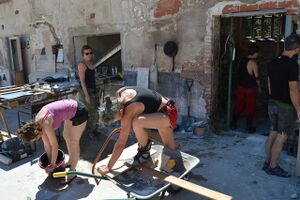
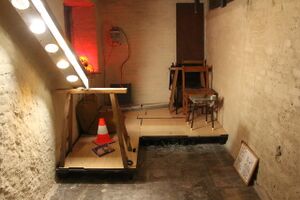
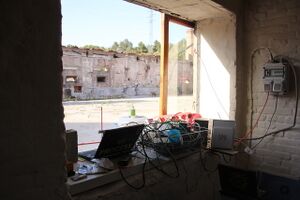


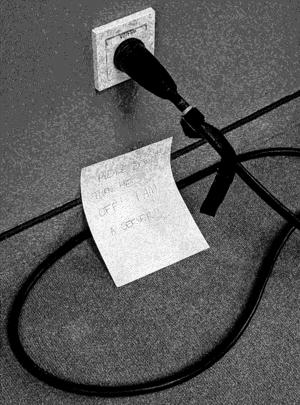
.png)


